

Anchor standard · English Language Arts and Literacy · Kindergarten to grade 12
CCRA.R.7
Integrate and evaluate content presented in diverse media and formats, including visually and quantitatively, as well as in words.
Anchor Standards for Reading · Integration of Knowledge and Ideas
Activities matched to standards under CCRA.R.7
Filter by grade
- ScienceFeatured
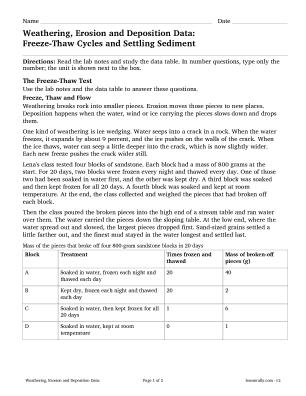
Weathering, Erosion and Deposition Data: Freeze-Thaw Cycles and Settling Sediment (opens in a new tab)
- Grades 6–7
- 8 questions
- Estimated reading level 6.1
Common Core RST.6-8.7
Made by Theo Nakamura · LessonRally (AI-assisted)
- ScienceFeatured
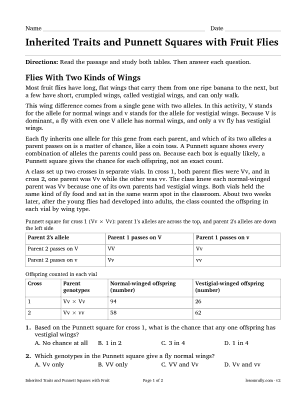
Inherited Traits and Punnett Squares with Fruit Flies (opens in a new tab)
- Grade 8
- 9 questions
- Estimated reading level 7.2
Common Core RST.6-8.7
Made by Myra Jefferson · LessonRally (AI-assisted)
- ScienceFeatured
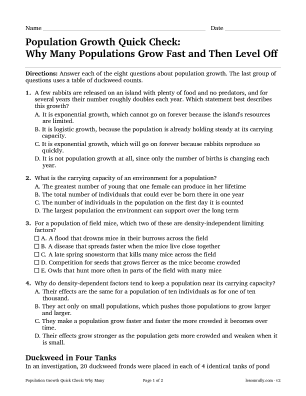
Population Growth Quick Check: Why Many Populations Grow Fast and Then Level Off (opens in a new tab)
- Grades 9–10
- 8 questions
- Estimated reading level 7.6
Common Core RST.9-10.7
Made by Leah Rosen · LessonRally (AI-assisted)
- ScienceFeatured
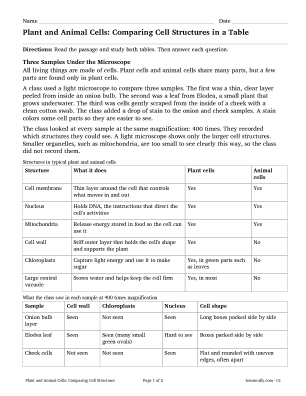
Plant and Animal Cells: Comparing Cell Structures in a Table (opens in a new tab)
- Grade 7
- 8 questions
- Estimated reading level 7.0
Common Core RST.6-8.7
Made by Myra Jefferson · LessonRally (AI-assisted)
- ScienceFeatured
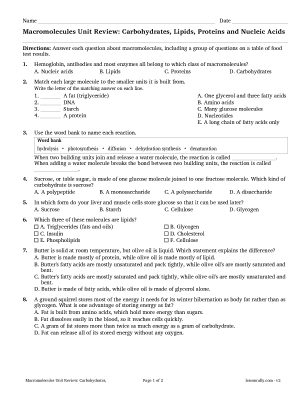
Macromolecules Unit Review: Carbohydrates, Lipids, Proteins and Nucleic Acids (opens in a new tab)
- Grades 9–10
- 14 questions
- Estimated reading level 8.8
Common Core RST.9-10.7
Made by Leah Rosen · LessonRally (AI-assisted)
- ScienceFeatured
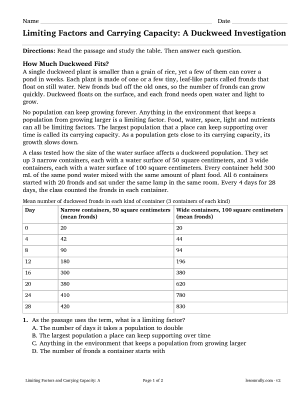
Limiting Factors and Carrying Capacity: A Duckweed Investigation (opens in a new tab)
- Grade 7
- 9 questions
- Estimated reading level 7.8
Common Core RST.6-8.7
Made by Myra Jefferson · LessonRally (AI-assisted)
- ScienceFeatured
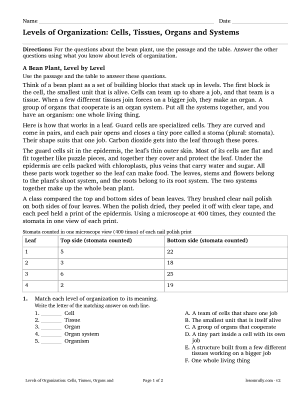
Levels of Organization: Cells, Tissues, Organs and Systems (opens in a new tab)
- Grade 7
- 10 questions
- Estimated reading level 7.5
Common Core RST.6-8.7
Made by Myra Jefferson · LessonRally (AI-assisted)
- ScienceFeatured
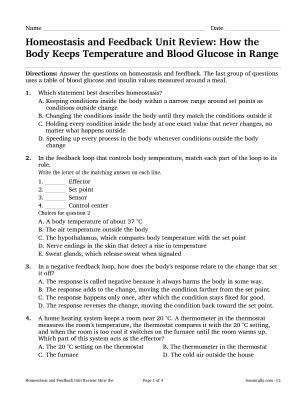
Homeostasis and Feedback Unit Review: How the Body Keeps Temperature and Blood Glucose in Range (opens in a new tab)
- Grades 9–10
- 14 questions
- Estimated reading level 9.2
Common Core RST.9-10.7
Made by Leah Rosen · LessonRally (AI-assisted)
- ScienceFeatured
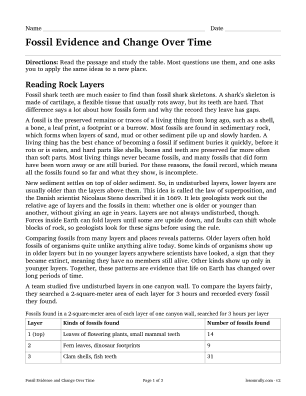
Fossil Evidence and Change Over Time (opens in a new tab)
- Grade 8
- 10 questions
- Estimated reading level 9.2
Common Core RST.6-8.7
Made by Myra Jefferson · LessonRally (AI-assisted)
- ScienceFeatured
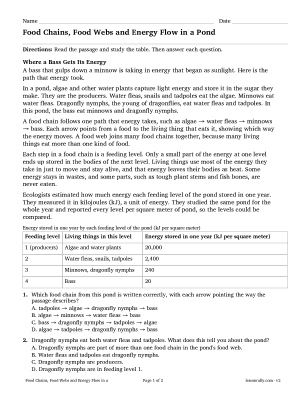
Food Chains, Food Webs and Energy Flow in a Pond (opens in a new tab)
- Grade 7
- 9 questions
- Estimated reading level 7.5
Common Core RST.6-8.7
Made by Myra Jefferson · LessonRally (AI-assisted)
- ScienceFeatured
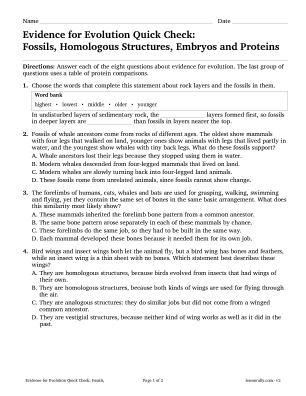
Evidence for Evolution Quick Check: Fossils, Homologous Structures, Embryos and Proteins (opens in a new tab)
- Grades 9–10
- 8 questions
- Estimated reading level 9.8
Common Core RST.9-10.7
Made by Leah Rosen · LessonRally (AI-assisted)
- ScienceFeatured
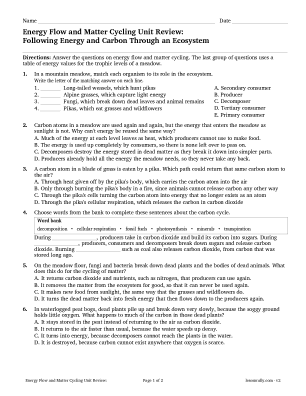
Energy Flow and Matter Cycling Unit Review: Following Energy and Carbon Through an Ecosystem (opens in a new tab)
- Grades 9–10
- 13 questions
- Estimated reading level 7.9
Common Core RST.9-10.7
Made by Leah Rosen · LessonRally (AI-assisted)
- ScienceFeatured
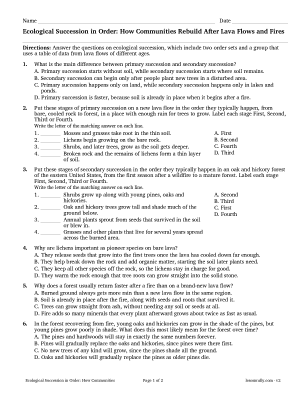
Ecological Succession in Order: How Communities Rebuild After Lava Flows and Fires (opens in a new tab)
- Grades 9–10
- 10 questions
- Estimated reading level 7.8
Common Core RST.9-10.7
Made by Leah Rosen · LessonRally (AI-assisted)
- ScienceFeatured
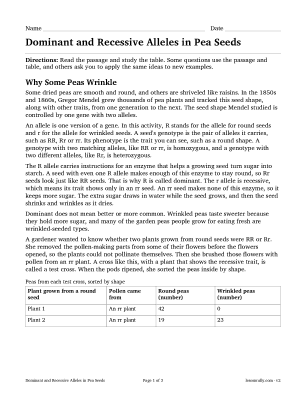
Dominant and Recessive Alleles in Pea Seeds (opens in a new tab)
- Grade 8
- 10 questions
- Estimated reading level 6.4
Common Core RST.6-8.7
Made by Myra Jefferson · LessonRally (AI-assisted)
- ScienceFeatured
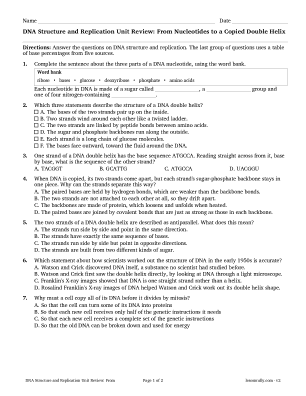
DNA Structure and Replication Unit Review: From Nucleotides to a Copied Double Helix (opens in a new tab)
- Grades 9–10
- 14 questions
- Estimated reading level 7.8
Common Core RST.9-10.7
Made by Leah Rosen · LessonRally (AI-assisted)
- ScienceFeatured
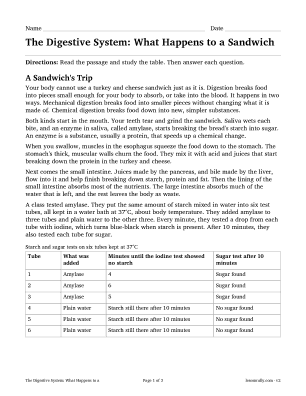
The Digestive System: What Happens to a Sandwich (opens in a new tab)
- Grade 7
- 10 questions
- Estimated reading level 8.3
Common Core RST.6-8.7
Made by Myra Jefferson · LessonRally (AI-assisted)
- ScienceFeatured
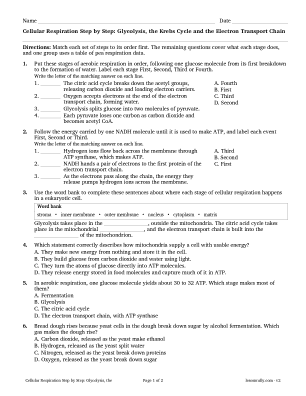
Cellular Respiration Step by Step: Glycolysis, the Krebs Cycle and the Electron Transport Chain (opens in a new tab)
- Grades 9–10
- 10 questions
- Estimated reading level 9.7
Common Core RST.9-10.7
Made by Leah Rosen · LessonRally (AI-assisted)
- ScienceFeatured
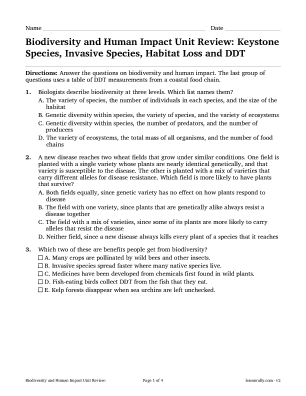
Biodiversity and Human Impact Unit Review: Keystone Species, Invasive Species, Habitat Loss and DDT (opens in a new tab)
- Grades 9–10
- 14 questions
- Estimated reading level 9.7
Common Core RST.9-10.7
Made by Leah Rosen · LessonRally (AI-assisted)
- ScienceFeatured
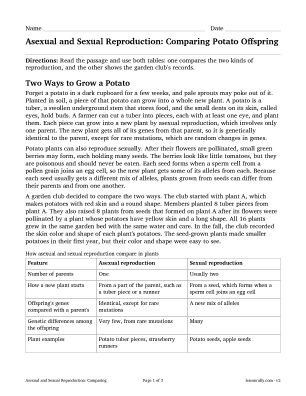
Asexual and Sexual Reproduction: Comparing Potato Offspring (opens in a new tab)
- Grade 8
- 8 questions
- Estimated reading level 8.3
Common Core RST.6-8.7
Made by Myra Jefferson · LessonRally (AI-assisted)
- Social StudiesFeatured
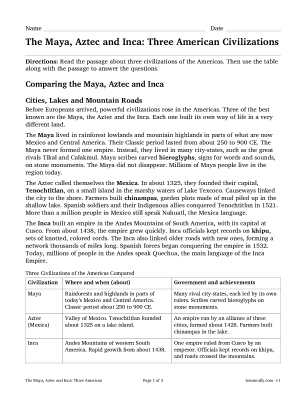
The Maya, Aztec and Inca: Three American Civilizations (opens in a new tab)
- Grade 7
- 10 questions
- Estimated reading level 7.8
Common Core RH.6-8.7
Made by Owen Brackwell · LessonRally (AI-assisted)
- Social StudiesFeatured
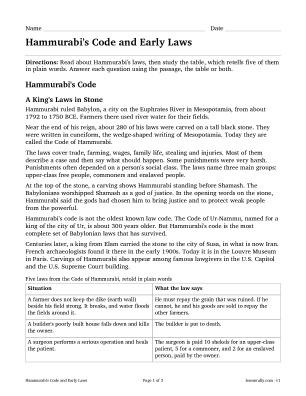
Hammurabi's Code and Early Laws (opens in a new tab)
- Grade 6
- 10 questions
- Estimated reading level 7.7
Common Core RH.6-8.7
Made by Owen Brackwell · LessonRally (AI-assisted)
- ScienceFeatured
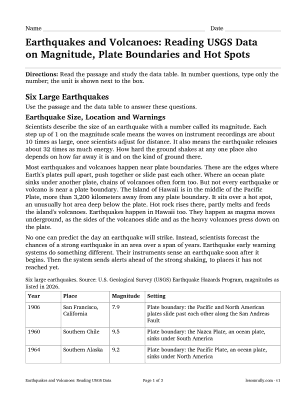
Earthquakes and Volcanoes: Reading USGS Data on Magnitude, Plate Boundaries and Hot Spots (opens in a new tab)
- Grades 6–7
- 8 questions
- Estimated reading level 8.7
Common Core RST.6-8.7
Made by Theo Nakamura · LessonRally (AI-assisted)
- Social StudiesFeatured
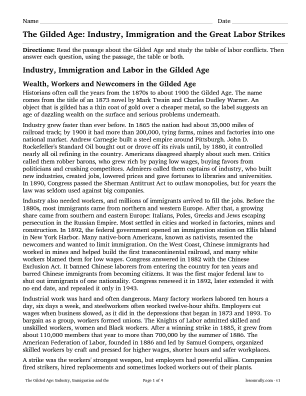
The Gilded Age: Industry, Immigration and the Great Labor Strikes (opens in a new tab)
- Grade 11
- 10 questions
- Estimated reading level 10.5
Common Core RH.11-12.7
Made by Monica Ellison · LessonRally (AI-assisted)
- Social StudiesFeatured
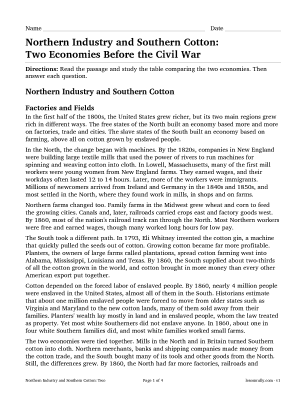
Northern Industry and Southern Cotton: Two Economies Before the Civil War (opens in a new tab)
- Grade 8
- 10 questions
- Estimated reading level 8.3
Common Core RH.6-8.7
Made by Monica Ellison · LessonRally (AI-assisted)
Where it fits
Grade standards under this anchor (28)
With prompting and support, describe the relationship between illustrations and the story in which they appear (e.g., what moment in a story an illustration depicts).
Use illustrations and details in a story to describe its characters, setting, or events.
Use information gained from the illustrations and words in a print or digital text to demonstrate understanding of its characters, setting, or plot.
Explain how specific aspects of a text's illustrations contribute to what is conveyed by the words in a story (e.g., create mood, emphasize aspects of a character or setting)
Make connections between the text of a story or drama and a visual or oral presentation of the text, identifying where each version reflects specific descriptions and directions in the text.
Analyze how visual and multimedia elements contribute to the meaning, tone, or beauty of a text (e.g., graphic novel, multimedia presentation of fiction, folktale, myth, poem).
Compare and contrast the experience of reading a story, drama, or poem to listening to or viewing an audio, video, or live version of the text, including contrasting what they "see" and "hear" when reading the text to what they perceive when they listen or watch.
Compare and contrast a written story, drama, or poem to its audio, filmed, staged, or multimedia version, analyzing the effects of techniques unique to each medium (e.g., lighting, sound, color, or camera focus and angles in a film).
Analyze the extent to which a filmed or live production of a story or drama stays faithful to or departs from the text or script, evaluating the choices made by the director or actors.
Analyze the representation of a subject or a key scene in two different artistic mediums, including what is emphasized or absent in each treatment (e.g., Auden's "Musée des Beaux Arts" and Breughel's Landscape with the Fall of Icarus).
Analyze multiple interpretations of a story, drama, or poem (e.g., recorded or live production of a play or recorded novel or poetry), evaluating how each version interprets the source text. (Include at least one play by Shakespeare and one play by an American dramatist.)
With prompting and support, describe the relationship between illustrations and the text in which they appear (e.g., what person, place, thing, or idea in the text an illustration depicts).
Use the illustrations and details in a text to describe its key ideas.
Explain how specific images (e.g., a diagram showing how a machine works) contribute to and clarify a text.
Use information gained from illustrations (e.g., maps, photographs) and the words in a text to demonstrate understanding of the text (e.g., where, when, why, and how key events occur).
RI.4.7 1 activity
Interpret information presented visually, orally, or quantitatively (e.g., in charts, graphs, diagrams, time lines, animations, or interactive elements on Web pages) and explain how the information contributes to an understanding of the text in which it appears.
Draw on information from multiple print or digital sources, demonstrating the ability to locate an answer to a question quickly or to solve a problem efficiently.
Integrate information presented in different media or formats (e.g., visually, quantitatively) as well as in words to develop a coherent understanding of a topic or issue.
Compare and contrast a text to an audio, video, or multimedia version of the text, analyzing each medium's portrayal of the subject (e.g., how the delivery of a speech affects the impact of the words).
Evaluate the advantages and disadvantages of using different mediums (e.g., print or digital text, video, multimedia) to present a particular topic or idea.
Analyze various accounts of a subject told in different mediums (e.g., a person's life story in both print and multimedia), determining which details are emphasized in each account.
Integrate and evaluate multiple sources of information presented in different media or formats (e.g., visually, quantitatively) as well as in words in order to address a question or solve a problem.
RH.6-8.7 4 activities
Integrate visual information (e.g., in charts, graphs, photographs, videos, or maps) with other information in print and digital texts.
Integrate quantitative or technical analysis (e.g., charts, research data) with qualitative analysis in print or digital text.
RH.11-12.7 1 activity
Integrate and evaluate multiple sources of information presented in diverse formats and media (e.g., visually, quantitatively, as well as in words) in order to address a question or solve a problem.
RST.6-8.7 12 activities
Integrate quantitative or technical information expressed in words in a text with a version of that information expressed visually (e.g., in a flowchart, diagram, model, graph, or table).
RST.9-10.7 11 activities
Translate quantitative or technical information expressed in words in a text into visual form (e.g., a table or chart) and translate information expressed visually or mathematically (e.g., in an equation) into words.
Integrate and evaluate multiple sources of information presented in diverse formats and media (e.g., quantitative data, video, multimedia) in order to address a question or solve a problem.
Counts updated 23 minutes ago.
How matching works
LessonRally matches each shared activity to the Common Core standards its questions require, using AI after the activity passes review. Every standard shown in Browse was chosen independently by two AI models, or by LessonRally.
© Copyright 2010. National Governors Association Center for Best Practices and Council of Chief State School Officers. All rights reserved.