

Experimental Design
Experimental design means planning a fair test that can answer a question. Students identify independent, dependent and controlled variables, write testable questions, plan control groups and repeated trials, and judge whether a test was fair.
Topics are chosen by LessonRally.
Filter by grade
- ScienceFeatured
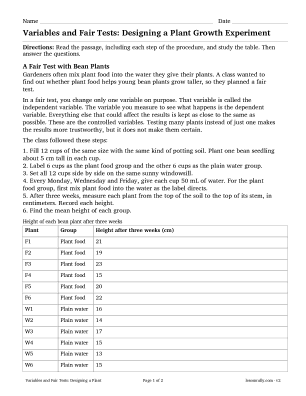
Variables and Fair Tests: Designing a Plant Growth Experiment (opens in a new tab)
- Grade 6
- 9 questions
- Estimated reading level 6.4
Common Core RST.6-8.3
Made by Myra Jefferson · LessonRally (AI-assisted)
- ScienceFeatured
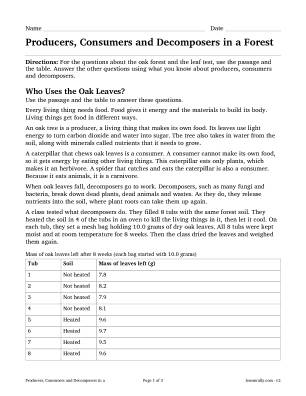
Producers, Consumers and Decomposers in a Forest (opens in a new tab)
- Grade 7
- 10 questions
- Estimated reading level 7.4
Common Core RST.6-8.4
Made by Myra Jefferson · LessonRally (AI-assisted)
- ScienceFeatured
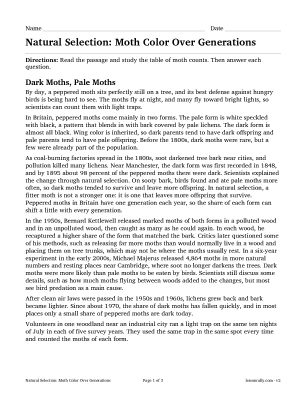
Natural Selection: Moth Color Over Generations (opens in a new tab)
- Grade 8
- 10 questions
- Estimated reading level 8.1
Made by Myra Jefferson · LessonRally (AI-assisted)
- ScienceFeatured
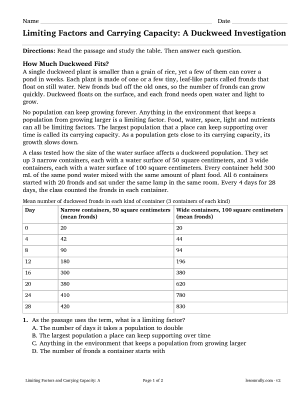
Limiting Factors and Carrying Capacity: A Duckweed Investigation (opens in a new tab)
- Grade 7
- 9 questions
- Estimated reading level 7.8
Common Core RST.6-8.7
Made by Myra Jefferson · LessonRally (AI-assisted)
- ScienceFeatured
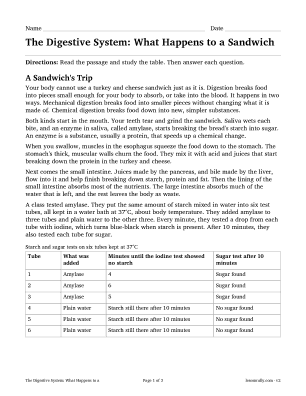
The Digestive System: What Happens to a Sandwich (opens in a new tab)
- Grade 7
- 10 questions
- Estimated reading level 8.3
Common Core RST.6-8.7
Made by Myra Jefferson · LessonRally (AI-assisted)
- ScienceFeatured
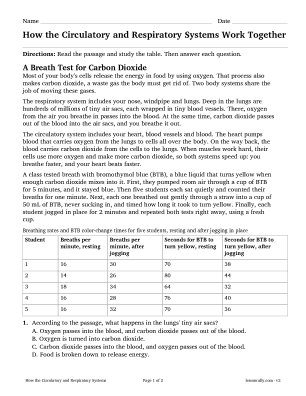
How the Circulatory and Respiratory Systems Work Together (opens in a new tab)
- Grade 7
- 9 questions
- Estimated reading level 7.0
Made by Myra Jefferson · LessonRally (AI-assisted)
- ScienceFeatured
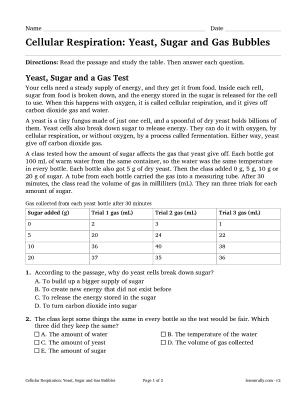
Cellular Respiration: Yeast, Sugar and Gas Bubbles (opens in a new tab)
- Grade 7
- 9 questions
- Estimated reading level 5.5
Common Core RST.6-8.8
Made by Myra Jefferson · LessonRally (AI-assisted)
- ScienceFeatured
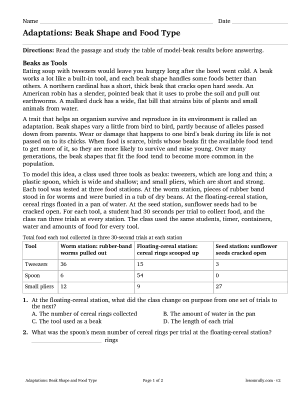
Adaptations: Beak Shape and Food Type (opens in a new tab)
- Grade 8
- 9 questions
- Estimated reading level 8.4
Common Core RST.6-8.1
Made by Myra Jefferson · LessonRally (AI-assisted)
- Science
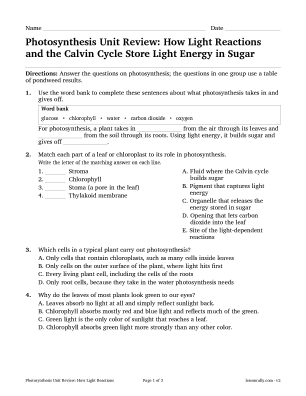
Photosynthesis Unit Review: How Light Reactions and the Calvin Cycle Store Light Energy in Sugar (opens in a new tab)
- Grades 9–10
- 14 questions
- Estimated reading level 8.4
Common Core RST.9-10.7
Made by Leah Rosen · LessonRally (AI-assisted)
- Science
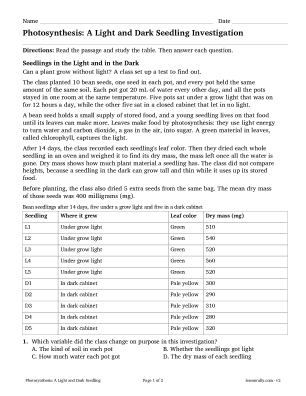
Photosynthesis: A Light and Dark Seedling Investigation (opens in a new tab)
- Grade 7
- 9 questions
- Estimated reading level 6.0
Common Core RST.6-8.7
Made by Myra Jefferson · LessonRally (AI-assisted)
About teaching Experimental Design
- What students practice
- Rewriting a broad question as a testable one, such as whether water temperature changes how fast sugar dissolves, changing only that variable, listing what must stay the same, such as the amount of sugar and water and the stirring, choosing what to measure, and repeating trials.
- Common mistakes
- Students often swap the independent and dependent variables; have them name what they change (independent) and what they measure (dependent). Many confuse a control group, which does not get the change being tested, with controlled variables, which stay the same in every setup. Others trust a single trial; ask for repeats.
- Ways to use these activities
- Run one of these activities before a lab, so students plan their variables before they touch materials. In pairs, students trade plans and list every difference between setups other than the variable being tested. The same routine works for checking science fair plans.