

U.S. Constitution
The Constitution replaced the weak national government of the Articles of Confederation. Students study Shays’ Rebellion, the 1787 convention’s compromises, the ratification debate and the Bill of Rights, and read what each article says.
Topics are chosen by LessonRally.
Filter by grade
- Social StudiesFeatured
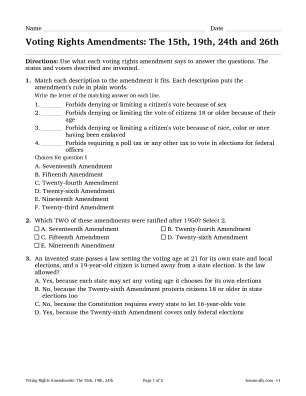
Voting Rights Amendments: The 15th, 19th, 24th and 26th (opens in a new tab)
- Grade 8
- 8 questions
- Estimated reading level 10.3
Made by Nathan Kessler · LessonRally (AI-assisted)
- Social StudiesFeatured
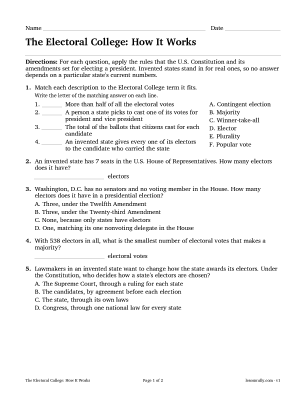
The Electoral College: How It Works (opens in a new tab)
- Grades 9–10
- 8 questions
- Estimated reading level 9.5
Made by Nathan Kessler · LessonRally (AI-assisted)
- Social StudiesFeatured
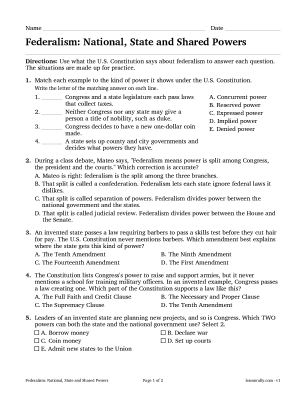
Federalism: National, State and Shared Powers (opens in a new tab)
- Grades 9–10
- 8 questions
- Estimated reading level 9.2
Made by Nathan Kessler · LessonRally (AI-assisted)
- Social StudiesFeatured
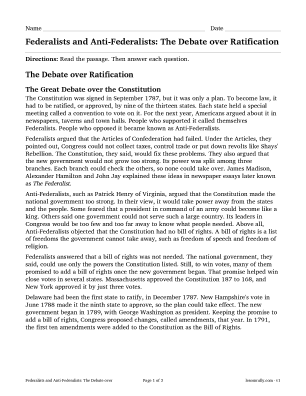
Federalists and Anti-Federalists: The Debate over Ratification (opens in a new tab)
- Grade 8
- 10 questions
- Estimated reading level 9.7
Common Core RH.6-8.1
Made by Monica Ellison · LessonRally (AI-assisted)
- Social StudiesFeatured
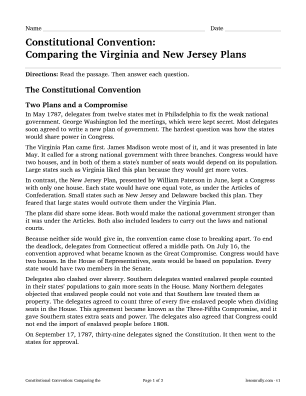
Constitutional Convention: Comparing the Virginia and New Jersey Plans (opens in a new tab)
- Grade 8
- 10 questions
- Estimated reading level 9.5
Common Core RH.6-8.5
Made by Monica Ellison · LessonRally (AI-assisted)
- Social StudiesFeatured
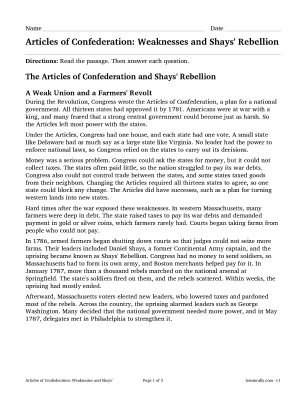
Articles of Confederation: Weaknesses and Shays' Rebellion (opens in a new tab)
- Grade 8
- 10 questions
- Estimated reading level 9.6
Made by Monica Ellison · LessonRally (AI-assisted)
- Social Studies
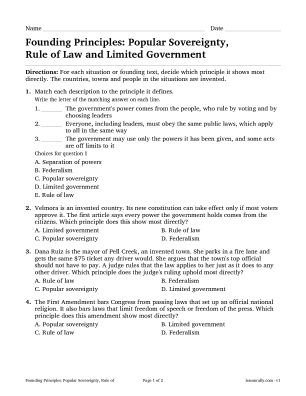
Founding Principles: Popular Sovereignty, Rule of Law and Limited Government (opens in a new tab)
- Grades 8–9
- 8 questions
- Estimated reading level 9.4
Made by Nathan Kessler · LessonRally (AI-assisted)
- Social Studies
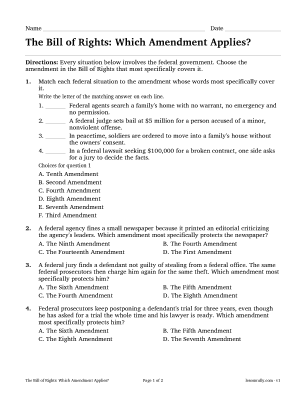
The Bill of Rights: Which Amendment Applies? (opens in a new tab)
- Grades 8–9
- 10 questions
- Estimated reading level 11.6
Made by Nathan Kessler · LessonRally (AI-assisted)
- Social Studies
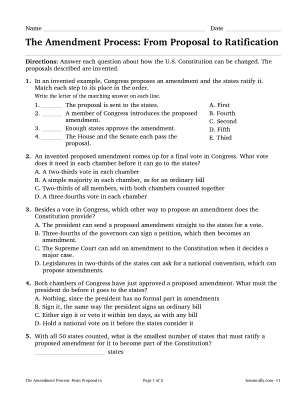
The Amendment Process: From Proposal to Ratification (opens in a new tab)
- Grade 8
- 8 questions
- Estimated reading level 8.3
Made by Nathan Kessler · LessonRally (AI-assisted)
About teaching U.S. Constitution
- What students practice
- Listing weaknesses of the Articles, explaining how the Great Compromise blended the Virginia and New Jersey Plans into a House based on population and a Senate with two members per state, and matching Articles I, II and III to Congress, the president and the courts.
- Common mistakes
- Students often think the Bill of Rights was in the original Constitution; it was added in 1791, partly to answer Anti-Federalist concerns. Many read the Three-Fifths Compromise as a rule about voting, but it set how enslaved people were counted for House seats and direct taxes, giving slaveholding states more seats than counting free people alone.
- Ways to use these activities
- Use one of these activities after a mock convention in which students from large and small states negotiate how to share representation. In pairs, one student reads a clause from the Constitution and the other names the article it comes from.