

Ancient Civilizations
Many of the first civilizations grew up along rivers such as the Nile, Tigris and Euphrates. Students study the geography, government, trade and writing of ancient Mesopotamia, Egypt, the Indus Valley, China, Greece and Rome.
Topics are chosen by LessonRally.
Filter by grade
- Social StudiesFeatured
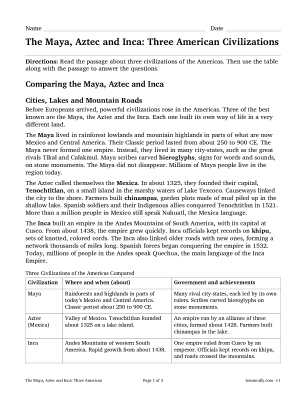
The Maya, Aztec and Inca: Three American Civilizations (opens in a new tab)
- Grade 7
- 10 questions
- Estimated reading level 7.8
Common Core RH.6-8.7
Made by Owen Brackwell · LessonRally (AI-assisted)
- Social StudiesFeatured
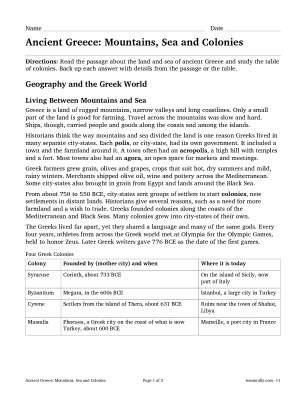
Ancient Greece: Mountains, Sea and Colonies (opens in a new tab)
- Grade 6
- 10 questions
- Estimated reading level 8.5
Made by Owen Brackwell · LessonRally (AI-assisted)
- Social StudiesFeatured
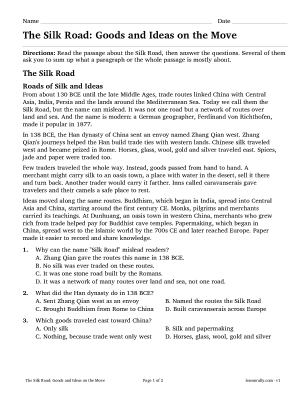
The Silk Road: Goods and Ideas on the Move (opens in a new tab)
- Grade 7
- 10 questions
- Estimated reading level 6.9
Common Core RI.7.2
Made by Owen Brackwell · LessonRally (AI-assisted)
- Social StudiesFeatured
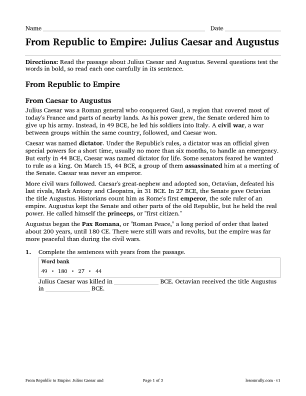
From Republic to Empire: Julius Caesar and Augustus (opens in a new tab)
- Grade 6
- 10 questions
- Estimated reading level 8.0
Common Core RH.6-8.4
Made by Owen Brackwell · LessonRally (AI-assisted)
- Social StudiesFeatured
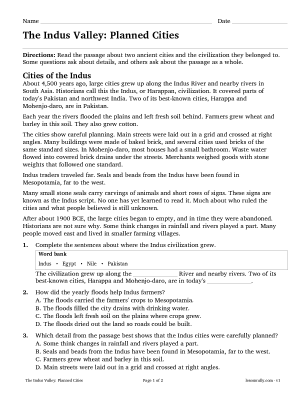
The Indus Valley: Planned Cities (opens in a new tab)
- Grade 6
- 10 questions
- Estimated reading level 7.2
Made by Owen Brackwell · LessonRally (AI-assisted)
- Social StudiesFeatured
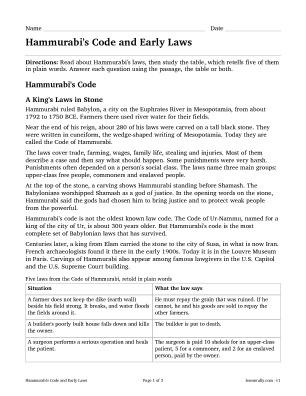
Hammurabi's Code and Early Laws (opens in a new tab)
- Grade 6
- 10 questions
- Estimated reading level 7.7
Common Core RH.6-8.7
Made by Owen Brackwell · LessonRally (AI-assisted)
- Social StudiesFeatured
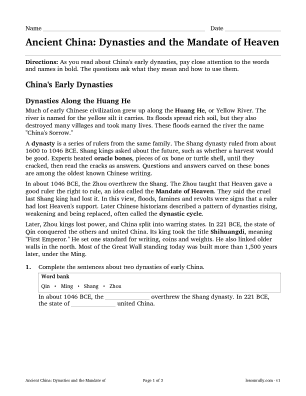
Ancient China: Dynasties and the Mandate of Heaven (opens in a new tab)
- Grade 6
- 10 questions
- Estimated reading level 7.4
Made by Owen Brackwell · LessonRally (AI-assisted)
- Social StudiesFeatured
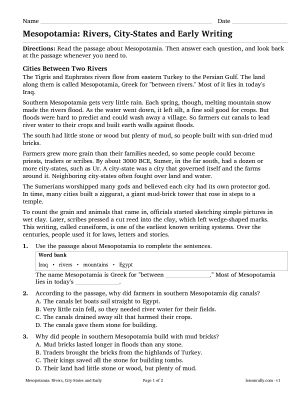
Mesopotamia: Rivers, City-States and Early Writing (opens in a new tab)
- Grade 6
- 10 questions
- Estimated reading level 7.4
Made by Owen Brackwell · LessonRally (AI-assisted)
- Social StudiesFeatured
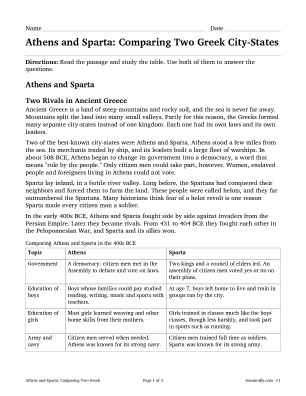
Athens and Sparta: Comparing Two Greek City-States (opens in a new tab)
- Grade 6
- 10 questions
- Estimated reading level 8.0
Made by Owen Brackwell · LessonRally (AI-assisted)
- Social Studies
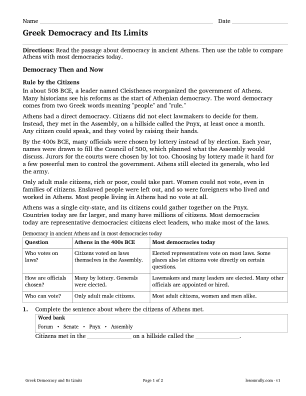
Greek Democracy and Its Limits (opens in a new tab)
- Grade 6
- 10 questions
- Estimated reading level 9.0
Made by Owen Brackwell · LessonRally (AI-assisted)
- Social Studies
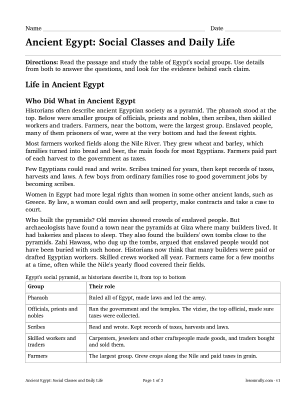
Ancient Egypt: Social Classes and Daily Life (opens in a new tab)
- Grade 6
- 10 questions
- Estimated reading level 8.0
Common Core RH.6-8.1
Made by Owen Brackwell · LessonRally (AI-assisted)
- Social Studies
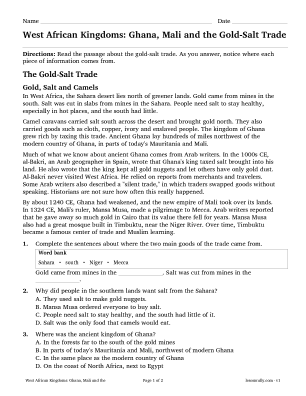
West African Kingdoms: Ghana, Mali and the Gold-Salt Trade (opens in a new tab)
- Grade 7
- 10 questions
- Estimated reading level 7.6
Common Core RH.6-8.1
Made by Owen Brackwell · LessonRally (AI-assisted)
- Social Studies
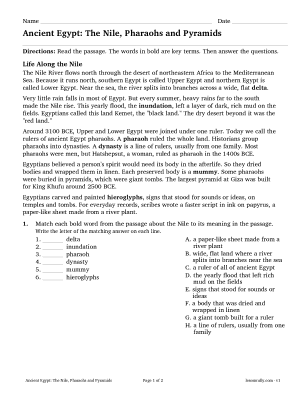
Ancient Egypt: The Nile, Pharaohs and Pyramids (opens in a new tab)
- Grade 6
- 10 questions
- Estimated reading level 6.7
Made by Owen Brackwell · LessonRally (AI-assisted)
About teaching Ancient Civilizations
- What students practice
- Explaining how river floods and irrigation made surplus harvests possible, using terms such as city-state, dynasty and republic correctly, comparing how two civilizations were governed, reading a translated law or inscription, and separating what the evidence shows from what historians infer.
- Common mistakes
- Students often count BCE dates the wrong way and think 500 BCE came after 300 BCE; placing both on a number line that counts down to year 1 shows the order. Many treat ancient Greece as one country rather than independent city-states, or call Julius Caesar the first Roman emperor, a title historians give to Augustus.
- Ways to use these activities
- Open the study of each new civilization with one of these activities, and keep a class chart comparing each civilization’s geography, government, writing and trade. In pairs, students argue which feature mattered most to one civilization, citing evidence. A class timeline with BCE and CE dates keeps the order clear.