

Evolution and Natural Selection
Evolution is change in a population’s inherited traits across generations. Students explain how natural selection produces adaptations, read the evidence in fossils, body structures and DNA, and trace how new species form.
Topics are chosen by LessonRally.
Filter by grade
- ScienceFeatured
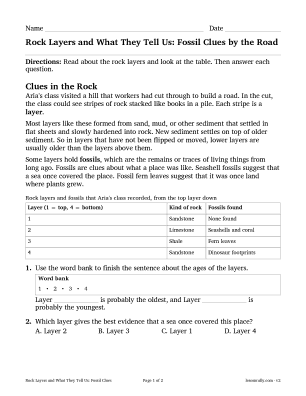
Rock Layers and What They Tell Us: Fossil Clues by the Road (opens in a new tab)
- Grade 4
- 8 questions
- Estimated reading level 5.1
Common Core RI.4.3
Made by Wes Calloway · LessonRally (AI-assisted)
- ScienceFeatured
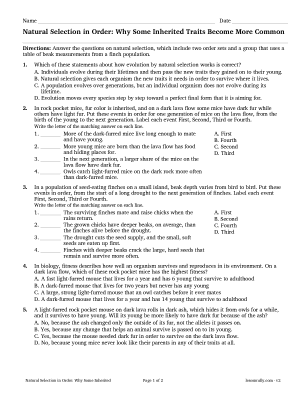
Natural Selection in Order: Why Some Inherited Traits Become More Common (opens in a new tab)
- Grades 9–10
- 10 questions
- Estimated reading level 8.6
Made by Leah Rosen · LessonRally (AI-assisted)
- ScienceFeatured
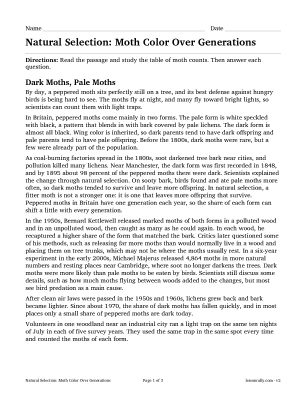
Natural Selection: Moth Color Over Generations (opens in a new tab)
- Grade 8
- 10 questions
- Estimated reading level 8.1
Made by Myra Jefferson · LessonRally (AI-assisted)
- ScienceFeatured
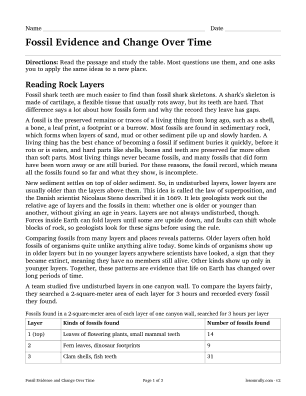
Fossil Evidence and Change Over Time (opens in a new tab)
- Grade 8
- 10 questions
- Estimated reading level 9.2
Common Core RST.6-8.7
Made by Myra Jefferson · LessonRally (AI-assisted)
- ScienceFeatured
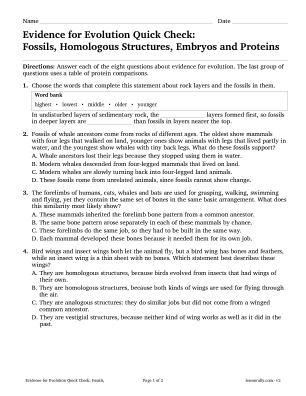
Evidence for Evolution Quick Check: Fossils, Homologous Structures, Embryos and Proteins (opens in a new tab)
- Grades 9–10
- 8 questions
- Estimated reading level 9.8
Common Core RST.9-10.7
Made by Leah Rosen · LessonRally (AI-assisted)
- ScienceFeatured
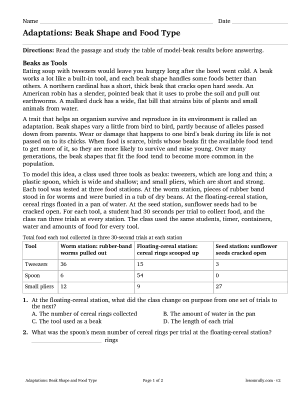
Adaptations: Beak Shape and Food Type (opens in a new tab)
- Grade 8
- 9 questions
- Estimated reading level 8.4
Common Core RST.6-8.1
Made by Myra Jefferson · LessonRally (AI-assisted)
- ScienceFeatured
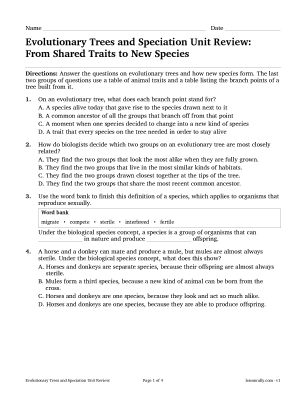
Evolutionary Trees and Speciation Unit Review: From Shared Traits to New Species (opens in a new tab)
- Grades 9–10
- 14 questions
- Estimated reading level 8.2
Made by Leah Rosen · LessonRally (AI-assisted)
- Science
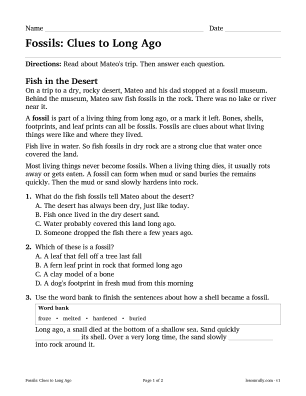
Fossils: Clues to Long Ago (opens in a new tab)
- Grade 3
- 8 questions
- Estimated reading level 4.7
Common Core RI.3.1
Made by Wes Calloway · LessonRally (AI-assisted)
- Science
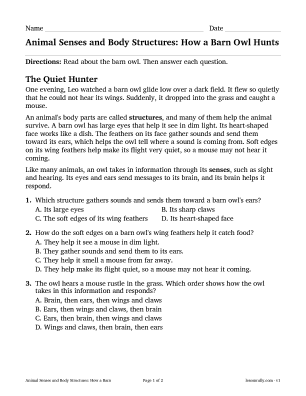
Animal Senses and Body Structures: How a Barn Owl Hunts (opens in a new tab)
- Grade 4
- 8 questions
- Estimated reading level 4.9
Common Core RI.4.1
Made by Wes Calloway · LessonRally (AI-assisted)
About teaching Evolution and Natural Selection
- What students practice
- Connecting a structure like webbed feet to survival, explaining why some individuals leave more offspring than others, tracking how common a trait becomes over generations, putting fossils in order by rock layer, and telling homologous structures from analogous ones.
- Common mistakes
- Students often say giraffes grew long necks because they needed them, or that “fittest” means strongest. Have them retell it with inherited variation already present and the giraffes that left more offspring. On evolutionary trees, many see one living species turning into another; have them trace both branches back to where they meet.
- Ways to use these activities
- Use one as a warm-up before a natural selection simulation, so students know what to look for. Pair students: one explains how natural selection made a trait more common while the other listens for variation, inheritance, selection and time. For an exit ticket, have students explain how an adaptation became common without using “need” or “want.”