

Spanish Adjectives and Articles
In Spanish, articles and adjectives agree with their nouns in gender and number: la mochila roja, los libros nuevos. Students choose articles, place most adjectives after the noun, and use possessives and demonstratives.
Topics are chosen by LessonRally.
Filter by grade
- World LanguagesFeatured
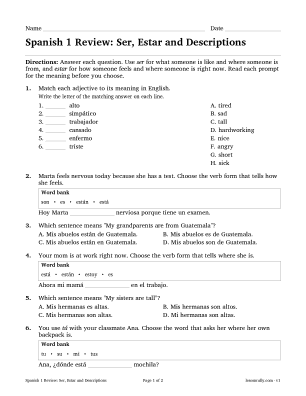
Spanish 1 Review: Ser, Estar and Descriptions (opens in a new tab)
- Grades 8–9
- 12 questions
Made by Elena Brisaval · LessonRally (AI-assisted)
- World LanguagesFeatured
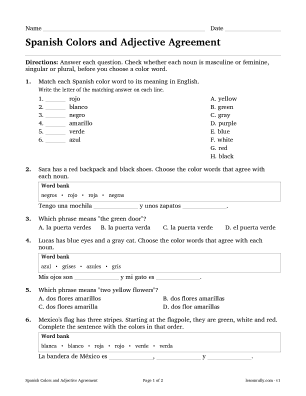
Spanish Colors and Adjective Agreement (opens in a new tab)
- Grades 7–8
- 10 questions
Made by Elena Brisaval · LessonRally (AI-assisted)
- World Languages
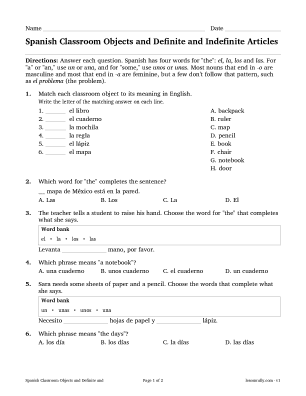
Spanish Classroom Objects and Definite and Indefinite Articles (opens in a new tab)
- Grades 7–8
- 10 questions
Made by Elena Brisaval · LessonRally (AI-assisted)
- World Languages
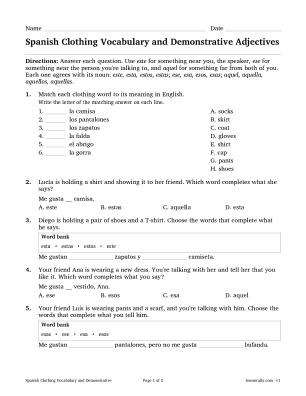
Spanish Clothing Vocabulary and Demonstrative Adjectives (opens in a new tab)
- Grades 7–8
- 10 questions
Made by Elena Brisaval · LessonRally (AI-assisted)
- World Languages
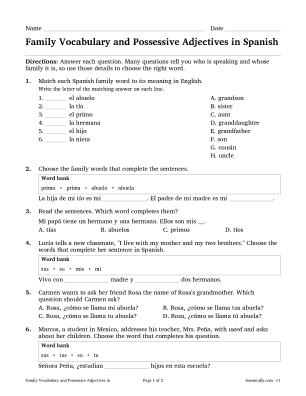
Family Vocabulary and Possessive Adjectives in Spanish (opens in a new tab)
- Grades 7–8
- 10 questions
Made by Elena Brisaval · LessonRally (AI-assisted)
About teaching Spanish Adjectives and Articles
- What students practice
- Matching el, la, un or una to the noun, as in el lápiz and una mesa, turning alto into alta, altos or altas, knowing that verde and azul change only for number, using mis with plural nouns, and picking este, ese or aquel by distance.
- Common mistakes
- Students often assume every noun ending in -a is feminine, but el día and el mapa are masculine; have them learn each noun with its article. Many make a possessive plural for plural owners, writing sus casa for their house, when su agrees with casa.
- Ways to use these activities
- Use one of these activities after students label classroom objects with their articles. In pairs, one student picks an object and a color from a class list, such as rojo or blanco, and the other says the noun with its article and the color in the matching form.