

Genetics and Heredity
Heredity is how traits pass from parents to offspring through genes. Students tell inherited traits from acquired ones, use alleles and Punnett squares to predict offspring, and explain patterns such as codominance.
Topics are chosen by LessonRally.
Filter by grade
- ScienceFeatured
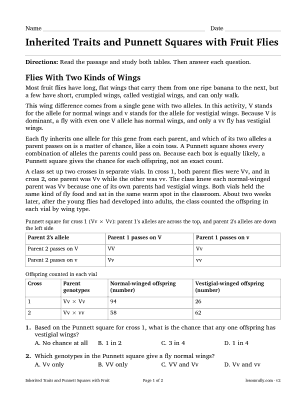
Inherited Traits and Punnett Squares with Fruit Flies (opens in a new tab)
- Grade 8
- 9 questions
- Estimated reading level 7.2
Common Core RST.6-8.7
Made by Myra Jefferson · LessonRally (AI-assisted)
- ScienceFeatured
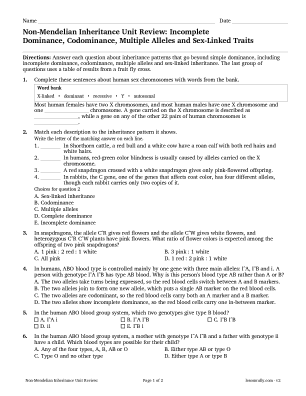
Non-Mendelian Inheritance Unit Review: Incomplete Dominance, Codominance, Multiple Alleles and Sex-Linked Traits (opens in a new tab)
- Grades 9–10
- 13 questions
- Estimated reading level 8.5
Made by Leah Rosen · LessonRally (AI-assisted)
- ScienceFeatured
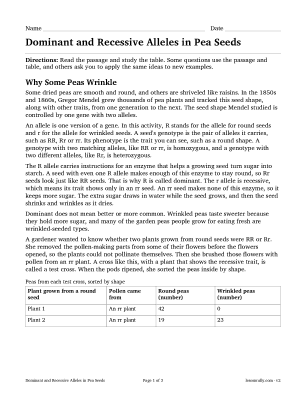
Dominant and Recessive Alleles in Pea Seeds (opens in a new tab)
- Grade 8
- 10 questions
- Estimated reading level 6.4
Common Core RST.6-8.4
Made by Myra Jefferson · LessonRally (AI-assisted)
- ScienceFeatured
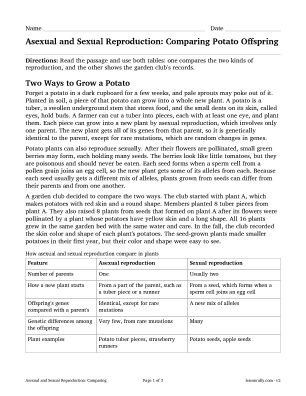
Asexual and Sexual Reproduction: Comparing Potato Offspring (opens in a new tab)
- Grade 8
- 8 questions
- Estimated reading level 8.3
Common Core RST.6-8.7
Made by Myra Jefferson · LessonRally (AI-assisted)
- ScienceFeatured
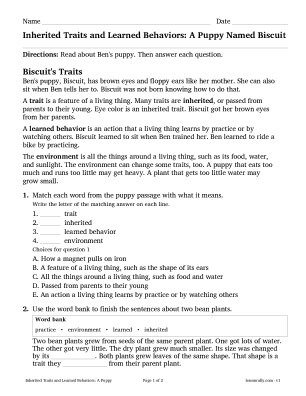
Inherited Traits and Learned Behaviors: A Puppy Named Biscuit (opens in a new tab)
- Grade 3
- 8 questions
- Estimated reading level 4.7
Common Core RI.3.1
Made by Wes Calloway · LessonRally (AI-assisted)
- ScienceFeatured
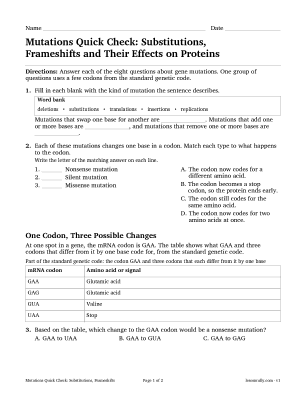
Mutations Quick Check: Substitutions, Frameshifts and Their Effects on Proteins (opens in a new tab)
- Grades 9–10
- 8 questions
- Estimated reading level 7.8
Made by Leah Rosen · LessonRally (AI-assisted)
- Science
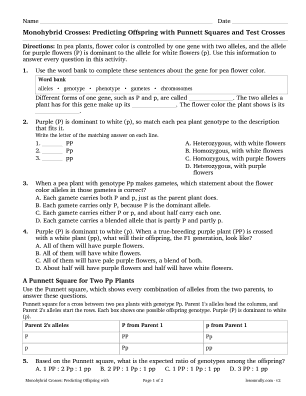
Monohybrid Crosses: Predicting Offspring with Punnett Squares and Test Crosses (opens in a new tab)
- Grades 9–10
- 10 questions
- Estimated reading level 7.9
Made by Leah Rosen · LessonRally (AI-assisted)
- Science
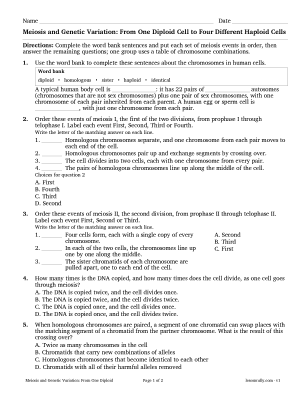
Meiosis and Genetic Variation: From One Diploid Cell to Four Different Haploid Cells (opens in a new tab)
- Grades 9–10
- 10 questions
- Estimated reading level 10.6
Made by Leah Rosen · LessonRally (AI-assisted)
About teaching Genetics and Heredity
- What students practice
- Filling a Punnett square from each parent’s alleles, reading the 3 to 1 phenotype ratio in Bb × Bb with complete dominance, crossing with bb to infer whether a dominant-looking parent is BB or Bb, and telling pink snapdragons (incomplete dominance) from AB blood (codominance).
- Common mistakes
- Students often think dominant means common, but it means the allele shows even when paired with a recessive one; extra fingers can come from a dominant allele yet be uncommon. Many treat a 1 in 4 chance as exactly one child in four, but each child has its own 1 in 4 chance.
- Ways to use these activities
- Pair one of these activities with a coin-flip lab: two partners each flip a coin for a Bb parent, heads B and tails b, then compare class totals with the square. As an exit ticket, ask how two parents with a dominant trait can have a child with the recessive one.