Natural Selection in Order: Why Some Inherited Traits Become More Common

10 questions · 16 points · Grades 9–10 · English · Preview the 10 questions

Made by Leah Rosen · LessonRally (AI-assisted)

Digital classroom activity

What is a digital classroom activity?

Teachers who sign in can assign LessonRally activities to their Google Classroom classes: students open them in Classroom and answer online, and their grades go to the teacher's Classroom gradebook. Practice lets you try it first, the way students see it.

Free for teachers. Sign in to assign activities to your Google Classroom classes.

Printable worksheet

Students review natural selection: why populations evolve but individuals do not, the events of one generation of selection in rock pocket mice and of a drought on a finch island in order, what fitness means, why only inherited traits are passed on, how the favored trait depends on the environment, why variation is needed, and a table of finch beak depths.

Learning goal: Put the events of natural selection in order and explain how inherited variation, overproduction and differences in survival and reproduction change a population over generations.

Estimated reading level 8.6

  1. Grade 6Hard
  2. Grade 7Stretch
  3. Grade 8On level
  4. Grade 9Easier
  5. Grade 10Easy
About this estimate

The estimate is halfway between the two middle scores of four readability formulas. Their scores run from 7.1 to 9.1.

  • Flesch-Kincaid GradeSentence length and syllables per word7.1
  • Gunning Fog Middle scoreSentence length and words of three or more syllables9.1
  • Coleman-LiauLetters per word and sentences per 100 words9.1
  • Automated Readability Index Middle scoreCharacters per word and words per sentence8.1
Flesch Reading Ease
72.6 on a 0 to 100 scale where higher is easier: fairly easy. Not part of the estimate.
Text measured
917 words, 22 sentences

Adapted from common readability formulas (Flesch-Kincaid, Gunning Fog, Coleman-Liau and ARI, plus SMOG for long texts), which look at sentence length and word length. Answer choices count toward word length only. Grades below the estimate will likely find the text harder, grades above it easier. It does not measure ideas, background knowledge or images.

Topic: Evolution and Natural Selection Chosen by LessonRally

Question types: multiple choice, matching.

Student preview

The questions as students see them, without the answers.

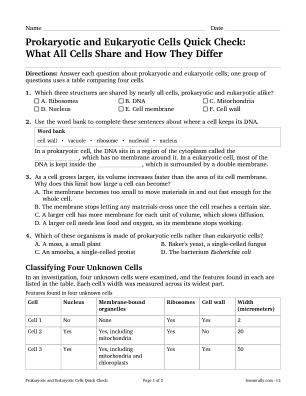
Answer the questions on natural selection, which include two order sets and a group that uses a table of beak measurements from a finch population.

Question 1

Which of these statements about how evolution by natural selection works is correct?

Choose one answer.

  • A population evolves over generations, but an individual organism does not evolve during its lifetime.
  • Individuals evolve during their lifetimes and then pass the new traits they gained on to their young.
  • Evolution moves every species step by step toward a perfect final form that it is aiming for.
  • Natural selection gives each organism the new traits it needs in order to survive where it lives.
Question 2

In rock pocket mice, fur color is inherited, and on a dark lava flow some mice have dark fur while others have light fur. Put these events in order for one generation of mice on the lava flow, from the birth of the young to the next generation. Label each event First, Second, Third or Fourth.

Match each item to an option.

Items

  1. More of the dark-furred mice live long enough to mate and have young.
  2. More young mice are born than the lava flow has food and hiding places for.
  3. In the next generation, a larger share of the mice on the lava flow have dark fur.
  4. Owls catch light-furred mice on the dark rock more often than dark-furred mice.

Options

  1. Second
  2. Fourth
  3. First
  4. Third

Question 3

In a population of seed-eating finches on a small island, beak depth varies from bird to bird. Put these events in order, from the start of a long drought to the next generation of finches. Label each event First, Second, Third or Fourth.

Match each item to an option.

Items

  1. The surviving finches mate and raise chicks when the rains return.
  2. The grown chicks have deeper beaks, on average, than the finches alive before the drought.
  3. The drought cuts the seed supply, and the small, soft seeds are eaten up first.
  4. Finches with deeper beaks crack the large, hard seeds that remain and survive more often.

Options

  1. Fourth
  2. Third
  3. Second
  4. First

Question 4

In biology, fitness describes how well an organism survives and reproduces in its environment. On a dark lava flow, which of these rock pocket mice has the highest fitness?

Choose one answer.

  • A dark-furred mouse that lives for two years but never has any young
  • A large, strong light-furred mouse that an owl catches before it ever mates
  • A dark-furred mouse that lives for a year and has 14 young that survive to adulthood
  • A fast light-furred mouse that lives for a year and has 6 young that survive to adulthood

Question 5

A light-furred rock pocket mouse on dark lava rolls in dark ash, which hides it from owls for a while, and it survives to have young. Will its young be more likely to have dark fur because of the ash?

Choose one answer.

  • No, because the ash changed only the outside of its fur, not the alleles it passes on.
  • No, because young mice never look like their parents in any of their traits at all.
  • Yes, because the mouse needed dark fur in order to survive on the dark lava flow.
  • Yes, because any change that helps an animal survive is passed on to its young.

Question 6

Near the lava flow, other rock pocket mice live on light, sandy rock. There, which fur color is most likely favored by natural selection, and why?

Choose one answer.

  • Dark fur, because dark fur is the better trait in every kind of habitat
  • Neither color, because owls find mice only by sound and never by sight
  • Light fur, because owls spot dark mice more easily against light rock
  • Dark fur, because dark-furred mice are stronger than light-furred mice

Question 7

Suppose every finch in an island population had exactly the same beak depth. During a long drought that left mostly large, hard seeds, what would most likely happen to the population's mean beak depth?

Choose one answer.

  • It would decrease, because only the birds with the smallest beaks would survive.
  • It would stay the same, because natural selection needs variation among individuals.
  • It would increase, because the drought would make each bird's beak grow deeper over time.
  • It would increase, because the finches would try harder to crack the large seeds.

Beak Depth Before and After a Drought

In a study, every adult finch on a small island was caught, banded and measured before a long drought. The survivors were measured again after the drought, and no adult's beak depth had changed. The chicks of the survivors were measured once they were fully grown.

Beak depth of the seed-eating finches on one small island, before and after a long drought
Group of finchesNumber of finchesMean beak depth (mm)
All adults before the drought7509.4
Adults that died during the drought6409.3
Adults that survived the drought11010.0
Chicks of the survivors, measured once grown2209.8

Question 8

About what share of the adult finches survived the drought?

Choose one answer.

  • About 15 percent
  • About 85 percent
  • About 50 percent
  • About 30 percent

Question 9

Which comparison in the table best supports a link between beak depth and whether finches survived the drought?

Choose one answer.

  • The number of adults before the drought (750) compared with the number of grown chicks (220)
  • The chicks' mean beak depth (9.8 mm) compared with the survivors' mean beak depth (10.0 mm)
  • The number of finches that died (640) compared with the number that survived the drought (110)
  • The survivors' mean beak depth (10.0 mm) compared with that of the finches that died (9.3 mm)

Question 10

Which conclusion about this finch population do the measurements support?

Choose one answer.

  • The population did not evolve, because no single finch's beak got any deeper at any point during the drought.
  • Each surviving finch's beak grew about 0.6 mm deeper during the drought, and its chicks inherited the change.
  • The population's mean beak depth rose in one generation, though no adult's beak changed, which fits evolution by natural selection.
  • The chicks' deeper beaks prove that the finches needed deeper beaks and so grew them to survive the drought.

Reviews

No reviews yet.

Reviews come from teachers who assigned this activity to a class.

Sign in to write a review

Have a topic of your own? Make a printable worksheet and online quiz, free.

Create an activity

Answer key

Answer keys come with Premium

Print this worksheet with the correct answers marked. The key includes any explanations, sample answers, and rubrics supplied with the activity.

Answer keys aren't public: only teachers with Premium and the people who can edit an activity can download one, so students can't get a ready-to-print key from this page.

Premium includes:

  • No ads for you, and no ads for your students on the assignments you post.
  • Answer keys for printable worksheets, with the correct answers marked and any explanations, sample answers, and rubrics.
  • Create with AI: up to 100 activities a year (5 during the free trial), with every answer checked before you see the draft.

$29 a year, plus sales tax where it applies.

New Premium teachers can try it free for 7 days. A card or other payment method is needed to start. Unless you cancel before the trial ends, you are charged then and the plan renews every year.

Already have Premium or edit this activity? Sign in