

Photosynthesis and Cellular Respiration
Photosynthesis uses light energy to build sugar from carbon dioxide and water, releasing oxygen. Cellular respiration breaks sugar down, usually with oxygen, to make ATP, which powers cell work. Students trace the inputs and outputs of both.
Topics are chosen by LessonRally.
Filter by grade
- ScienceFeatured
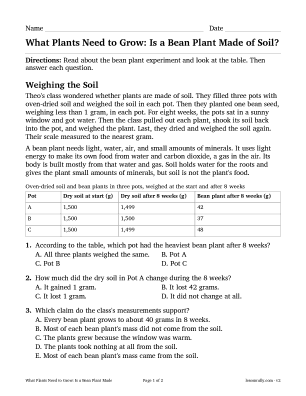
What Plants Need to Grow: Is a Bean Plant Made of Soil? (opens in a new tab)
- Grade 5
- 8 questions
- Estimated reading level 4.7
Common Core RI.5.3
Made by Wes Calloway · LessonRally (AI-assisted)
- ScienceFeatured
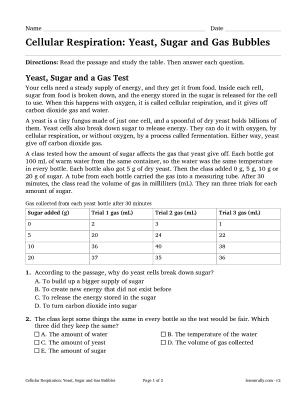
Cellular Respiration: Yeast, Sugar and Gas Bubbles (opens in a new tab)
- Grade 7
- 9 questions
- Estimated reading level 5.5
Common Core RST.6-8.8
Made by Myra Jefferson · LessonRally (AI-assisted)
- ScienceFeatured
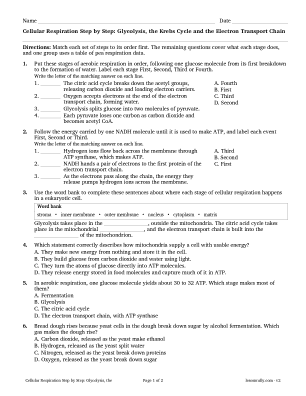
Cellular Respiration Step by Step: Glycolysis, the Krebs Cycle and the Electron Transport Chain (opens in a new tab)
- Grades 9–10
- 10 questions
- Estimated reading level 9.7
Common Core RST.9-10.7
Made by Leah Rosen · LessonRally (AI-assisted)
- Science
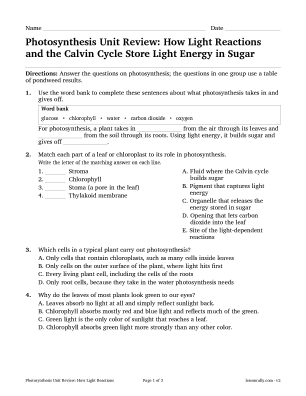
Photosynthesis Unit Review: How Light Reactions and the Calvin Cycle Store Light Energy in Sugar (opens in a new tab)
- Grades 9–10
- 14 questions
- Estimated reading level 8.4
Common Core RST.9-10.7
Made by Leah Rosen · LessonRally (AI-assisted)
- Science
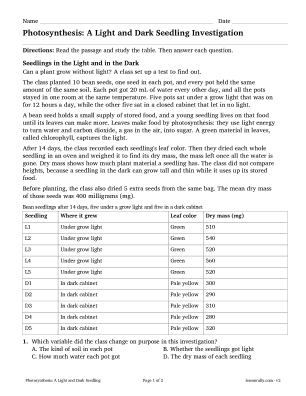
Photosynthesis: A Light and Dark Seedling Investigation (opens in a new tab)
- Grade 7
- 9 questions
- Estimated reading level 6.0
Common Core RST.6-8.7
Made by Myra Jefferson · LessonRally (AI-assisted)
About teaching Photosynthesis and Cellular Respiration
- What students practice
- Listing each process’s inputs and outputs, placing photosynthesis in chloroplasts and most of respiration in mitochondria in plant cells, seeing that each makes the substances the other uses, and reading bromothymol blue, which turns from blue toward yellow as carbon dioxide increases.
- Common mistakes
- Students often think plants photosynthesize while animals respire, but plants respire all the time; have them keep two tubes of bromothymol blue in the dark, one with a water plant, and compare for a shift toward green or yellow. Many think plants are built from soil, though most of their dry mass comes from carbon dioxide.
- Ways to use these activities
- Use one of these activities before a yeast or bromothymol blue lab. In pairs, one student names a substance and the other says whether it goes into or comes out of each process. For an exit ticket, have students trace a carbon atom from the air into sugar and back out.