

Anchor standard · English Language Arts and Literacy · Kindergarten to grade 12
CCRA.R.8
Delineate and evaluate the argument and specific claims in a text, including the validity of the reasoning as well as the relevance and sufficiency of the evidence.
Anchor Standards for Reading · Integration of Knowledge and Ideas
Activities matched to standards under CCRA.R.8
Filter by grade
- English Language ArtsFeatured
Ethos, Pathos and Logos in an Op-Ed: A Later School Start (opens in a new tab)
- Grades 11–12
- 10 questions
- Estimated reading level 10.1
Common Core RI.11-12.8
Made by Julian Corvell · LessonRally (AI-assisted)
- English Language ArtsFeatured
Tracing an Argument: Claims, Evidence and Reasoning (opens in a new tab)
- Grades 11–12
- 8 questions
- Estimated reading level 9.8
Common Core RI.11-12.8
Made by Julian Corvell · LessonRally (AI-assisted)
- ScienceFeatured
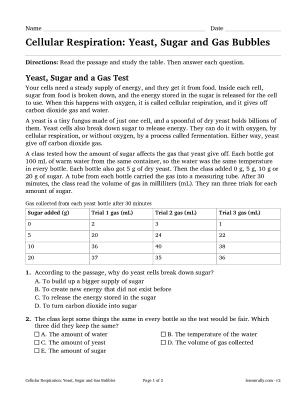
Cellular Respiration: Yeast, Sugar and Gas Bubbles (opens in a new tab)
- Grade 7
- 9 questions
- Estimated reading level 5.5
Common Core RST.6-8.8
Made by Myra Jefferson · LessonRally (AI-assisted)
- English Language ArtsFeatured
An Author's Points, Reasons and Evidence: Should Recess Be Longer? (opens in a new tab)
- Grade 5
- 7 questions
- Estimated reading level 5.0
Common Core RI.5.8
Made by Andre Whitaker · LessonRally (AI-assisted)
- English Language Arts
Logical Fallacies: Spot the Flaw in the Reasoning (opens in a new tab)
- Grades 11–12
- 8 questions
- Estimated reading level 10.1
Common Core RI.11-12.8
Made by Julian Corvell · LessonRally (AI-assisted)
- English Language Arts
Medieval Europe: Feudalism and the Manor (opens in a new tab)
- Grade 7
- 10 questions
- Estimated reading level 7.7
Common Core RH.6-8.8
Made by Owen Brackwell · LessonRally (AI-assisted)
- English Language Arts
An Author's Point, Reasons and Evidence: Why Cities Plant Trees (opens in a new tab)
- Grade 4
- 7 questions
- Estimated reading level 6.7
Common Core RI.4.8
Made by Andre Whitaker · LessonRally (AI-assisted)
Where it fits
Grade standards under this anchor (17)
With prompting and support, identify the reasons an author gives to support points in a text.
Identify the reasons an author gives to support points in a text.
Describe how reasons support specific points the author makes in a text.
Describe the logical connection between particular sentences and paragraphs in a text (e.g., comparison, cause/effect, first/second/third in a sequence).
RI.4.8 1 activity
Explain how an author uses reasons and evidence to support particular points in a text.
RI.5.8 1 activity
Explain how an author uses reasons and evidence to support particular points in a text, identifying which reasons and evidence support which point(s).
Trace and evaluate the argument and specific claims in a text, distinguishing claims that are supported by reasons and evidence from claims that are not.
Trace and evaluate the argument and specific claims in a text, assessing whether the reasoning is sound and the evidence is relevant and sufficient to support the claims.
Delineate and evaluate the argument and specific claims in a text, assessing whether the reasoning is sound and the evidence is relevant and sufficient; recognize when irrelevant evidence is introduced.
Delineate and evaluate the argument and specific claims in a text, assessing whether the reasoning is valid and the evidence is relevant and sufficient; identify false statements and fallacious reasoning.
RI.11-12.8 3 activities
Delineate and evaluate the reasoning in seminal U.S. texts, including the application of constitutional principles and use of legal reasoning (e.g., in U.S. Supreme Court majority opinions and dissents) and the premises, purposes, and arguments in works of public advocacy (e.g., The Federalist, presidential addresses).
RH.6-8.8 1 activity
Distinguish among fact, opinion, and reasoned judgment in a text.
Assess the extent to which the reasoning and evidence in a text support the author's claims.
Evaluate an author's premises, claims, and evidence by corroborating or challenging them with other information.
RST.6-8.8 1 activity
Distinguish among facts, reasoned judgment based on research findings, and speculation in a text.
Assess the extent to which the reasoning and evidence in a text support the author's claim or a recommendation for solving a scientific or technical problem.
Evaluate the hypotheses, data, analysis, and conclusions in a science or technical text, verifying the data when possible and corroborating or challenging conclusions with other sources of information.
Counts updated 24 minutes ago.
How matching works
LessonRally matches each shared activity to the Common Core standards its questions require, using AI after the activity passes review. Every standard shown in Browse was chosen independently by two AI models, or by LessonRally.
© Copyright 2010. National Governors Association Center for Best Practices and Council of Chief State School Officers. All rights reserved.