

Anchor standard · English Language Arts and Literacy · Kindergarten to grade 12
CCRA.R.5
Analyze the structure of texts, including how specific sentences, paragraphs, and larger portions of the text (e.g., a section, chapter, scene, or stanza) relate to each other and the whole.
Anchor Standards for Reading · Craft and Structure
Activities matched to standards under CCRA.R.5
Filter by grade
- English Language ArtsFeatured
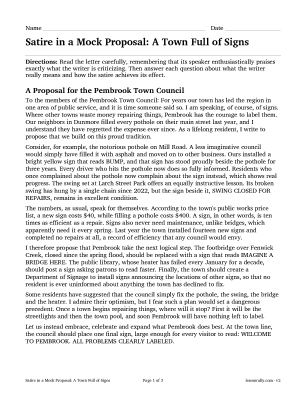
Satire in a Mock Proposal: A Town Full of Signs (opens in a new tab)
- Grades 11–12
- 10 questions
- Estimated reading level 9.7
Common Core RL.11-12.5
Made by Julian Corvell · LessonRally (AI-assisted)
- English Language ArtsFeatured
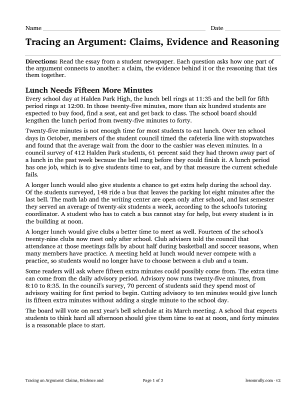
Tracing an Argument: Claims, Evidence and Reasoning (opens in a new tab)
- Grades 11–12
- 8 questions
- Estimated reading level 9.8
Common Core RI.11-12.5
Made by Julian Corvell · LessonRally (AI-assisted)
- Social StudiesFeatured
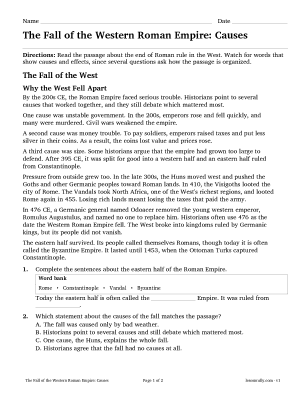
The Fall of the Western Roman Empire: Causes (opens in a new tab)
- Grade 7
- 10 questions
- Estimated reading level 7.7
Common Core RH.6-8.5
Made by Owen Brackwell · LessonRally (AI-assisted)
- English Language ArtsFeatured
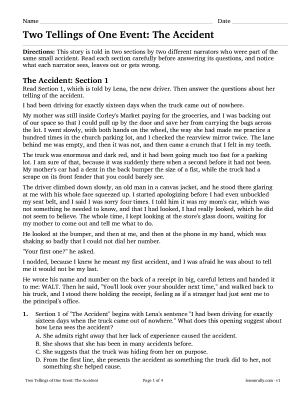
Two Tellings of One Event: The Accident (opens in a new tab)
- Grades 9–10
- 12 questions
- Estimated reading level 7.3
Common Core RL.9-10.5
Made by Eleanor Wrenfield · LessonRally (AI-assisted)
- English Language ArtsFeatured
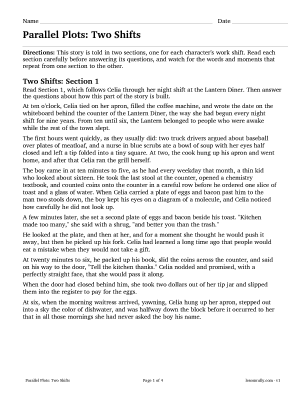
Parallel Plots: Two Shifts (opens in a new tab)
- Grades 9–10
- 12 questions
- Estimated reading level 8.6
Common Core RL.9-10.5
Made by Eleanor Wrenfield · LessonRally (AI-assisted)
- English Language ArtsFeatured
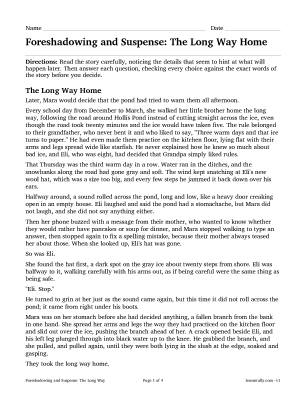
Foreshadowing and Suspense: The Long Way Home (opens in a new tab)
- Grades 9–10
- 10 questions
- Estimated reading level 8.1
Common Core RL.9-10.5
Made by Eleanor Wrenfield · LessonRally (AI-assisted)
- English Language ArtsFeatured
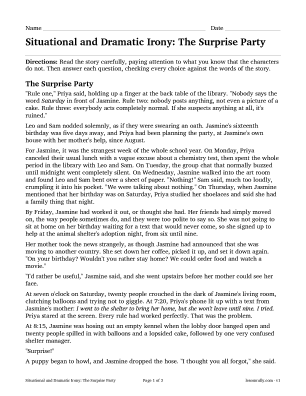
Situational and Dramatic Irony: The Surprise Party (opens in a new tab)
- Grades 9–10
- 10 questions
- Estimated reading level 8.2
Common Core RL.9-10.5
Made by Eleanor Wrenfield · LessonRally (AI-assisted)
- English Language ArtsFeatured
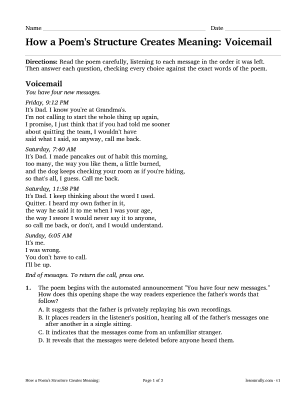
How a Poem's Structure Creates Meaning: Voicemail (opens in a new tab)
- Grades 9–10
- 10 questions
- Estimated reading level 7.3
Common Core RL.9-10.5
Made by Eleanor Wrenfield · LessonRally (AI-assisted)
- English Language ArtsFeatured
Structure and Pacing with Flashback: Ten Minutes Late (opens in a new tab)
- Grades 9–10
- 12 questions
- Estimated reading level 7.3
Common Core RL.9-10.5
Made by Eleanor Wrenfield · LessonRally (AI-assisted)
- Social StudiesFeatured
Northern Industry and Southern Cotton: Two Economies Before the Civil War (opens in a new tab)
- Grade 8
- 10 questions
- Estimated reading level 8.3
Common Core RH.6-8.5
Made by Monica Ellison · LessonRally (AI-assisted)
- Social StudiesFeatured
Thirteen Colonies Review: New England, Middle and Southern Colonies (opens in a new tab)
- Grade 8
- 12 questions
- Estimated reading level 8.9
Common Core RH.6-8.5
Made by Monica Ellison · LessonRally (AI-assisted)
- Social StudiesFeatured
Constitutional Convention: Comparing the Virginia and New Jersey Plans (opens in a new tab)
- Grade 8
- 10 questions
- Estimated reading level 9.5
Common Core RH.6-8.5
Made by Monica Ellison · LessonRally (AI-assisted)
- English Language ArtsFeatured
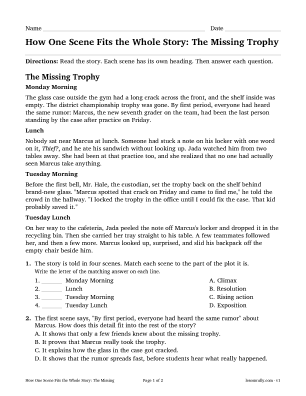
How One Scene Fits the Whole Story: The Missing Trophy (opens in a new tab)
- Grade 6
- 8 questions
- Estimated reading level 6.1
Common Core RL.6.5
Made by Claire Fenwood · LessonRally (AI-assisted)
- English Language ArtsFeatured
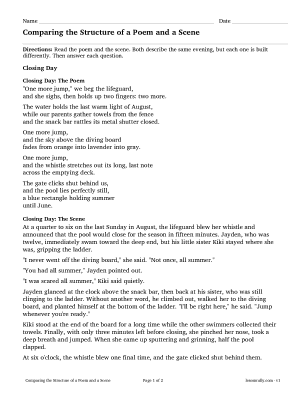
Comparing the Structure of a Poem and a Scene (opens in a new tab)
- Grade 8
- 8 questions
- Estimated reading level 6.5
Common Core RL.8.5
Made by Claire Fenwood · LessonRally (AI-assisted)
- English Language ArtsFeatured
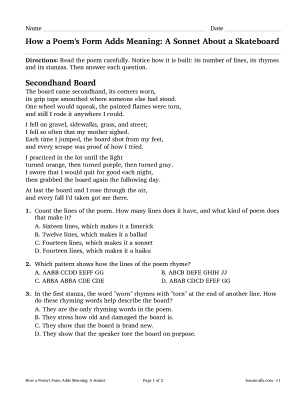
How a Poem's Form Adds Meaning: A Sonnet About a Skateboard (opens in a new tab)
- Grade 7
- 8 questions
- Estimated reading level 5.5
Common Core RL.7.5
Made by Claire Fenwood · LessonRally (AI-assisted)
- English Language ArtsFeatured
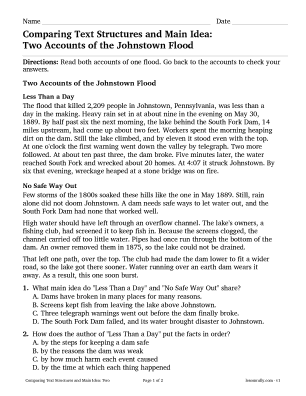
Comparing Text Structures and Main Idea: Two Accounts of the Johnstown Flood (opens in a new tab)
- Grade 5
- 8 questions
- Estimated reading level 5.1
Common Core RI.5.5
Made by Andre Whitaker · LessonRally (AI-assisted)
- English Language ArtsFeatured
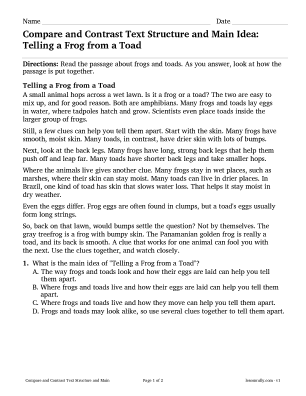
Compare and Contrast Text Structure and Main Idea: Telling a Frog from a Toad (opens in a new tab)
- Grade 4
- 7 questions
- Estimated reading level 4.7
Common Core RI.4.5
Made by Andre Whitaker · LessonRally (AI-assisted)
- English Language Arts
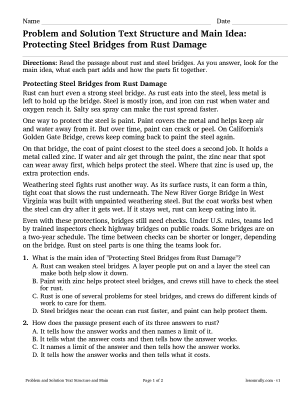
Problem and Solution Text Structure and Main Idea: Protecting Steel Bridges from Rust Damage (opens in a new tab)
- Grade 4
- 7 questions
- Estimated reading level 6.1
Common Core RI.4.5
Made by Andre Whitaker · LessonRally (AI-assisted)
Where it fits
Grade standards under this anchor (28)
Recognize common types of texts (e.g., storybooks, poems).
Explain major differences between books that tell stories and books that give information, drawing on a wide reading of a range of text types.
Describe the overall structure of a story, including describing how the beginning introduces the story and the ending concludes the action.
Refer to parts of stories, dramas, and poems when writing or speaking about a text, using terms such as chapter, scene, and stanza; describe how each successive part builds on earlier sections.
Explain major differences between poems, drama, and prose, and refer to the structural elements of poems (e.g., verse, rhythm, meter) and drama (e.g., casts of characters, settings, descriptions, dialogue, stage directions) when writing or speaking about a text.
Explain how a series of chapters, scenes, or stanzas fits together to provide the overall structure of a particular story, drama, or poem.
RL.6.5 1 activity
Analyze how a particular sentence, chapter, scene, or stanza fits into the overall structure of a text and contributes to the development of the theme, setting, or plot.
RL.7.5 1 activity
Analyze how a drama's or poem's form or structure (e.g., soliloquy, sonnet) contributes to its meaning
RL.8.5 1 activity
Compare and contrast the structure of two or more texts and analyze how the differing structure of each text contributes to its meaning and style.
RL.9-10.5 6 activities
Analyze how an author's choices concerning how to structure a text, order events within it (e.g., parallel plots), and manipulate time (e.g., pacing, flashbacks) create such effects as mystery, tension, or surprise.
RL.11-12.5 1 activity
Analyze how an author's choices concerning how to structure specific parts of a text (e.g., the choice of where to begin or end a story, the choice to provide a comedic or tragic resolution) contribute to its overall structure and meaning as well as its aesthetic impact.
Identify the front cover, back cover, and title page of a book.
Know and use various text features (e.g., headings, tables of contents, glossaries, electronic menus, icons) to locate key facts or information in a text.
Know and use various text features (e.g., captions, bold print, subheadings, glossaries, indexes, electronic menus, icons) to locate key facts or information in a text efficiently.
Use text features and search tools (e.g., key words, sidebars, hyperlinks) to locate information relevant to a given topic efficiently.
RI.4.5 2 activities
Describe the overall structure (e.g., chronology, comparison, cause/effect, problem/solution) of events, ideas, concepts, or information in a text or part of a text.
RI.5.5 1 activity
Compare and contrast the overall structure (e.g., chronology, comparison, cause/effect, problem/solution) of events, ideas, concepts, or information in two or more texts.
Analyze how a particular sentence, paragraph, chapter, or section fits into the overall structure of a text and contributes to the development of the ideas.
Analyze the structure an author uses to organize a text, including how the major sections contribute to the whole and to the development of the ideas.
Analyze in detail the structure of a specific paragraph in a text, including the role of particular sentences in developing and refining a key concept.
Analyze in detail how an author's ideas or claims are developed and refined by particular sentences, paragraphs, or larger portions of a text (e.g., a section or chapter).
RI.11-12.5 1 activity
Analyze and evaluate the effectiveness of the structure an author uses in his or her exposition or argument, including whether the structure makes points clear, convincing, and engaging.
RH.6-8.5 4 activities
Describe how a text presents information (e.g., sequentially, comparatively, causally).
Analyze how a text uses structure to emphasize key points or advance an explanation or analysis.
Analyze in detail how a complex primary source is structured, including how key sentences, paragraphs, and larger portions of the text contribute to the whole.
Analyze the structure an author uses to organize a text, including how the major sections contribute to the whole and to an understanding of the topic.
Analyze the structure of the relationships among concepts in a text, including relationships among key terms (e.g., force, friction, reaction force, energy).
Analyze how the text structures information or ideas into categories or hierarchies, demonstrating understanding of the information or ideas.
Counts updated 24 minutes ago.
How matching works
LessonRally matches each shared activity to the Common Core standards its questions require, using AI after the activity passes review. Every standard shown in Browse was chosen independently by two AI models, or by LessonRally.
© Copyright 2010. National Governors Association Center for Best Practices and Council of Chief State School Officers. All rights reserved.