

Figurative Language
Figurative language says something beyond the literal meaning of the words. Students identify similes, metaphors, personification, hyperbole, idioms and more, then explain what each figure of speech suggests and why the writer chose it.
Topics are chosen by LessonRally.
Filter by grade
- English Language ArtsFeatured
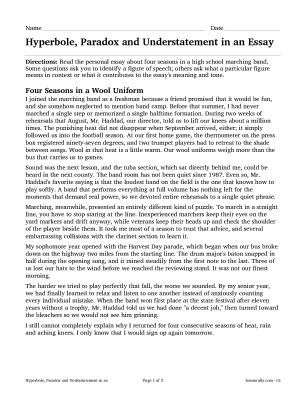
Hyperbole, Paradox and Understatement in an Essay (opens in a new tab)
- Grades 11–12
- 10 questions
- Estimated reading level 10.3
Common Core L.11-12.5a
Made by Julian Corvell · LessonRally (AI-assisted)
- English Language ArtsFeatured
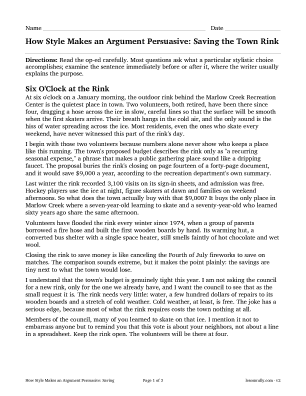
How Style Makes an Argument Persuasive: Saving the Town Rink (opens in a new tab)
- Grades 11–12
- 10 questions
- Estimated reading level 9.1
Common Core RI.11-12.6
Made by Julian Corvell · LessonRally (AI-assisted)
- English Language ArtsFeatured
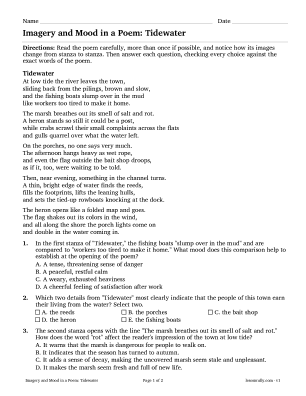
Imagery and Mood in a Poem: Tidewater (opens in a new tab)
- Grades 9–10
- 10 questions
- Estimated reading level 7.7
Common Core RL.9-10.4
Made by Eleanor Wrenfield · LessonRally (AI-assisted)
- English Language ArtsFeatured
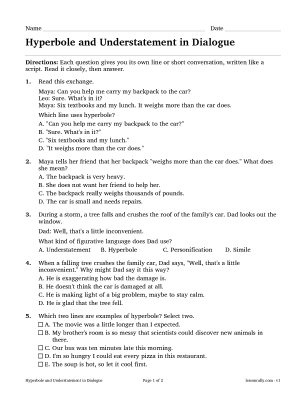
Hyperbole and Understatement in Dialogue (opens in a new tab)
- Grade 7
- 10 questions
- Estimated reading level 5.7
Common Core L.7.5a
Made by Claire Fenwood · LessonRally (AI-assisted)
- English Language ArtsFeatured
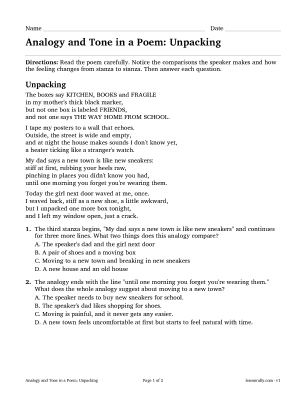
Analogy and Tone in a Poem: Unpacking (opens in a new tab)
- Grade 8
- 8 questions
- Estimated reading level 6.3
Common Core RL.8.4
Made by Claire Fenwood · LessonRally (AI-assisted)
- English Language ArtsFeatured
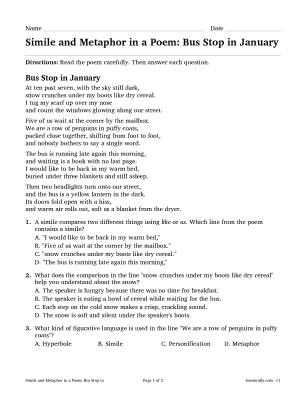
Simile and Metaphor in a Poem: Bus Stop in January (opens in a new tab)
- Grade 6
- 8 questions
- Estimated reading level 5.3
Common Core L.6.5a
Made by Claire Fenwood · LessonRally (AI-assisted)
- English Language Arts
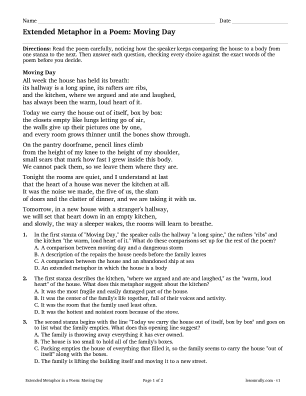
Extended Metaphor in a Poem: Moving Day (opens in a new tab)
- Grades 9–10
- 10 questions
- Estimated reading level 7.6
Common Core RL.9-10.4
Made by Eleanor Wrenfield · LessonRally (AI-assisted)
- English Language Arts
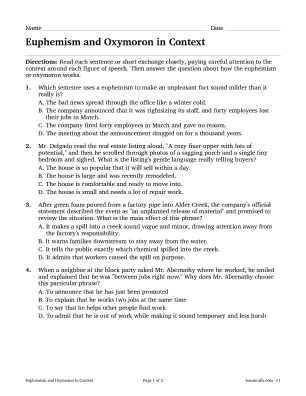
Euphemism and Oxymoron in Context (opens in a new tab)
- Grades 9–10
- 10 questions
- Estimated reading level 8.5
Common Core L.9-10.5a
Made by Eleanor Wrenfield · LessonRally (AI-assisted)
- English Language Arts
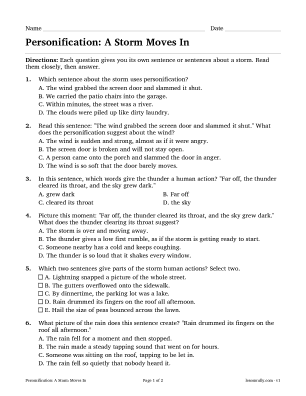
Personification: A Storm Moves In (opens in a new tab)
- Grade 6
- 10 questions
- Estimated reading level 4.9
Common Core L.6.5a
Made by Claire Fenwood · LessonRally (AI-assisted)
About teaching Figurative Language
- What students practice
- Naming the two unlike things a simile or metaphor compares and the quality they share, as in “The hallway was a freezer,” restating an idiom such as “spill the beans” in plain words, spotting deliberate exaggeration, and explaining what each choice adds to the mood.
- Common mistakes
- Students often call any sentence with like or as a simile, but “She is as tall as her brother” is a literal comparison; ask whether it reports a real likeness or asks readers to picture one thing as another. Others stop at naming the figure of speech, so ask what it suggests.
- Ways to use these activities
- Use one of these activities as a warm-up before a poem or a descriptive chapter. In pairs, students find a figure of speech in their reading and explain what it suggests, not just what it is called. Then have them rewrite a plain sentence from their own writing with a simile or metaphor.