

Symbolism, Foreshadowing and Flashback
Students explain how a symbol stands for something beyond itself, how foreshadowing hints at later events, how a flashback fills in the past, what an allusion draws from a well-known story, person or event, and how suspense builds.
Topics are chosen by LessonRally.
Filter by grade
- English Language ArtsFeatured
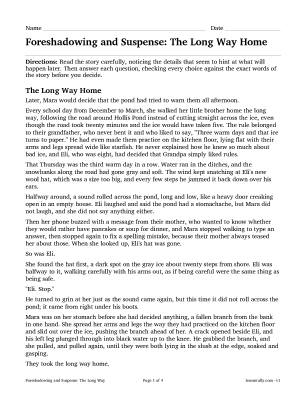
Foreshadowing and Suspense: The Long Way Home (opens in a new tab)
- Grades 9–10
- 10 questions
- Estimated reading level 8.1
Common Core RL.9-10.5
Made by Eleanor Wrenfield · LessonRally (AI-assisted)
- English Language ArtsFeatured
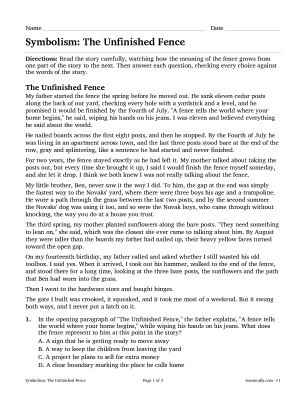
Symbolism: The Unfinished Fence (opens in a new tab)
- Grades 9–10
- 10 questions
- Estimated reading level 7.6
Common Core RL.9-10.4
Made by Eleanor Wrenfield · LessonRally (AI-assisted)
- English Language ArtsFeatured
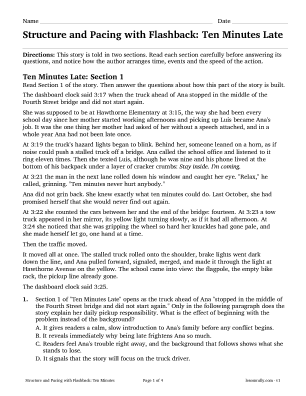
Structure and Pacing with Flashback: Ten Minutes Late (opens in a new tab)
- Grades 9–10
- 12 questions
- Estimated reading level 7.3
Common Core RL.9-10.5
Made by Eleanor Wrenfield · LessonRally (AI-assisted)
- English Language ArtsFeatured
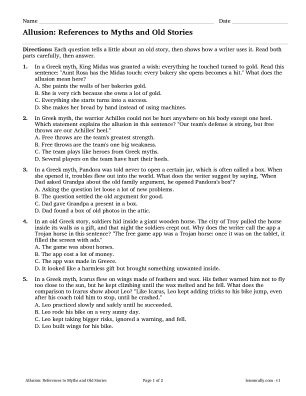
Allusion: References to Myths and Old Stories (opens in a new tab)
- Grade 7
- 10 questions
- Estimated reading level 7.0
Common Core L.7.5a
Made by Claire Fenwood · LessonRally (AI-assisted)
About teaching Symbolism, Foreshadowing and Flashback
- What students practice
- Tracking an object that keeps returning and what it comes to mean, rereading after the ending to find earlier hints, marking where a flashback starts and stops through shifts in tense or time words, and explaining what calling a choice “opening Pandora’s box” suggests.
- Common mistakes
- Students often name a symbol without saying what it stands for, or call anything repeated a symbol; ask what it means beyond itself and which details show that. Many mix up foreshadowing, a hint about events still ahead, with flashback, a scene from before the story’s present.
- Ways to use these activities
- Use one of these activities at the start of a novel, and have students keep a log of objects that return. In pairs, students mark possible hints of what is coming, then check after the ending which ones paid off. In their own stories, have students plant one hint.