

Plot and Setting
Plot is the sequence of events in a story, and setting is when and where it happens. Students trace plots from exposition to resolution, explain what a single scene adds, and show how setting shapes events.
Topics are chosen by LessonRally.
Filter by grade
- English Language ArtsFeatured
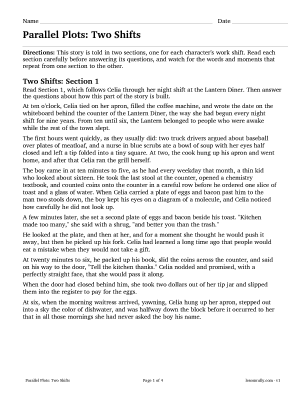
Parallel Plots: Two Shifts (opens in a new tab)
- Grades 9–10
- 12 questions
- Estimated reading level 8.6
Common Core RL.9-10.5
Made by Eleanor Wrenfield · LessonRally (AI-assisted)
- English Language ArtsFeatured
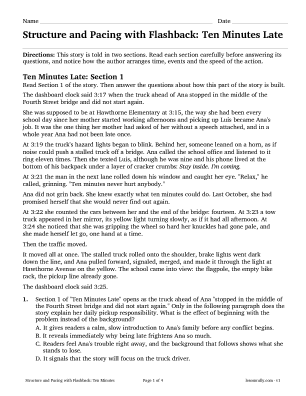
Structure and Pacing with Flashback: Ten Minutes Late (opens in a new tab)
- Grades 9–10
- 12 questions
- Estimated reading level 7.3
Common Core RL.9-10.5
Made by Eleanor Wrenfield · LessonRally (AI-assisted)
- English Language ArtsFeatured
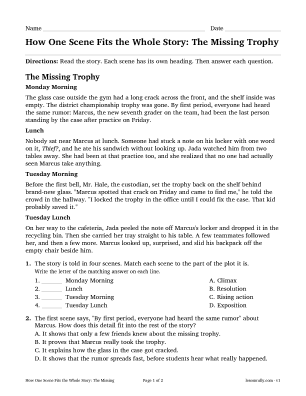
How One Scene Fits the Whole Story: The Missing Trophy (opens in a new tab)
- Grade 6
- 8 questions
- Estimated reading level 6.1
Common Core RL.6.5
Made by Claire Fenwood · LessonRally (AI-assisted)
- English Language ArtsFeatured
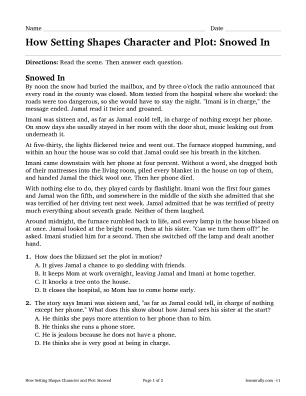
How Setting Shapes Character and Plot: Snowed In (opens in a new tab)
- Grade 7
- 8 questions
- Estimated reading level 6.4
Common Core RL.7.3
Made by Claire Fenwood · LessonRally (AI-assisted)
- English Language ArtsFeatured
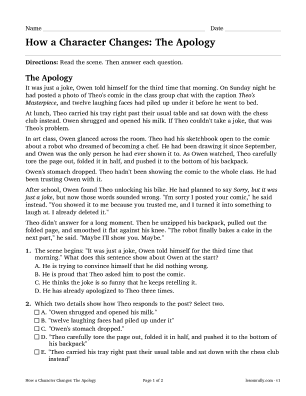
How a Character Changes: The Apology (opens in a new tab)
- Grade 6
- 8 questions
- Estimated reading level 6.1
Common Core RL.6.3
Made by Claire Fenwood · LessonRally (AI-assisted)
About teaching Plot and Setting
- What students practice
- Placing events on a plot diagram, finding the conflict and the turning point where it peaks, linking events with “because” rather than “and then,” and testing a setting by imagining the story somewhere else and listing what would have to change.
- Common mistakes
- Students often pick the most exciting moment as the climax; ask where the conflict peaks and what changes after it. Many treat setting as a place only, so have them name the time, season or era too. Others think a resolution must be happy, when it is simply how the conflict turns out.
- Ways to use these activities
- Use one of these activities before students plan their own stories. In pairs, students place the events of a familiar story on a plot diagram and explain each choice. As a short writing task, have students move one scene to a new setting and revise what must change.