

Characterization
Characterization is how an author shows what a character is like. Students look at what characters say, think and do, how others react to them and what the narrator states directly, then follow how the character develops.
Topics are chosen by LessonRally.
Filter by grade
- English Language ArtsFeatured
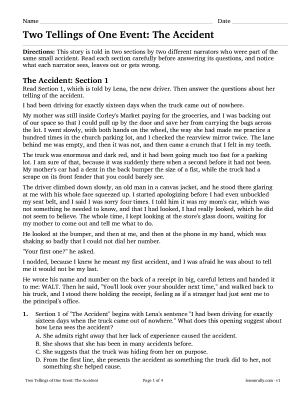
Two Tellings of One Event: The Accident (opens in a new tab)
- Grades 9–10
- 12 questions
- Estimated reading level 7.3
Common Core RL.9-10.5
Made by Eleanor Wrenfield · LessonRally (AI-assisted)
- English Language ArtsFeatured
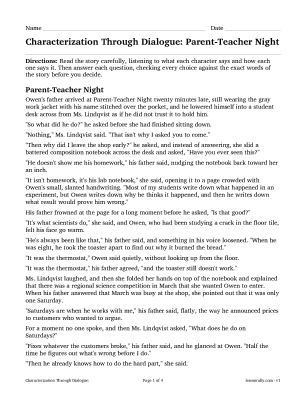
Characterization Through Dialogue: Parent-Teacher Night (opens in a new tab)
- Grades 9–10
- 10 questions
- Estimated reading level 8.3
Common Core RL.9-10.3
Made by Eleanor Wrenfield · LessonRally (AI-assisted)
- English Language ArtsFeatured
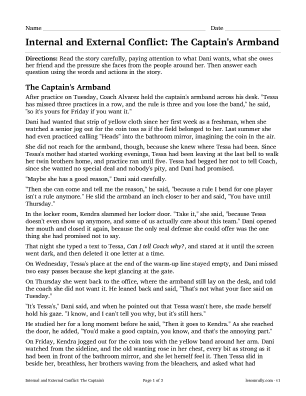
Internal and External Conflict: The Captain's Armband (opens in a new tab)
- Grades 9–10
- 10 questions
- Estimated reading level 8.1
Common Core RL.9-10.3
Made by Eleanor Wrenfield · LessonRally (AI-assisted)
- English Language ArtsFeatured
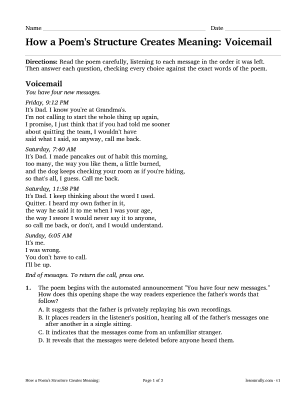
How a Poem's Structure Creates Meaning: Voicemail (opens in a new tab)
- Grades 9–10
- 10 questions
- Estimated reading level 7.3
Common Core RL.9-10.5
Made by Eleanor Wrenfield · LessonRally (AI-assisted)
- English Language ArtsFeatured
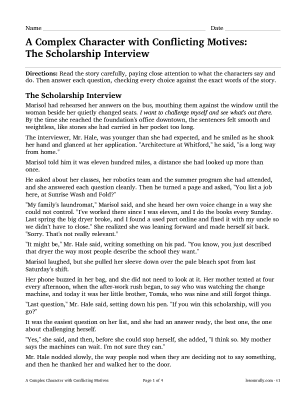
A Complex Character with Conflicting Motives: The Scholarship Interview (opens in a new tab)
- Grades 9–10
- 10 questions
- Estimated reading level 8.8
Common Core RL.9-10.3
Made by Eleanor Wrenfield · LessonRally (AI-assisted)
- English Language ArtsFeatured
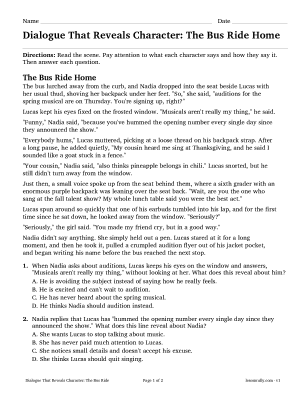
Dialogue That Reveals Character: The Bus Ride Home (opens in a new tab)
- Grade 8
- 8 questions
- Estimated reading level 6.9
Common Core RL.8.3
Made by Claire Fenwood · LessonRally (AI-assisted)
- English Language ArtsFeatured
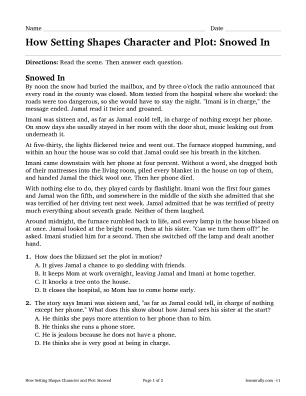
How Setting Shapes Character and Plot: Snowed In (opens in a new tab)
- Grade 7
- 8 questions
- Estimated reading level 6.4
Common Core RL.7.3
Made by Claire Fenwood · LessonRally (AI-assisted)
- English Language ArtsFeatured
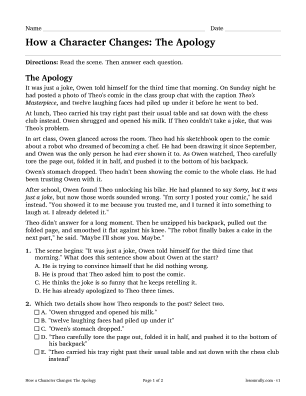
How a Character Changes: The Apology (opens in a new tab)
- Grade 6
- 8 questions
- Estimated reading level 6.1
Common Core RL.6.3
Made by Claire Fenwood · LessonRally (AI-assisted)
- English Language Arts
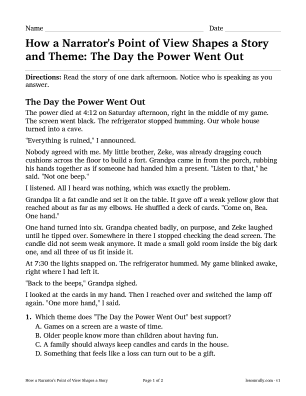
How a Narrator's Point of View Shapes a Story and Theme: The Day the Power Went Out (opens in a new tab)
- Grade 5
- 7 questions
- Estimated reading level 4.8
Common Core RL.5.6
Made by Andre Whitaker · LessonRally (AI-assisted)
- English Language Arts
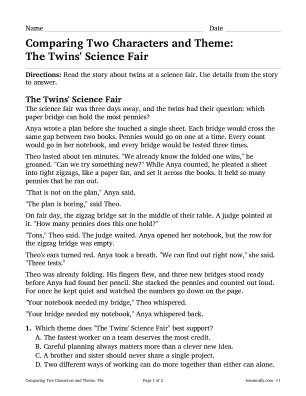
Comparing Two Characters and Theme: The Twins' Science Fair (opens in a new tab)
- Grade 5
- 7 questions
- Estimated reading level 4.8
Common Core RL.5.3
Made by Andre Whitaker · LessonRally (AI-assisted)
- English Language Arts
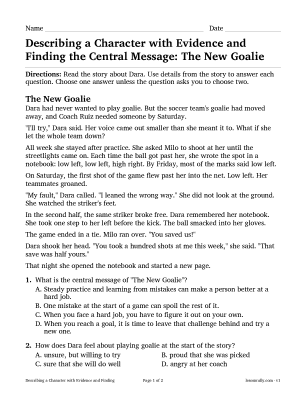
Describing a Character with Evidence and Finding the Central Message: The New Goalie (opens in a new tab)
- Grade 4
- 7 questions
- Estimated reading level 4.0
Common Core RL.4.3
Made by Andre Whitaker · LessonRally (AI-assisted)
About teaching Characterization
- What students practice
- Choosing a precise trait word such as stubborn or generous, backing it with a quotation or an action, telling direct statements from clues the reader must infer, working out what a character wants, and comparing the character at the start and the end.
- Common mistakes
- Students often name a feeling, like angry, when they mean a trait, like hot-tempered; ask whether it describes one moment or how the character usually acts. Others use vague words like nice; a class list of precise trait words helps. Pairing each trait with specific evidence catches traits the text does not show.
- Ways to use these activities
- Open a novel study with one of these activities to set the habit of naming a trait and supporting it. In pairs, students argue for different traits for one character, each citing a line. As an exit ticket, ask for one trait, one quotation and one sentence linking them.