

Summarizing
An objective summary briefly restates the most important ideas or events of a whole text in the reader’s own words. Students choose what matters, keep events in order and leave out opinions and minor details.
Topics are chosen by LessonRally.
Filter by grade
- English Language ArtsFeatured
Central Ideas That Build on One Another (opens in a new tab)
- Grades 11–12
- 9 questions
- Estimated reading level 9.8
Common Core RI.11-12.2
Made by Julian Corvell · LessonRally (AI-assisted)
- English Language ArtsFeatured
Writing an Objective Summary of a Story: The Ferry (opens in a new tab)
- Grades 9–10
- 10 questions
- Estimated reading level 8.6
Common Core RL.9-10.2
Made by Eleanor Wrenfield · LessonRally (AI-assisted)
- English Language ArtsFeatured
Theme and Its Development: The Inheritance (opens in a new tab)
- Grades 9–10
- 10 questions
- Estimated reading level 8.8
Common Core RL.9-10.2
Made by Eleanor Wrenfield · LessonRally (AI-assisted)
- English Language ArtsFeatured
How a Theme Develops Across a Story: Grandpa's Garden (opens in a new tab)
- Grade 7
- 8 questions
- Estimated reading level 8.2
Common Core RL.7.2
Made by Claire Fenwood · LessonRally (AI-assisted)
- English Language ArtsFeatured
Theme vs. Topic in a Short Scene: The Last Tryout (opens in a new tab)
- Grade 6
- 8 questions
- Estimated reading level 6.5
Common Core RL.6.2
Made by Claire Fenwood · LessonRally (AI-assisted)
- English Language ArtsFeatured
Two Main Ideas, Key Details and Summary in an Informational Text: The Honeybee's Year (opens in a new tab)
- Grade 5
- 7 questions
- Estimated reading level 5.7
Common Core RI.5.2
Made by Andre Whitaker · LessonRally (AI-assisted)
- English Language ArtsFeatured
Theme from a Character's Response to a Challenge: The Spelling Bee (opens in a new tab)
- Grade 5
- 7 questions
- Estimated reading level 4.9
Common Core RL.5.2
Made by Andre Whitaker · LessonRally (AI-assisted)
- English Language ArtsFeatured
Summarizing, Main Idea and Key Details in an Informational Text: The Journey of a Recycled Can (opens in a new tab)
- Grade 4
- 7 questions
- Estimated reading level 5.8
Common Core RI.4.2
Made by Andre Whitaker · LessonRally (AI-assisted)
- English Language ArtsFeatured
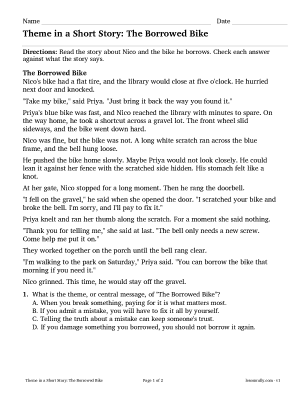
Theme in a Short Story: The Borrowed Bike (opens in a new tab)
- Grade 4
- 7 questions
- Estimated reading level 4.4
Common Core RL.4.2
Made by Andre Whitaker · LessonRally (AI-assisted)
- English Language Arts
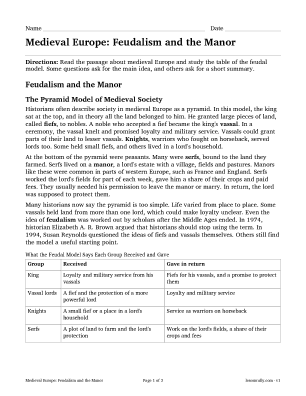
Medieval Europe: Feudalism and the Manor (opens in a new tab)
- Grade 7
- 10 questions
- Estimated reading level 7.7
Common Core RH.6-8.2
Made by Owen Brackwell · LessonRally (AI-assisted)
About teaching Summarizing
- What students practice
- Picking out the most important ideas or events, putting them in order, restating them in their own words, using a frame such as Somebody, Wanted, But, So, Then for stories, and cutting examples, side details and opinion words such as amazing.
- Common mistakes
- Students often retell every detail, so set a limit such as 50 words. Others add opinions, like calling the story exciting; have them underline any word that shows how they feel. Many summarize only the beginning, so check for the outcome or the later main ideas. Have them draft with the text covered, then compare with it for borrowed wording.
- Ways to use these activities
- Start class by having students summarize yesterday’s chapter in three sentences, then use one of these activities to check the skill on a fresh text. In pairs, students trade summaries and cross out anything that is opinion or a minor detail. One-sentence summaries make a quick exit ticket.