

Text Structure
Text structure is how an informational text is organized. Students identify chronology, cause and effect, compare and contrast, and problem and solution, use signal words, and explain how the structure supports the author’s purpose.
Topics are chosen by LessonRally.
Filter by grade
- English Language ArtsFeatured
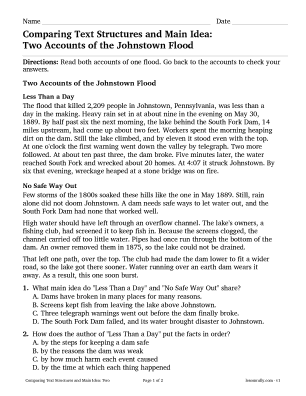
Comparing Text Structures and Main Idea: Two Accounts of the Johnstown Flood (opens in a new tab)
- Grade 5
- 8 questions
- Estimated reading level 5.1
Common Core RI.5.5
Made by Andre Whitaker · LessonRally (AI-assisted)
- English Language ArtsFeatured
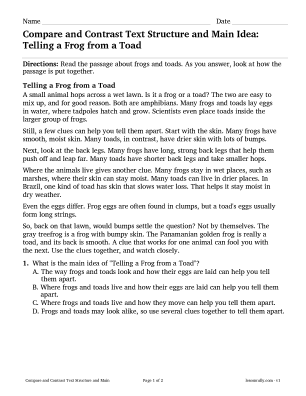
Compare and Contrast Text Structure and Main Idea: Telling a Frog from a Toad (opens in a new tab)
- Grade 4
- 7 questions
- Estimated reading level 4.7
Common Core RI.4.5
Made by Andre Whitaker · LessonRally (AI-assisted)
- English Language ArtsFeatured
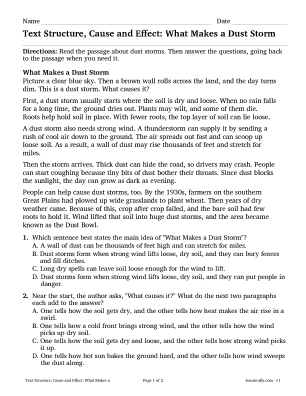
Text Structure, Cause and Effect: What Makes a Dust Storm (opens in a new tab)
- Grade 4
- 8 questions
- Estimated reading level 5.0
Common Core RI.4.1
Made by Andre Whitaker · LessonRally (AI-assisted)
- English Language Arts
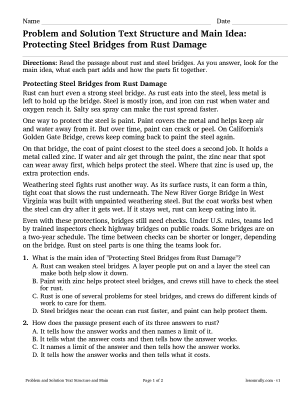
Problem and Solution Text Structure and Main Idea: Protecting Steel Bridges from Rust Damage (opens in a new tab)
- Grade 4
- 7 questions
- Estimated reading level 6.1
Common Core RI.4.5
Made by Andre Whitaker · LessonRally (AI-assisted)
About teaching Text Structure
- What students practice
- Matching signal words to structures, such as “as a result” for cause and effect and “unlike” for compare and contrast, sketching the organizer that fits, such as a timeline or a T-chart, and explaining why the author chose that structure for this topic.
- Common mistakes
- Students often label a whole text from one signal word, such as because; have them check how most paragraphs connect. Many confuse cause and effect with problem and solution, so ask whether the text offers a fix or only explains causes and effects.
- Ways to use these activities
- Use one of these activities before students read an article in science or social studies. In pairs, one student names a structure and the other writes two sentences about a familiar topic, such as lunch, in that structure. For an exit ticket, ask for a text’s structure and one clue that shows it.