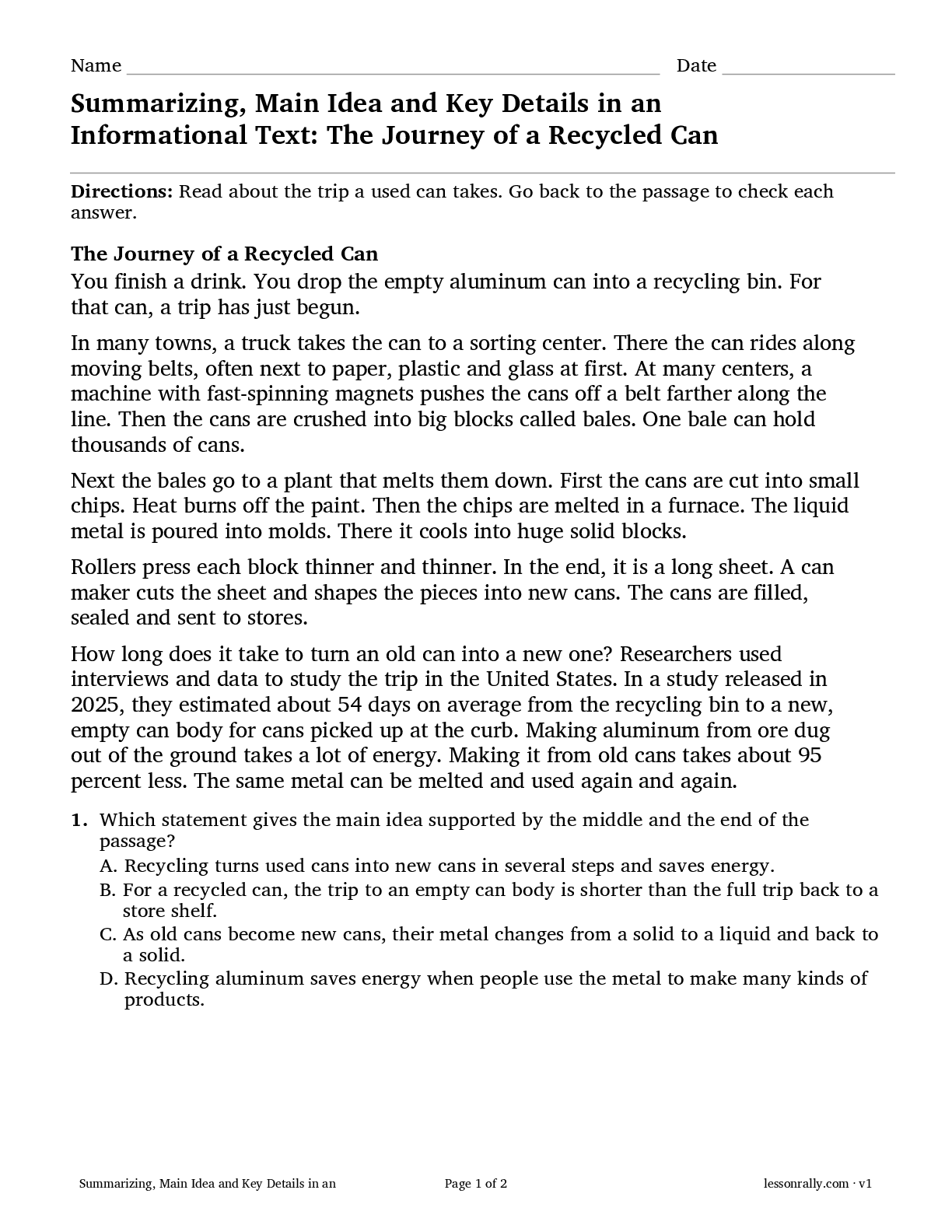
You finish a drink. You drop the empty aluminum can into a recycling bin. For that can, a trip has just begun.
In many towns, a truck takes the can to a sorting center. There the can rides along moving belts, often next to paper, plastic and glass at first. At many centers, a machine with fast-spinning magnets pushes the cans off a belt farther along the line. Then the cans are crushed into big blocks called bales. One bale can hold thousands of cans.
Next the bales go to a plant that melts them down. First the cans are cut into small chips. Heat burns off the paint. Then the chips are melted in a furnace. The liquid metal is poured into molds. There it cools into huge solid blocks.
Rollers press each block thinner and thinner. In the end, it is a long sheet. A can maker cuts the sheet and shapes the pieces into new cans. The cans are filled, sealed and sent to stores.
How long does it take to turn an old can into a new one? Researchers used interviews and data to study the trip in the United States. In a study released in 2025, they estimated about 54 days on average from the recycling bin to a new, empty can body for cans picked up at the curb. Making aluminum from ore dug out of the ground takes a lot of energy. Making it from old cans takes about 95 percent less. The same metal can be melted and used again and again.