

Anchor standard · English Language Arts and Literacy · Kindergarten to grade 12
CCRA.R.1
Read closely to determine what the text says explicitly and to make logical inferences from it; cite specific textual evidence when writing or speaking to support conclusions drawn from the text.
Anchor Standards for Reading · Key Ideas and Details
Activities matched to standards under CCRA.R.1
Filter by grade
- English Language Arts
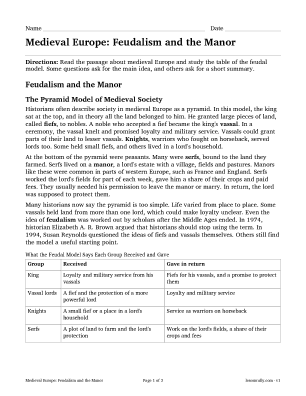
Medieval Europe: Feudalism and the Manor (opens in a new tab)
- Grade 7
- 10 questions
- Estimated reading level 7.7
Common Core RH.6-8.1
Made by Owen Brackwell · LessonRally (AI-assisted)
- Social Studies
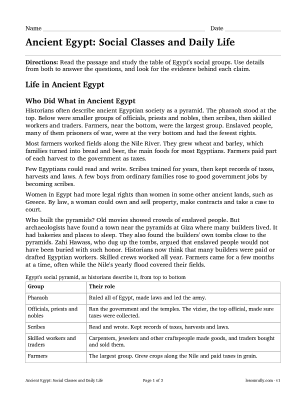
Ancient Egypt: Social Classes and Daily Life (opens in a new tab)
- Grade 6
- 10 questions
- Estimated reading level 8.0
Common Core RH.6-8.1
Made by Owen Brackwell · LessonRally (AI-assisted)
- Social Studies
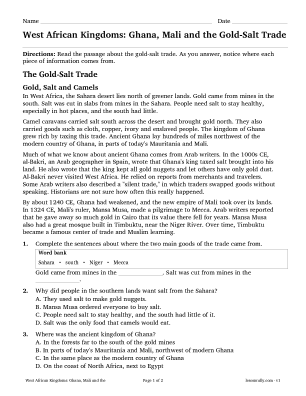
West African Kingdoms: Ghana, Mali and the Gold-Salt Trade (opens in a new tab)
- Grade 7
- 10 questions
- Estimated reading level 7.6
Common Core RH.6-8.1
Made by Owen Brackwell · LessonRally (AI-assisted)
- Social Studies
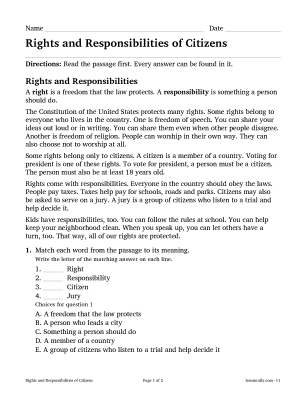
Rights and Responsibilities of Citizens (opens in a new tab)
- Grade 3
- 9 questions
- Estimated reading level 5.3
Common Core RI.3.1
Made by Carmen Valdoria · LessonRally (AI-assisted)
- Social Studies
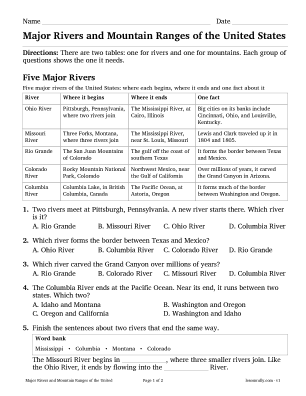
Major Rivers and Mountain Ranges of the United States (opens in a new tab)
- Grade 4
- 9 questions
- Estimated reading level 8.5
Common Core RI.4.1
Made by Carmen Valdoria · LessonRally (AI-assisted)
- Science
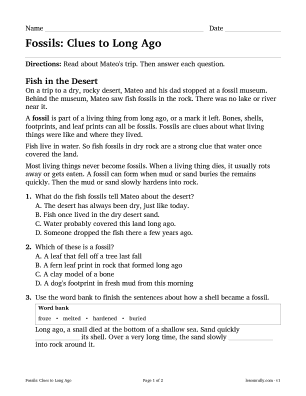
Fossils: Clues to Long Ago (opens in a new tab)
- Grade 3
- 8 questions
- Estimated reading level 4.7
Common Core RI.3.1
Made by Wes Calloway · LessonRally (AI-assisted)
- Social Studies
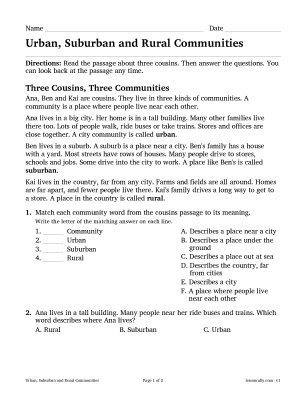
Urban, Suburban and Rural Communities (opens in a new tab)
- Grade 3
- 9 questions
- Estimated reading level 5.2
Common Core RI.3.1
Made by Carmen Valdoria · LessonRally (AI-assisted)
- Science
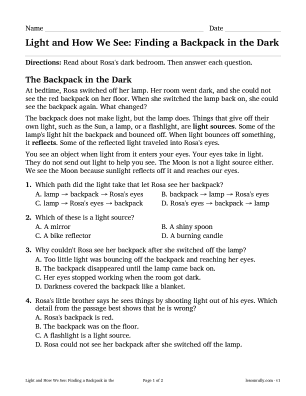
Light and How We See: Finding a Backpack in the Dark (opens in a new tab)
- Grade 4
- 8 questions
- Estimated reading level 5.0
Common Core RI.4.1
Made by Wes Calloway · LessonRally (AI-assisted)
- Science
Animal Senses and Body Structures: How a Barn Owl Hunts (opens in a new tab)
- Grade 4
- 8 questions
- Estimated reading level 4.9
Common Core RI.4.1
Made by Wes Calloway · LessonRally (AI-assisted)
- Science
Energy Transfer: Why a Spoon Gets Hot in Soup (opens in a new tab)
- Grade 4
- 8 questions
- Estimated reading level 4.8
Common Core RI.4.1
Made by Wes Calloway · LessonRally (AI-assisted)
- Social Studies
Local, State and National Government: Who Does What? (opens in a new tab)
- Grade 4
- 9 questions
- Estimated reading level 7.3
Common Core RI.4.1
Made by Carmen Valdoria · LessonRally (AI-assisted)
- English Language Arts
Making Inferences and Main Idea with Text Evidence: A Night at the Fire Station (opens in a new tab)
- Grade 4
- 7 questions
- Estimated reading level 5.1
Common Core RI.4.1
Made by Andre Whitaker · LessonRally (AI-assisted)
- English Language Arts
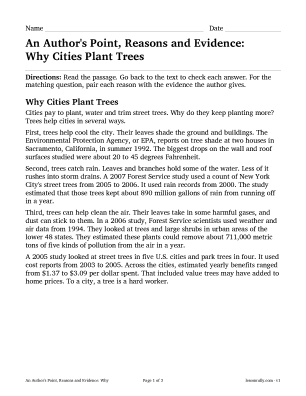
An Author's Point, Reasons and Evidence: Why Cities Plant Trees (opens in a new tab)
- Grade 4
- 7 questions
- Estimated reading level 6.7
Common Core RI.4.1
Made by Andre Whitaker · LessonRally (AI-assisted)
- English Language Arts
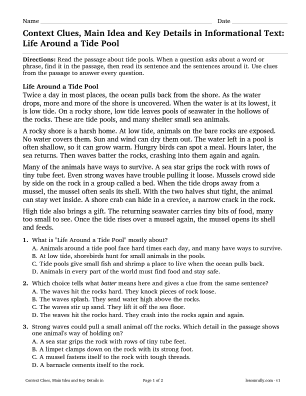
Context Clues, Main Idea and Key Details in Informational Text: Life Around a Tide Pool (opens in a new tab)
- Grade 4
- 7 questions
- Estimated reading level 5.7
Common Core RI.4.1
Made by Andre Whitaker · LessonRally (AI-assisted)
- English Language Arts
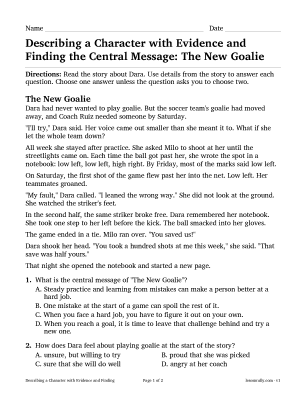
Describing a Character with Evidence and Finding the Central Message: The New Goalie (opens in a new tab)
- Grade 4
- 7 questions
- Estimated reading level 4.0
Common Core RL.4.1
Made by Andre Whitaker · LessonRally (AI-assisted)
Where it fits
Grade standards under this anchor (28)
With prompting and support, ask and answer questions about key details in a text.
Ask and answer questions about key details in a text.
Ask and answer such questions as who, what, where, when, why, and how to demonstrate understanding of key details in a text.
Ask and answer questions to demonstrate understanding of a text, referring explicitly to the text as the basis for the answers.
RL.4.1 3 activities
Refer to details and examples in a text when explaining what the text says explicitly and when drawing inferences from the text.
RL.5.1 1 activity
Quote accurately from a text when explaining what the text says explicitly and when drawing inferences from the text.
RL.6.1 2 activities
Cite textual evidence to support analysis of what the text says explicitly as well as inferences drawn from the text.
Cite several pieces of textual evidence to support analysis of what the text says explicitly as well as inferences drawn from the text.
Cite the textual evidence that most strongly supports an analysis of what the text says explicitly as well as inferences drawn from the text.
RL.9-10.1 2 activities
Cite strong and thorough textual evidence to support analysis of what the text says explicitly as well as inferences drawn from the text.
Cite strong and thorough textual evidence to support analysis of what the text says explicitly as well as inferences drawn from the text, including determining where the text leaves matters uncertain.
With prompting and support, ask and answer questions about key details in a text.
Ask and answer questions about key details in a text.
Ask and answer such questions as who, what, where, when, why, and how to demonstrate understanding of key details in a text.
RI.3.1 6 activities
Ask and answer questions to demonstrate understanding of a text, referring explicitly to the text as the basis for the answers.
RI.4.1 14 activities
Refer to details and examples in a text when explaining what the text says explicitly and when drawing inferences from the text.
RI.5.1 1 activity
Quote accurately from a text when explaining what the text says explicitly and when drawing inferences from the text.
Cite textual evidence to support analysis of what the text says explicitly as well as inferences drawn from the text.
Cite several pieces of textual evidence to support analysis of what the text says explicitly as well as inferences drawn from the text.
Cite the textual evidence that most strongly supports an analysis of what the text says explicitly as well as inferences drawn from the text.
Cite strong and thorough textual evidence to support analysis of what the text says explicitly as well as inferences drawn from the text.
RI.11-12.1 1 activity
Cite strong and thorough textual evidence to support analysis of what the text says explicitly as well as inferences drawn from the text, including determining where the text leaves matters uncertain.
RH.6-8.1 8 activities
Cite specific textual evidence to support analysis of primary and secondary sources.
Cite specific textual evidence to support analysis of primary and secondary sources, attending to such features as the date and origin of the information.
Cite specific textual evidence to support analysis of primary and secondary sources, connecting insights gained from specific details to an understanding of the text as a whole.
RST.6-8.1 1 activity
Cite specific textual evidence to support analysis of science and technical texts.
Cite specific textual evidence to support analysis of science and technical texts, attending to the precise details of explanations or descriptions.
Cite specific textual evidence to support analysis of science and technical texts, attending to important distinctions the author makes and to any gaps or inconsistencies in the account.
Counts updated less than a minute ago.
How matching works
LessonRally matches each shared activity to the Common Core standards its questions require, using AI after the activity passes review. Every standard shown in Browse was chosen independently by two AI models, or by LessonRally.
© Copyright 2010. National Governors Association Center for Best Practices and Council of Chief State School Officers. All rights reserved.