Making Inferences and Main Idea with Text Evidence: A Night at the Fire Station

7 questions · 7 points · Grade 4 · English · Preview the 7 questions

Made by Andre Whitaker · LessonRally (AI-assisted)

Digital classroom activity

What is a digital classroom activity?

Teachers who sign in can assign LessonRally activities to their Google Classroom classes: students open them in Classroom and answer online, and their grades go to the teacher's Classroom gradebook. Practice lets you try it first, the way students see it.

Free for teachers. Sign in to assign activities to your Google Classroom classes.

Printable worksheet

Students read about a 24-hour shift at a fire station. They choose the main idea and a supporting detail, make inferences about meals and sleep, pick details that support two ideas, find two stated details about a night call, and use U.S. call figures to choose a practice that fits the most common calls. Grade 4 reading comprehension practice on inferences and text evidence.

Learning goal: Make inferences from an informational passage and refer to details in the text that support them.

Estimated reading level 5.1

  1. Grade 3Hard
  2. Grade 4Stretch
  3. Grade 5On level
  4. Grade 6Easier
  5. Grade 7Easy
About this estimate

The estimate is the middle score of five readability formulas. Their scores run from 3.0 to 5.8.

  • Flesch-Kincaid GradeSentence length and syllables per word3.0
  • Gunning FogSentence length and words of three or more syllables5.2
  • Coleman-Liau Middle scoreLetters per word and sentences per 100 words5.1
  • Automated Readability IndexCharacters per word and words per sentence3.0
  • SMOGWords of three or more syllables, for texts of 30 sentences or more5.8
Flesch Reading Ease
92.9 on a 0 to 100 scale where higher is easier: very easy. Not part of the estimate.
Text measured
745 words, 38 sentences

Adapted from common readability formulas (Flesch-Kincaid, Gunning Fog, Coleman-Liau and ARI, plus SMOG for long texts), which look at sentence length and word length. Answer choices count toward word length only. Grades below the estimate will likely find the text harder, grades above it easier. It does not measure ideas, background knowledge or images.

Common Core

Closest anchor: CCRA.R.1 Read closely to determine what the text says explicitly and to make logical inferences from it; cite specific textual evidence when writing or speaking to support conclusions drawn from the text.Anchor Standards for ReadingShow 2 matched standardsHide matched standards

Matched standards

  • RI.4.1

    Refer to details and examples in a text when explaining what the text says explicitly and when drawing inferences from the text.

    Student preview questions 2, 3, 4, 5, 7

  • RI.4.2

    Determine the main idea of a text and explain how it is supported by key details; summarize the text.

    Student preview question 1

Matched independently by two AI models from this activity's questions.

© Copyright 2010. National Governors Association Center for Best Practices and Council of Chief State School Officers. All rights reserved.

Topics: Main Idea and Key Details, Citing Text Evidence, Making Inferences Chosen by LessonRally

Question types: multiple choice, select all that apply.

Student preview

The questions as students see them, without the answers.

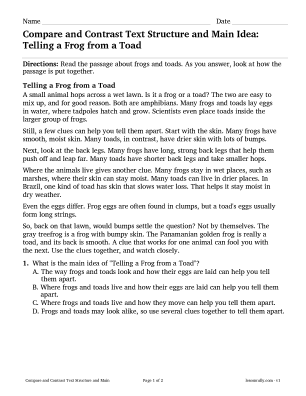
Read the passage about a shift at a fire station. Go back to it to find the details that answer each question.

A Night at the Fire Station

At many fire stations, a crew is on duty for 24 hours in a row. It eats and sleeps at the station. A shift might go like this.

At the start of the shift, the crew checks its gear, tools and truck. Later the crew may train, clean the station and cook. At some stations, each member chips in money for food. Then one member cooks for the whole crew.

Each firefighter's gear waits beside the truck, set up ahead of time. The boots stand inside the legs of the pants, and the pants are pushed down around them.

Then a call comes in the night. The overhead lights switch on. A buzzer sounds. A voice tells what is wrong and gives the address. For a fire call, some departments aim to have the truck moving within 80 seconds of the alert.

In 2020, U.S. fire departments answered an estimated 36 million calls. About two in three were for medical help or rescue. On those calls, crews may give first aid or get someone out of danger. About eight in every hundred were false alarms, and about four in every hundred were for fires.

Back at the station, the work may not be over. There may be gear to clean or a report to write. Then the crew can go back to bed. On a busy night, the buzzer may sound again and again.

In the morning, a new crew takes over. The first crew goes home. Some of its members may need to catch up on sleep.

Question 1

Which choice gives the main idea of "A Night at the Fire Station" and a detail that supports it?

Choose one answer.

  • A fire crew has a routine for getting ready at the start of a shift. At the start of the shift, the crew checks its gear, tools and truck.
  • A fire crew works together to take care of its station during a shift. The crew may clean the station.
  • A fire crew spends a long shift at the station and stays ready for emergencies. At the start of the shift, the crew checks its gear, tools and truck.
  • A fire crew has to be ready to leave quickly for a fire. Some departments aim to get the truck moving within 80 seconds of being called out.
Question 2

What can you infer about the meal that some fire crews share?

Choose one answer.

  • The crew buys the food for its shared meal.
  • A hired cook makes the shared meal.
  • The city gives the crew all the food for free.
  • The firefighters bring all the food from home without sharing the cost.

Question 3

A crew sets up its gear so that it can dress fast. Which detail in the passage backs this up?

Choose one answer.

  • The coats hang on a gear rack.
  • The boots sit in the bottom spaces of a gear rack.
  • The gloves are kept in coat pockets.
  • The boots stand inside the legs of the pants.

Question 4

Before the crew gets the details of the night call, what happens inside the station? Select two.

Choose 2 answers.

  • A bell rings twice.
  • A siren starts on the truck.
  • A buzzer sounds.
  • The overhead lights switch on.
  • The doors swing open.

Question 5

The crew can head to the right place with an idea of how to help. How does the passage show the crew learning both things?

Choose one answer.

  • A text message tells the crew what help is needed and where to go.
  • A voice tells what is wrong and gives the address.
  • A printed slip at the station lists the problem and the street.
  • A screen in the truck shows the kind of trouble and a map.

Question 6

Which practice would help with the most common kind of call in the 2020 U.S. figures? Choose the practice and the fraction the passage gives for that kind of call.

Choose one answer.

  • Checking reports that turn out to be false alarms. About eight in every hundred calls.
  • Putting out fires. About four in ten calls.
  • Giving first aid and helping people get to safety. About four in five calls.
  • Giving first aid and helping people get to safety. About two in three calls.

Question 7

Why might some crew members need extra sleep after the shift you read about?

Choose one answer.

  • Cleaning up after a late meal
  • Getting up early to prepare for the new crew
  • Finishing a practice drill late at night
  • Doing more work between night calls

Reviews

No reviews yet.

Reviews come from teachers who assigned this activity to a class.

Sign in to write a review

Have a topic of your own? Make a printable worksheet and online quiz, free.

Create an activity

Answer key

Answer keys come with Premium

Print this worksheet with the correct answers marked. The key includes any explanations, sample answers, and rubrics supplied with the activity.

Answer keys aren't public: only teachers with Premium and the people who can edit an activity can download one, so students can't get a ready-to-print key from this page.

Premium includes:

  • No ads for you, and no ads for your students on the assignments you post.
  • Answer keys for printable worksheets, with the correct answers marked and any explanations, sample answers, and rubrics.
  • Create with AI: up to 100 activities a year (5 during the free trial), with every answer checked before you see the draft.

$29 a year, plus sales tax where it applies.

New Premium teachers can try it free for 7 days. A card or other payment method is needed to start. Unless you cancel before the trial ends, you are charged then and the plan renews every year.

Already have Premium or edit this activity? Sign in