

Human Body Systems
The body’s systems depend on one another. Students trace food through the digestive system, follow oxygen from lungs to cells, link heart rate to exercise, and explain how feedback keeps body temperature near a set point.
Topics are chosen by LessonRally.
Filter by grade
- ScienceFeatured
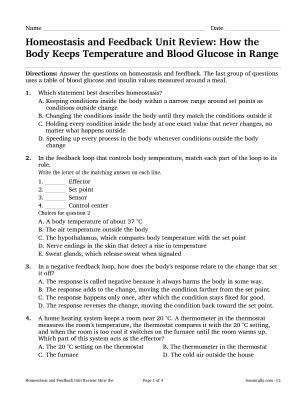
Homeostasis and Feedback Unit Review: How the Body Keeps Temperature and Blood Glucose in Range (opens in a new tab)
- Grades 9–10
- 14 questions
- Estimated reading level 9.2
Common Core RST.9-10.7
Made by Leah Rosen · LessonRally (AI-assisted)
- ScienceFeatured
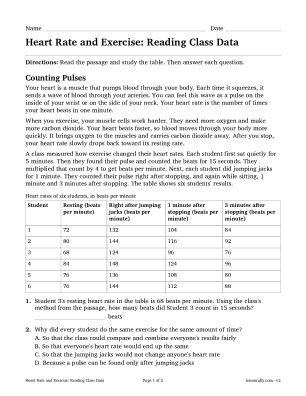
Heart Rate and Exercise: Reading Class Data (opens in a new tab)
- Grade 7
- 9 questions
- Estimated reading level 6.2
Made by Myra Jefferson · LessonRally (AI-assisted)
- ScienceFeatured
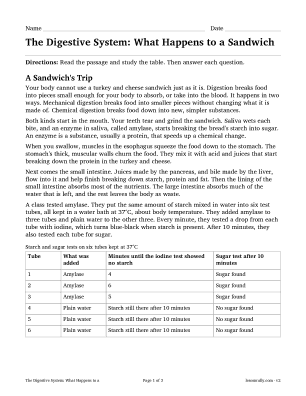
The Digestive System: What Happens to a Sandwich (opens in a new tab)
- Grade 7
- 10 questions
- Estimated reading level 8.3
Common Core RST.6-8.7
Made by Myra Jefferson · LessonRally (AI-assisted)
- ScienceFeatured
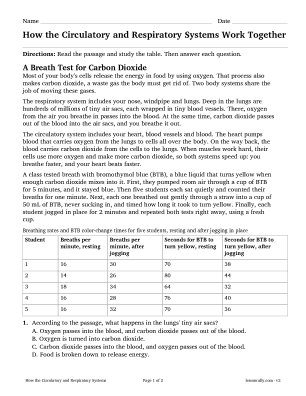
How the Circulatory and Respiratory Systems Work Together (opens in a new tab)
- Grade 7
- 9 questions
- Estimated reading level 7.0
Made by Myra Jefferson · LessonRally (AI-assisted)
About teaching Human Body Systems
- What students practice
- Telling mechanical digestion, such as chewing, from chemical digestion, such as enzymes in saliva breaking down starch, following blood from the heart to the lungs and back, and explaining sweating and shivering as negative feedback.
- Common mistakes
- Students often credit the stomach with most digestion, but most chemical digestion and nearly all absorption happen in the small intestine. Many believe blood in veins is blue; blood is always red, darker when low in oxygen, and veins only look blue through skin. Others think exhaled air is all carbon dioxide, but it is mostly nitrogen, with some oxygen.
- Ways to use these activities
- Use one of these activities before students take their pulse at rest and after a minute of exercise. In pairs, one student names an organ from a class list and the other gives its system and one job. For an exit ticket, have students trace oxygen from the air to a muscle cell.