

English Language Arts and Literacy
Grade 7 ELA
Open a standard to see the worksheets and online quizzes matched to it.
Grade 7 ELA activities
- ScienceFeatured
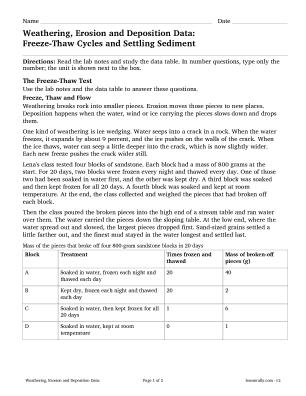
Weathering, Erosion and Deposition Data: Freeze-Thaw Cycles and Settling Sediment (opens in a new tab)
- Grades 6–7
- 8 questions
- Estimated reading level 6.1
Common Core RST.6-8.7
Made by Theo Nakamura · LessonRally (AI-assisted)
- English Language ArtsFeatured
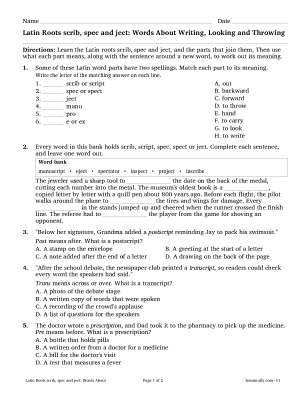
Latin Roots scrib, spec and ject: Words About Writing, Looking and Throwing (opens in a new tab)
- Grade 7
- 12 questions
- Estimated reading level 6.4
Common Core L.7.4b
Made by Simone Thornbury · LessonRally (AI-assisted)
- Social StudiesFeatured
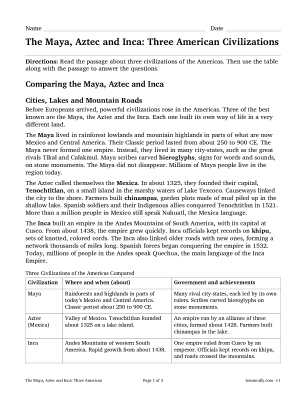
The Maya, Aztec and Inca: Three American Civilizations (opens in a new tab)
- Grade 7
- 10 questions
- Estimated reading level 7.8
Common Core RH.6-8.7
Made by Owen Brackwell · LessonRally (AI-assisted)
Counts updated 14 minutes ago.
Reading: Literature
Cite several pieces of textual evidence to support analysis of what the text says explicitly as well as inferences drawn from the text.
RL.7.2 1 activity
Determine a theme or central idea of a text and analyze its development over the course of the text; provide an objective summary of the text.
RL.7.3 1 activity
Analyze how particular elements of a story or drama interact (e.g., how setting shapes the characters or plot).
RL.7.4 2 activities
Determine the meaning of words and phrases as they are used in a text, including figurative and connotative meanings; analyze the impact of rhymes and other repetitions of sounds (e.g., alliteration) on a specific verse or stanza of a poem or section of a story or drama.
RL.7.5 1 activity
Analyze how a drama's or poem's form or structure (e.g., soliloquy, sonnet) contributes to its meaning
RL.7.6 1 activity
Analyze how an author develops and contrasts the points of view of different characters or narrators in a text.
Compare and contrast a written story, drama, or poem to its audio, filmed, staged, or multimedia version, analyzing the effects of techniques unique to each medium (e.g., lighting, sound, color, or camera focus and angles in a film).
Compare and contrast a fictional portrayal of a time, place, or character and a historical account of the same period as a means of understanding how authors of fiction use or alter history.
By the end of the year, read and comprehend literature, including stories, dramas, and poems, in the grades 6-8 text complexity band proficiently, with scaffolding as needed at the high end of the range.
Reading: Informational Text
Cite several pieces of textual evidence to support analysis of what the text says explicitly as well as inferences drawn from the text.
RI.7.2 1 activity
Determine two or more central ideas in a text and analyze their development over the course of the text; provide an objective summary of the text.
Analyze the interactions between individuals, events, and ideas in a text (e.g., how ideas influence individuals or events, or how individuals influence ideas or events).
Determine the meaning of words and phrases as they are used in a text, including figurative, connotative, and technical meanings; analyze the impact of a specific word choice on meaning and tone.
Analyze the structure an author uses to organize a text, including how the major sections contribute to the whole and to the development of the ideas.
Determine an author's point of view or purpose in a text and analyze how the author distinguishes his or her position from that of others.
Compare and contrast a text to an audio, video, or multimedia version of the text, analyzing each medium's portrayal of the subject (e.g., how the delivery of a speech affects the impact of the words).
Trace and evaluate the argument and specific claims in a text, assessing whether the reasoning is sound and the evidence is relevant and sufficient to support the claims.
Analyze how two or more authors writing about the same topic shape their presentations of key information by emphasizing different evidence or advancing different interpretations of facts.
By the end of the year, read and comprehend literary nonfiction in the grades 6-8 text complexity band proficiently, with scaffolding as needed at the high end of the range.
Writing
Show 10 standards in Writing
Write arguments to support claims with clear reasons and relevant evidence.
Parts of W.7.1 (5)
- W.7.1a Introduce claim(s), acknowledge alternate or opposing claims, and organize the reasons and evidence logically.
- W.7.1b Support claim(s) with logical reasoning and relevant evidence, using accurate, credible sources and demonstrating an understanding of the topic or text.
- W.7.1c Use words, phrases, and clauses to create cohesion and clarify the relationships among claim(s), reasons, and evidence.
- W.7.1d Establish and maintain a formal style.
- W.7.1e Provide a concluding statement or section that follows from and supports the argument presented.
Write informative/explanatory texts to examine a topic and convey ideas, concepts, and information through the selection, organization, and analysis of relevant content.
Parts of W.7.2 (6)
- W.7.2a Introduce a topic clearly, previewing what is to follow; organize ideas, concepts, and information, using strategies such as definition, classification, comparison/contrast, and cause/effect; include formatting (e.g., headings), graphics (e.g., charts, tables), and multimedia when useful to aiding comprehension.
- W.7.2b Develop the topic with relevant facts, definitions, concrete details, quotations, or other information and examples.
- W.7.2c Use appropriate transitions to create cohesion and clarify the relationships among ideas and concepts.
- W.7.2d Use precise language and domain-specific vocabulary to inform about or explain the topic.
- W.7.2e Establish and maintain a formal style.
- W.7.2f Provide a concluding statement or section that follows from and supports the information or explanation presented.
Write narratives to develop real or imagined experiences or events using effective technique, relevant descriptive details, and well-structured event sequences.
Parts of W.7.3 (5)
- W.7.3a Engage and orient the reader by establishing a context and point of view and introducing a narrator and/or characters; organize an event sequence that unfolds naturally and logically.
- W.7.3b Use narrative techniques, such as dialogue, pacing, and description, to develop experiences, events, and/or characters.
- W.7.3c Use a variety of transition words, phrases, and clauses to convey sequence and signal shifts from one time frame or setting to another.
- W.7.3d Use precise words and phrases, relevant descriptive details, and sensory language to capture the action and convey experiences and events.
- W.7.3e Provide a conclusion that follows from and reflects on the narrated experiences or events.
Produce clear and coherent writing in which the development, organization, and style are appropriate to task, purpose, and audience. (Grade-specific expectations for writing types are defined in standards 1-3 above.)
With some guidance and support from peers and adults, develop and strengthen writing as needed by planning, revising, editing, rewriting, or trying a new approach, focusing on how well purpose and audience have been addressed. (Editing for conventions should demonstrate command of Language standards 1-3 up to and including grade 7 here.)
Use technology, including the Internet, to produce and publish writing and link to and cite sources as well as to interact and collaborate with others, including linking to and citing sources.
Conduct short research projects to answer a question, drawing on several sources and generating additional related, focused questions for further research and investigation.
Gather relevant information from multiple print and digital sources, using search terms effectively; assess the credibility and accuracy of each source; and quote or paraphrase the data and conclusions of others while avoiding plagiarism and following a standard format for citation.
Draw evidence from literary or informational texts to support analysis, reflection, and research.
Parts of W.7.9 (2)
- W.7.9a Apply grade 7 Reading standards to literature (e.g., "Compare and contrast a fictional portrayal of a time, place, or character and a historical account of the same period as a means of understanding how authors of fiction use or alter history").
- W.7.9b Apply grade 7 Reading standards to literary nonfiction (e.g. "Trace and evaluate the argument and specific claims in a text, assessing whether the reasoning is sound and the evidence is relevant and sufficient to support the claims").
Write routinely over extended time frames (time for research, reflection, and revision) and shorter time frames (a single sitting or a day or two) for a range of discipline-specific tasks, purposes, and audiences.
Speaking and Listening
Show 6 standards in Speaking and Listening
Engage effectively in a range of collaborative discussions (one-on-one, in groups, and teacher-led) with diverse partners on grade 7 topics, texts, and issues, building on others' ideas and expressing their own clearly.
Parts of SL.7.1 (4)
- SL.7.1a Come to discussions prepared, having read or researched material under study; explicitly draw on that preparation by referring to evidence on the topic, text, or issue to probe and reflect on ideas under discussion.
- SL.7.1b Follow rules for collegial discussions, track progress toward specific goals and deadlines, and define individual roles as needed.
- SL.7.1c Pose questions that elicit elaboration and respond to others' questions and comments with relevant observations and ideas that bring the discussion back on topic as needed.
- SL.7.1d Acknowledge new information expressed by others and, when warranted, modify their own views.
Analyze the main ideas and supporting details presented in diverse media and formats (e.g., visually, quantitatively, orally) and explain how the ideas clarify a topic, text, or issue under study.
Delineate a speaker's argument and specific claims, evaluating the soundness of the reasoning and the relevance and sufficiency of the evidence.
Present claims and findings, emphasizing salient points in a focused, coherent manner with pertinent descriptions, facts, details, and examples; use appropriate eye contact, adequate volume, and clear pronunciation.
Include multimedia components and visual displays in presentations to clarify claims and findings and emphasize salient points.
Adapt speech to a variety of contexts and tasks, demonstrating command of formal English when indicated or appropriate. (See grade 7 Language standards 1 and 3 here for specific expectations.)
Language
Demonstrate command of the conventions of standard English grammar and usage when writing or speaking.
Parts of L.7.1 (3)
- L.7.1a Explain the function of phrases and clauses in general and their function in specific sentences.
- L.7.1b Choose among simple, compound, complex, and compound-complex sentences to signal differing relationships among ideas.
- L.7.1c Place phrases and clauses within a sentence, recognizing and correcting misplaced and dangling modifiers.
L.7.2 1 activity
Demonstrate command of the conventions of standard English capitalization, punctuation, and spelling when writing.
Use knowledge of language and its conventions when writing, speaking, reading, or listening.
Parts of L.7.3 (1)
- L.7.3a Choose language that expresses ideas precisely and concisely, recognizing and eliminating wordiness and redundancy.
L.7.4 5 activities
Determine or clarify the meaning of unknown and multiple-meaning words and phrases based on grade 7 reading and content, choosing flexibly from a range of strategies.
L.7.4a, 4 activities L.7.4b, 4 activities
Parts of L.7.4 (4)
- L.7.4a Use context (e.g., the overall meaning of a sentence or paragraph; a word's position or function in a sentence) as a clue to the meaning of a word or phrase.
- L.7.4b Use common, grade-appropriate Greek or Latin affixes and roots as clues to the meaning of a word (e.g., belligerent, bellicose, rebel).
- L.7.4c Consult general and specialized reference materials (e.g., dictionaries, glossaries, thesauruses), both print and digital, to find the pronunciation of a word or determine or clarify its precise meaning or its part of speech.
- L.7.4d Verify the preliminary determination of the meaning of a word or phrase (e.g., by checking the inferred meaning in context or in a dictionary).
L.7.5 5 activities
Demonstrate understanding of figurative language, word relationships, and nuances in word meanings.
L.7.5a, 2 activities L.7.5b, 2 activities L.7.5c, 1 activity
Parts of L.7.5 (3)
- L.7.5a Interpret figures of speech (e.g., literary, biblical, and mythological allusions) in context.
- L.7.5b Use the relationship between particular words (e.g., synonym/antonym, analogy) to better understand each of the words.
- L.7.5c Distinguish among the connotations (associations) of words with similar denotations (definitions) (e.g., refined, respectful, polite, diplomatic, condescending).
Acquire and use accurately grade-appropriate general academic and domain-specific words and phrases; gather vocabulary knowledge when considering a word or phrase important to comprehension or expression.
Reading: History/Social Studies
RH.6-8.1 8 activities in grades 6 to 8
Cite specific textual evidence to support analysis of primary and secondary sources.
RH.6-8.2 5 activities in grades 6 to 8
Determine the central ideas or information of a primary or secondary source; provide an accurate summary of the source distinct from prior knowledge or opinions.
Identify key steps in a text's description of a process related to history/social studies (e.g., how a bill becomes law, how interest rates are raised or lowered).
RH.6-8.4 6 activities in grades 6 to 8
Determine the meaning of words and phrases as they are used in a text, including vocabulary specific to domains related to history/social studies.
RH.6-8.5 4 activities in grades 6 to 8
Describe how a text presents information (e.g., sequentially, comparatively, causally).
Identify aspects of a text that reveal an author's point of view or purpose (e.g., loaded language, inclusion or avoidance of particular facts).
RH.6-8.7 4 activities in grades 6 to 8
Integrate visual information (e.g., in charts, graphs, photographs, videos, or maps) with other information in print and digital texts.
RH.6-8.8 1 activity in grades 6 to 8
Distinguish among fact, opinion, and reasoned judgment in a text.
Analyze the relationship between a primary and secondary source on the same topic.
By the end of grade 8, read and comprehend history/social studies texts in the grades 6-8 text complexity band independently and proficiently.
Reading: Science and Technical Subjects
RST.6-8.1 1 activity in grades 6 to 8
Cite specific textual evidence to support analysis of science and technical texts.
Determine the central ideas or conclusions of a text; provide an accurate summary of the text distinct from prior knowledge or opinions.
RST.6-8.3 1 activity in grades 6 to 8
Follow precisely a multistep procedure when carrying out experiments, taking measurements, or performing technical tasks.
RST.6-8.4 7 activities in grades 6 to 8
Determine the meaning of symbols, key terms, and other domain-specific words and phrases as they are used in a specific scientific or technical context relevant to grades 6-8 texts and topics.
Analyze the structure an author uses to organize a text, including how the major sections contribute to the whole and to an understanding of the topic.
Analyze the author's purpose in providing an explanation, describing a procedure, or discussing an experiment in a text.
RST.6-8.7 12 activities in grades 6 to 8
Integrate quantitative or technical information expressed in words in a text with a version of that information expressed visually (e.g., in a flowchart, diagram, model, graph, or table).
RST.6-8.8 1 activity in grades 6 to 8
Distinguish among facts, reasoned judgment based on research findings, and speculation in a text.
Compare and contrast the information gained from experiments, simulations, video, or multimedia sources with that gained from reading a text on the same topic.
By the end of grade 8, read and comprehend science/technical texts in the grades 6-8 text complexity band independently and proficiently.
Writing: History/Social Studies, Science, and Technical Subjects
Show 9 standards in Writing: History/Social Studies, Science, and Technical Subjects
Write arguments focused on discipline-specific content.
Parts of WHST.6-8.1 (5)
- WHST.6-8.1a Introduce claim(s) about a topic or issue, acknowledge and distinguish the claim(s) from alternate or opposing claims, and organize the reasons and evidence logically.
- WHST.6-8.1b Support claim(s) with logical reasoning and relevant, accurate data and evidence that demonstrate an understanding of the topic or text, using credible sources.
- WHST.6-8.1c Use words, phrases, and clauses to create cohesion and clarify the relationships among claim(s), counterclaims, reasons, and evidence.
- WHST.6-8.1d Establish and maintain a formal style.
- WHST.6-8.1e Provide a concluding statement or section that follows from and supports the argument presented.
Write informative/explanatory texts, including the narration of historical events, scientific procedures/ experiments, or technical processes.
Parts of WHST.6-8.2 (6)
- WHST.6-8.2a Introduce a topic clearly, previewing what is to follow; organize ideas, concepts, and information into broader categories as appropriate to achieving purpose; include formatting (e.g., headings), graphics (e.g., charts, tables), and multimedia when useful to aiding comprehension.
- WHST.6-8.2b Develop the topic with relevant, well-chosen facts, definitions, concrete details, quotations, or other information and examples.
- WHST.6-8.2c Use appropriate and varied transitions to create cohesion and clarify the relationships among ideas and concepts.
- WHST.6-8.2d Use precise language and domain-specific vocabulary to inform about or explain the topic.
- WHST.6-8.2e Establish and maintain a formal style and objective tone.
- WHST.6-8.2f Provide a concluding statement or section that follows from and supports the information or explanation presented.
Produce clear and coherent writing in which the development, organization, and style are appropriate to task, purpose, and audience.
With some guidance and support from peers and adults, develop and strengthen writing as needed by planning, revising, editing, rewriting, or trying a new approach, focusing on how well purpose and audience have been addressed.
Use technology, including the Internet, to produce and publish writing and present the relationships between information and ideas clearly and efficiently.
Conduct short research projects to answer a question (including a self-generated question), drawing on several sources and generating additional related, focused questions that allow for multiple avenues of exploration.
Gather relevant information from multiple print and digital sources, using search terms effectively; assess the credibility and accuracy of each source; and quote or paraphrase the data and conclusions of others while avoiding plagiarism and following a standard format for citation.
Draw evidence from informational texts to support analysis, reflection, and research.
Write routinely over extended time frames (time for reflection and revision) and shorter time frames (a single sitting or a day or two) for a range of discipline-specific tasks, purposes, and audiences.
How matching works
LessonRally matches each shared activity to the Common Core standards its questions require, using AI after the activity passes review. Every standard shown in Browse was chosen independently by two AI models, or by LessonRally.
© Copyright 2010. National Governors Association Center for Best Practices and Council of Chief State School Officers. All rights reserved.
Don't see the standard you need?
Build it yourself or start from your AI chat. Your draft stays private until you publish it.