

Author's Claims and Evidence
A claim is the point an author wants readers to accept. Students find the claim, the reasons given for it and the evidence behind each reason, then decide whether that support would convince a careful reader.
Topics are chosen by LessonRally.
Filter by grade
- English Language ArtsFeatured
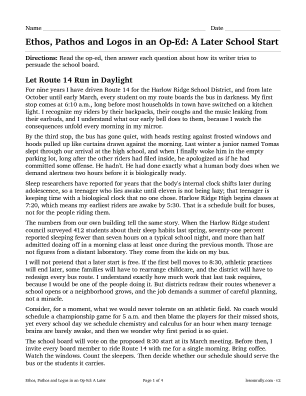
Ethos, Pathos and Logos in an Op-Ed: A Later School Start (opens in a new tab)
- Grades 11–12
- 10 questions
- Estimated reading level 10.1
Common Core RI.11-12.6
Made by Julian Corvell · LessonRally (AI-assisted)
- English Language ArtsFeatured
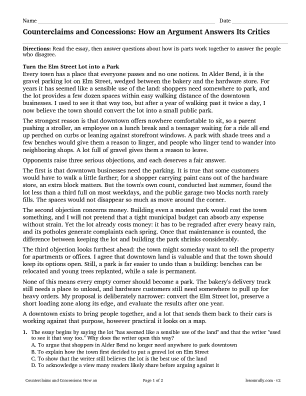
Counterclaims and Concessions: How an Argument Answers Its Critics (opens in a new tab)
- Grades 11–12
- 8 questions
- Estimated reading level 9.7
Made by Julian Corvell · LessonRally (AI-assisted)
- English Language ArtsFeatured
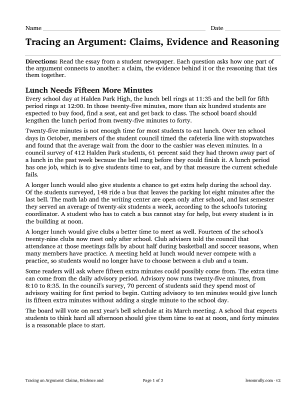
Tracing an Argument: Claims, Evidence and Reasoning (opens in a new tab)
- Grades 11–12
- 8 questions
- Estimated reading level 9.8
Common Core RI.11-12.5
Made by Julian Corvell · LessonRally (AI-assisted)
- English Language ArtsFeatured
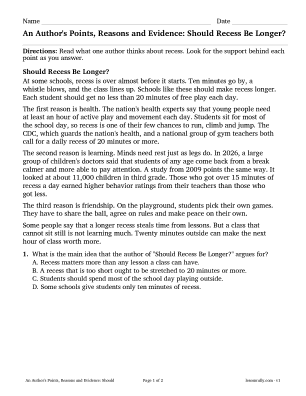
An Author's Points, Reasons and Evidence: Should Recess Be Longer? (opens in a new tab)
- Grade 5
- 7 questions
- Estimated reading level 5.0
Common Core RI.5.8
Made by Andre Whitaker · LessonRally (AI-assisted)
- English Language Arts
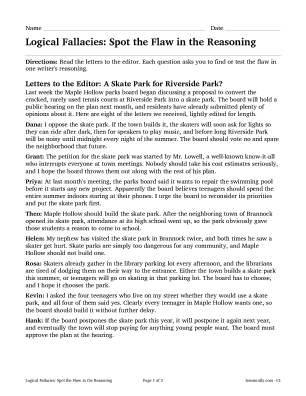
Logical Fallacies: Spot the Flaw in the Reasoning (opens in a new tab)
- Grades 11–12
- 8 questions
- Estimated reading level 10.1
Common Core RI.11-12.8
Made by Julian Corvell · LessonRally (AI-assisted)
- English Language Arts
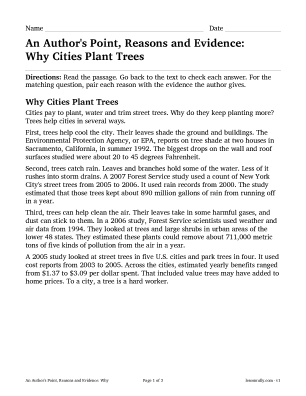
An Author's Point, Reasons and Evidence: Why Cities Plant Trees (opens in a new tab)
- Grade 4
- 7 questions
- Estimated reading level 6.7
Common Core RI.4.8
Made by Andre Whitaker · LessonRally (AI-assisted)
About teaching Author's Claims and Evidence
- What students practice
- Stating the claim in one sentence, finding each reason (why the claim should be accepted) and the evidence behind it, such as facts, examples, data or expert statements, and checking whether that evidence really supports the reason.
- Common mistakes
- Students often give the topic, such as school uniforms, rather than the claim, which takes a side. Others name a view the author raises only to argue against it; ask whether the author agrees. Many rate an argument by whether they agree with it; have them weigh the evidence for a claim they reject.
- Ways to use these activities
- Use one of these activities before students write their own argument. In pairs, one student reads a reason aloud and the other finds its evidence or says there is none. For an exit ticket, have students state an author's claim in their own words and name one reason the author gives for it.