Question 1
What does scarce mean in the paragraph?
Choose one answer.
- In short supply
- Cool and gentle
- Falling all at once
- Easy to find


Teachers who sign in can assign LessonRally activities to their Google Classroom classes: students open them in Classroom and answer online, and their grades go to the teacher's Classroom gradebook. Practice lets you try it first, the way students see it.
Free for teachers. Sign in to assign activities to your Google Classroom classes.
 (opens in a new tab)
2 pages · Student copy, no answers
Print worksheet (opens in a new tab)Answer keyPremiumStudents read a short science paragraph about how the saguaro cactus and desert wildflowers survive in the Sonoran Desert. They use context clues from nearby sentences to work out the meanings of words such as scarce, conserve, dormant, fleeting and thrive, and they find the sentence that holds a clue. A grade 7 context clues set built on one science passage.
Learning goal: Use context clues from the sentences around an unfamiliar word in a science paragraph to determine its meaning.
The estimate is the middle score of five readability formulas. Their scores run from 5.2 to 8.8.
Adapted from common readability formulas (Flesch-Kincaid, Gunning Fog, Coleman-Liau and ARI, plus SMOG for long texts), which look at sentence length and word length. Answer choices count toward word length only. Grades below the estimate will likely find the text harder, grades above it easier. It does not measure ideas, background knowledge or images.
Use context (e.g., the overall meaning of a sentence or paragraph; a word's position or function in a sentence) as a clue to the meaning of a word or phrase.
Use the relationship between particular words (e.g., synonym/antonym, analogy) to better understand each of the words.
Matched independently by two AI models from this activity's questions.
© Copyright 2010. National Governors Association Center for Best Practices and Council of Chief State School Officers. All rights reserved.
Topic: Context Clues Chosen by LessonRally
Question types: multiple choice.
The questions as students see them, without the answers.
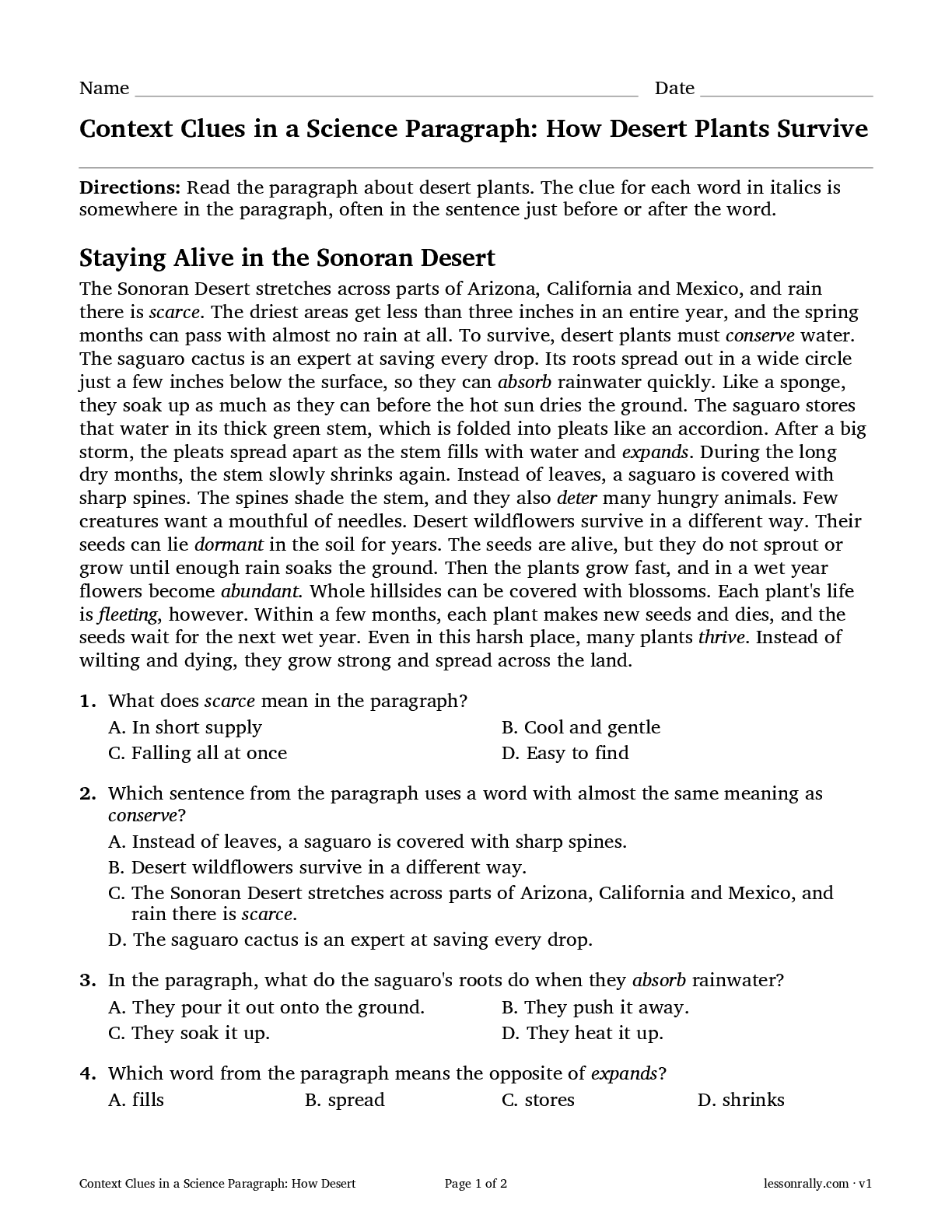
Read the paragraph about desert plants. The clue for each word in italics is somewhere in the paragraph, often in the sentence just before or after the word.
The Sonoran Desert stretches across parts of Arizona, California and Mexico, and rain there is scarce. The driest areas get less than three inches in an entire year, and the spring months can pass with almost no rain at all. To survive, desert plants must conserve water. The saguaro cactus is an expert at saving every drop. Its roots spread out in a wide circle just a few inches below the surface, so they can absorb rainwater quickly. Like a sponge, they soak up as much as they can before the hot sun dries the ground. The saguaro stores that water in its thick green stem, which is folded into pleats like an accordion. After a big storm, the pleats spread apart as the stem fills with water and expands. During the long dry months, the stem slowly shrinks again. Instead of leaves, a saguaro is covered with sharp spines. The spines shade the stem, and they also deter many hungry animals. Few creatures want a mouthful of needles. Desert wildflowers survive in a different way. Their seeds can lie dormant in the soil for years. The seeds are alive, but they do not sprout or grow until enough rain soaks the ground. Then the plants grow fast, and in a wet year flowers become abundant. Whole hillsides can be covered with blossoms. Each plant's life is fleeting, however. Within a few months, each plant makes new seeds and dies, and the seeds wait for the next wet year. Even in this harsh place, many plants thrive. Instead of wilting and dying, they grow strong and spread across the land.
What does scarce mean in the paragraph?
Choose one answer.
Which sentence from the paragraph uses a word with almost the same meaning as conserve?
Choose one answer.
In the paragraph, what do the saguaro's roots do when they absorb rainwater?
Choose one answer.
Which word from the paragraph means the opposite of expands?
Choose one answer.
What do the spines do when they deter hungry animals?
Choose one answer.
What does dormant mean in the paragraph?
Choose one answer.
In a wet year, the paragraph says, flowers become abundant. What does abundant mean?
Choose one answer.
What does fleeting tell you about each wildflower's life?
Choose one answer.
Which meaning of thrive fits the paragraph?
Choose one answer.
No reviews yet.
Reviews come from teachers who assigned this activity to a class.
Have a topic of your own? Make a printable worksheet and online quiz, free.
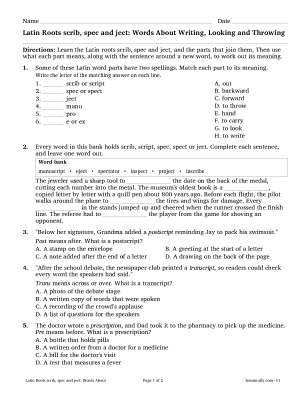
Create an activityCommon Core L.7.4b
Made by Simone Thornbury · LessonRally (AI-assisted)
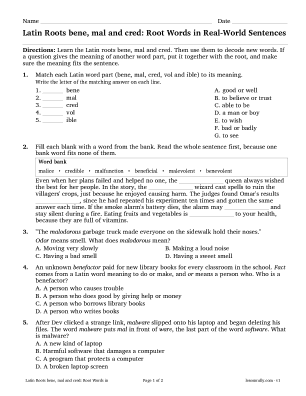
Common Core L.7.4b
Made by Simone Thornbury · LessonRally (AI-assisted)
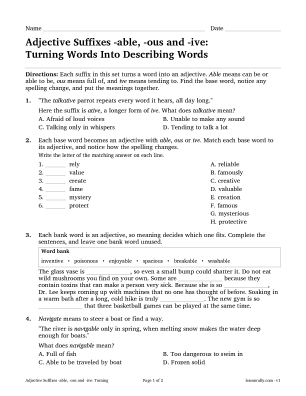
Common Core L.7.4a
Made by Simone Thornbury · LessonRally (AI-assisted)
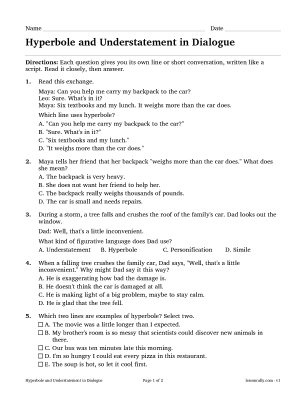
Common Core L.7.5a
Made by Claire Fenwood · LessonRally (AI-assisted)