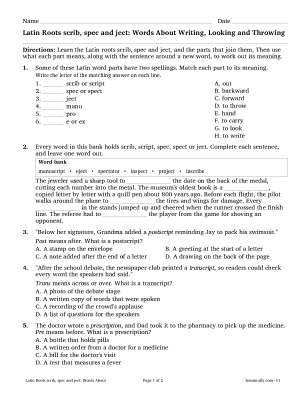
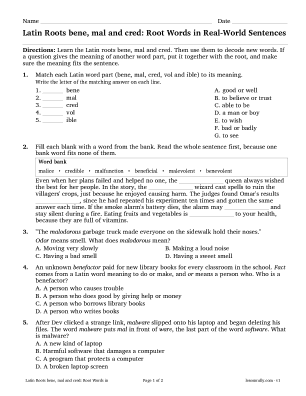
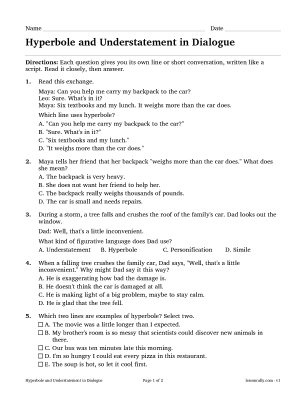
Made by Simone Thornbury · LessonRally (AI-assisted)
Digital classroom activity
What is a digital classroom activity?
Teachers who sign in can assign LessonRally activities to their Google Classroom classes: students open them in Classroom and answer online, and their grades go to the teacher's Classroom gradebook. Practice lets you try it first, the way students see it.
Students learn how the suffixes -able (can be), -ous (full of) and -ive (tending to) turn base words into adjectives. They match base words to adjectives and notice spelling changes, choose adjectives that fit sentences by meaning, and work out the meanings of new adjectives in context. A grade 7 suffix set on adjective suffixes.
Learning goal: Use the suffixes -able, -ous and -ive to form adjectives, notice spelling changes, and determine the meanings of unfamiliar adjectives.
Estimated reading level6.5
Grade 4Hard
Grade 5Stretch
Grade 6On level
Grade 7Easier
Grade 8Easy
About this estimate
The estimate is halfway between the two middle scores of four readability formulas. Their scores run from 5.0 to 7.8.
Flesch-Kincaid Grade Middle scoreSentence length and syllables per word5.3
Gunning FogSentence length and words of three or more syllables7.8
Coleman-Liau Middle scoreLetters per word and sentences per 100 words7.7
Automated Readability IndexCharacters per word and words per sentence5.0
Grade 181216
Flesch Reading Ease
75.9 on a 0 to 100 scale where higher is easier: fairly easy. Not part of the estimate.
Text measured
463 words, 29 sentences
Adapted from common readability formulas (Flesch-Kincaid, Gunning Fog, Coleman-Liau and ARI, plus SMOG for long texts), which look at sentence length and word length. Answer choices count toward word length only. Grades below the estimate will likely find the text harder, grades above it easier. It does not measure ideas, background knowledge or images.
Common Core
Press Ctrl+C or Command+C to copy.
Closest anchor:CCRA.L.4Determine or clarify the meaning of unknown and multiple-meaning words and phrases by using context clues, analyzing meaningful word parts, and consulting general and specialized reference materials, as appropriate.Anchor Standards for LanguageShow 3 matched standardsHide matched standards
Use context (e.g., the overall meaning of a sentence or paragraph; a word's position or function in a sentence) as a clue to the meaning of a word or phrase.
Question types: multiple choice, matching, fill in the blank.
Student preview
The questions as students see them, without the answers.
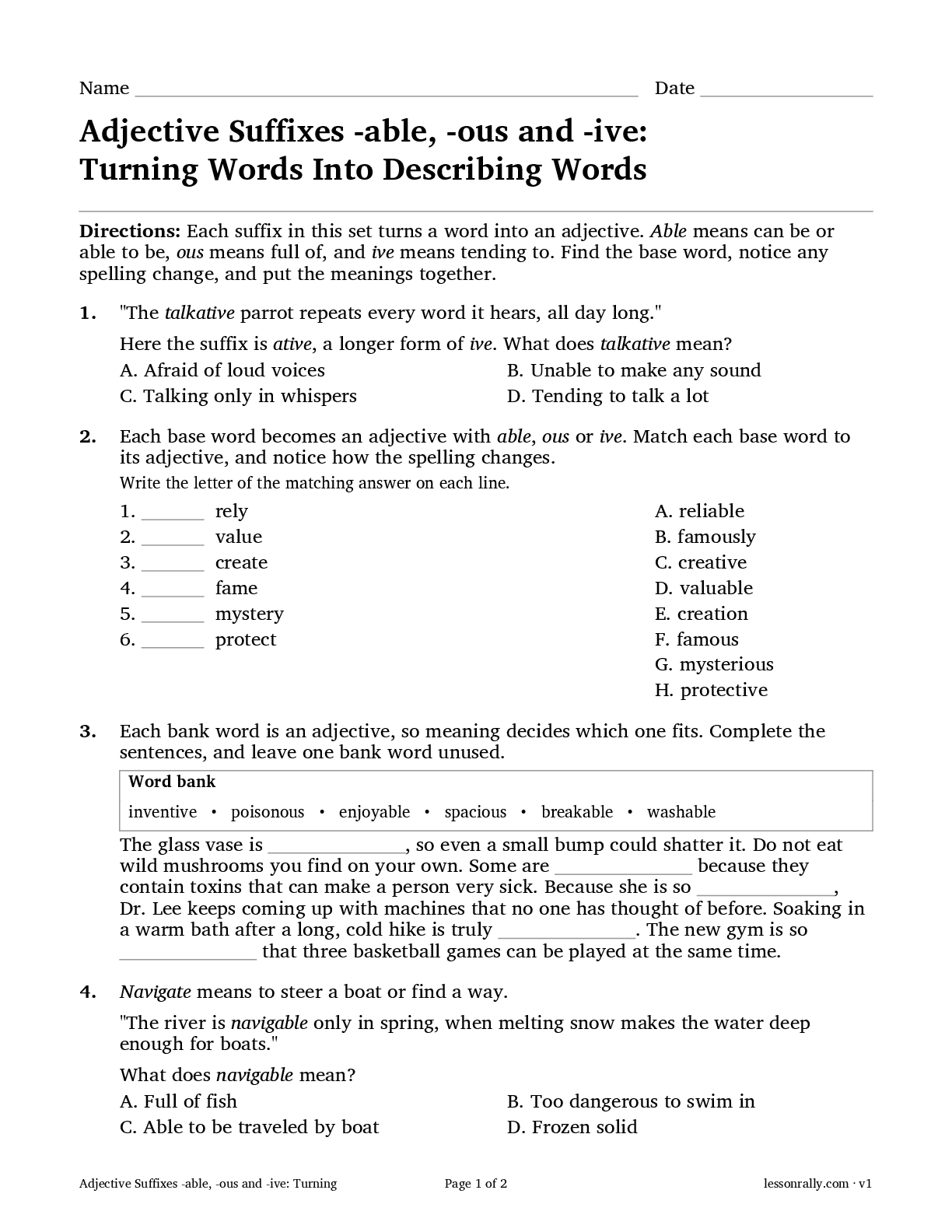
Each suffix in this set turns a word into an adjective. Able means can be or able to be, ous means full of, and ive means tending to. Find the base word, notice any spelling change, and put the meanings together.
Question 1
"The talkative parrot repeats every word it hears, all day long."
Here the suffix is ative, a longer form of ive. What does talkative mean?
Choose one answer.
Afraid of loud voices
Talking only in whispers
Unable to make any sound
Tending to talk a lot
Question 2
Each base word becomes an adjective with able, ous or ive. Match each base word to its adjective, and notice how the spelling changes.
Match each item to an option.
Items
rely
value
create
fame
mystery
protect
Options
reliable
creation
famous
protective
creative
valuable
famously
mysterious
Question 3
Each bank word is an adjective, so meaning decides which one fits. Complete the sentences, and leave one bank word unused.
Fill in each blank.
The glass vase is blank 1, so even a small bump could shatter it. Do not eat wild mushrooms you find on your own. Some are blank 2 because they contain toxins that can make a person very sick. Because she is so blank 3, Dr. Lee keeps coming up with machines that no one has thought of before. Soaking in a warm bath after a long, cold hike is truly blank 4. The new gym is so blank 5 that three basketball games can be played at the same time.
Word bank
inventive
poisonous
enjoyable
spacious
breakable
washable
Question 4
Navigate means to steer a boat or find a way.
"The river is navigable only in spring, when melting snow makes the water deep enough for boats."
What does navigable mean?
Choose one answer.
Full of fish
Able to be traveled by boat
Frozen solid
Too dangerous to swim in
Question 5
"The road wound through mountainous country, climbing one steep peak after another."
What does mountainous mean?
Choose one answer.
Crowded with houses
Close to the ocean
Flat and dry
Full of mountains
Question 6
When decide becomes decisive, what spelling change happens?
Choose one answer.
Nothing changes before ive.
The de at the end changes to s.
The c changes to s.
The final e is doubled.
Question 7
"Jada's persuasive speech convinced the principal to start a recycling program."
What does persuasive mean?
Choose one answer.
Spoken in a whisper
Angry and loud
Very long and slow
Good at convincing people
Question 8
When courage becomes courageous, what happens to the final e?
Choose one answer.
It stays, so the g keeps its soft sound.
It is doubled.
It changes to i.
It is dropped.
Question 9
"The destructive storm knocked down trees and power lines all across the county."
What does destructive mean?
Choose one answer.
Lasting only a minute
Gentle and quiet
Causing a lot of damage
Cold and snowy
Question 10
"The ending of the movie was so predictable that Max guessed it in the first ten minutes."