

Civil War
The Civil War, from 1861 to 1865, grew out of the conflict over slavery, including whether it could expand westward. Students contrast the economies of North and South, trace the steps to secession, and explain turning points.
Topics are chosen by LessonRally.
Filter by grade
- Social StudiesFeatured
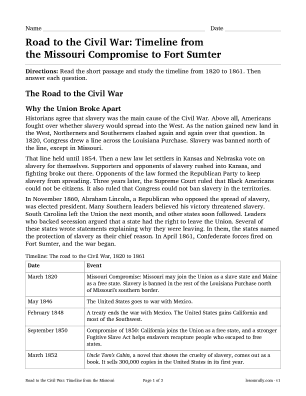
Road to the Civil War: Timeline from the Missouri Compromise to Fort Sumter (opens in a new tab)
- Grade 8
- 8 questions
- Estimated reading level 9.4
Made by Monica Ellison · LessonRally (AI-assisted)
- Social StudiesFeatured
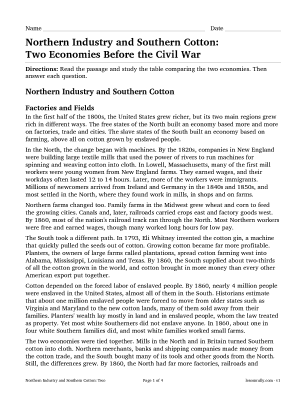
Northern Industry and Southern Cotton: Two Economies Before the Civil War (opens in a new tab)
- Grade 8
- 10 questions
- Estimated reading level 8.3
Common Core RH.6-8.5
Made by Monica Ellison · LessonRally (AI-assisted)
- Social Studies
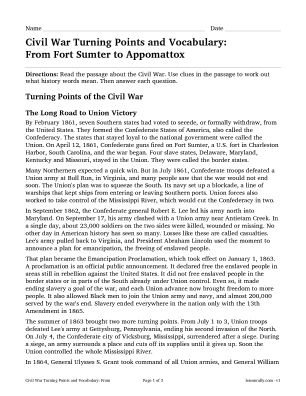
Civil War Turning Points and Vocabulary: From Fort Sumter to Appomattox (opens in a new tab)
- Grade 8
- 10 questions
- Estimated reading level 9.7
Common Core RH.6-8.4
Made by Monica Ellison · LessonRally (AI-assisted)
About teaching Civil War
- What students practice
- Comparing Northern factories and railroads with Southern plantations that depended on enslaved labor, ordering events such as the Missouri Compromise, the Kansas-Nebraska Act and Lincoln’s election, and explaining how Vicksburg helped give the Union control of the Mississippi River.
- Common mistakes
- Students often think the Emancipation Proclamation freed every enslaved person, but it applied only to areas in rebellion; the Thirteenth Amendment abolished slavery in 1865, except as punishment for a crime. Many describe the war as about states’ rights in general; have them read the declarations of causes from South Carolina and Mississippi, which name slavery directly.
- Ways to use these activities
- Use one of these activities before students shade a map of Union and Confederate states and mark the border states, slave states that stayed in the Union. In pairs, students compare a Union and a Confederate newspaper account of the same battle and list what each emphasizes.