Made by Elena Brisaval · LessonRally (AI-assisted)
Digital classroom activity
What is a digital classroom activity?
Teachers who sign in can assign LessonRally activities to their Google Classroom classes: students open them in Classroom and answer online, and their grades go to the teacher's Classroom gradebook. Practice lets you try it first, the way students see it.
Students match subjects to the present tense endings of regular -er and -ir verbs, then choose or type verb forms and tell who the subject is in short Spanish sentences. Conjugation practice with comer, beber, leer, vivir and escribir, with a focus on where -er and -ir verbs differ: comemos but vivimos. One new verb tests the pattern.
Learning goal: Conjugate regular -er and -ir verbs in the present tense to match the subject, including the different nosotros endings (comemos, vivimos).
Question types: matching, multiple choice, fill in the blank.
Student preview
The questions as students see them, without the answers.
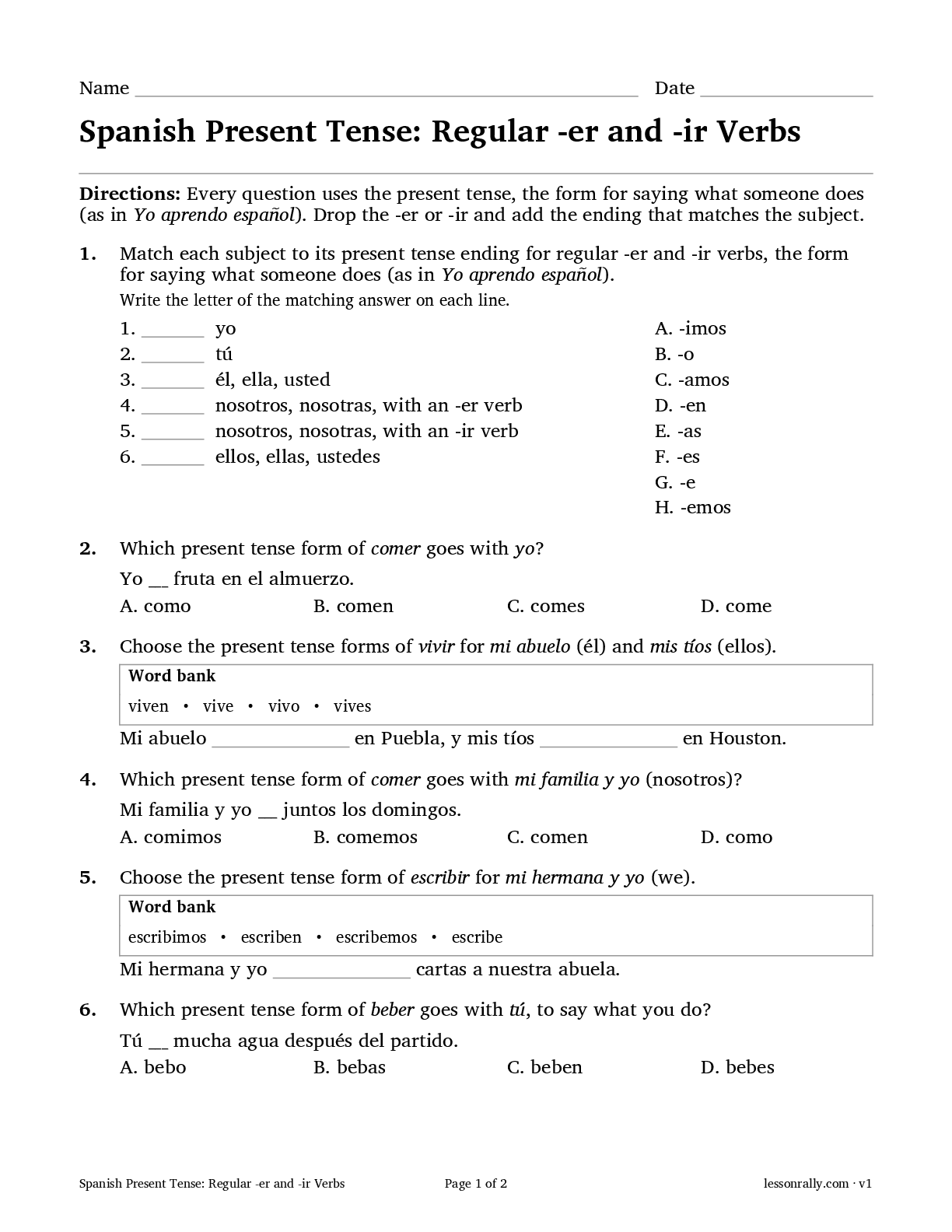
Every question uses the present tense, the form for saying what someone does (as in Yo aprendo español). Drop the -er or -ir and add the ending that matches the subject.
Question 1
Match each subject to its present tense ending for regular -er and -ir verbs, the form for saying what someone does (as in Yo aprendo español).
Match each item to an option.
Items
yo
tú
él, ella, usted
nosotros, nosotras, with an -er verb
nosotros, nosotras, with an -ir verb
ellos, ellas, ustedes
Options
-e
-es
-emos
-o
-en
-as
-imos
-amos
Question 2
Which present tense form of comer goes with yo?
Yo ___ fruta en el almuerzo.
Choose one answer.
como
come
comen
comes
Question 3
Choose the present tense forms of vivir for mi abuelo (él) and mis tíos (ellos).
Fill in each blank.
Mi abuelo blank 1 en Puebla, y mis tíos blank 2 en Houston.
Word bank
viven
vive
vivo
vives
Question 4
Which present tense form of comer goes with mi familia y yo (nosotros)?
Mi familia y yo ___ juntos los domingos.
Choose one answer.
comimos
comen
como
comemos
Question 5
Choose the present tense form of escribir for mi hermana y yo (we).
Fill in each blank.
Mi hermana y yo blank 1 cartas a nuestra abuela.
Word bank
escribemos
escriben
escribimos
escribe
Question 6
Which present tense form of beber goes with tú, to say what you do?
Tú ___ mucha agua después del partido.
Choose one answer.
bebo
bebes
bebas
beben
Question 7
The sentence Leen revistas en la biblioteca (from leer) has no subject pronoun. Who reads magazines?
Choose one answer.
yo (I)
ellos (they)
nosotros (we)
tú (you)
Question 8
Type the present tense form of leer that goes with usted, the form for saying what someone does.
Fill in each blank.
Señor Ortiz, usted blank 1 el periódico todas las mañanas.
Question 9
Compartir (to share) is a regular -ir verb. Use the pattern to choose its present tense form for mi hermano y yo (we).
Mi hermano y yo ___ un cuarto.
Choose one answer.
comparto
compartimos
comparten
compartemos
Question 10
Which sentence uses the correct present tense form of its verb?