Question 1
Which expression is equivalent to t + t + t + t?
Choose one answer.
- t × t × t × t
- t + 4
- 4 + 4t
- 4t


Teachers who sign in can assign LessonRally activities to their Google Classroom classes: students open them in Classroom and answer online, and their grades go to the teacher's Classroom gradebook. Practice lets you try it first, the way students see it.
Free for teachers. Sign in to assign activities to your Google Classroom classes.
 (opens in a new tab)
1 page · Student copy, no answers
Print worksheet (opens in a new tab)Answer keyPremiumStudents use the properties of operations to write equivalent expressions. They expand a product such as 2(n + 9) with the distributive property, factor a common factor out of a sum, combine like terms, and fill in the number that makes two expressions equivalent. One question asks who is right when a student multiplies only the first term inside the parentheses. Equivalent expression practice with one variable and with two.
Learning goal: Use the distributive property and other properties of operations to write equivalent expressions by expanding, factoring and combining like terms.
Apply the properties of operations to generate equivalent expressions. For example, apply the distributive property to the expression 3 (2 + x) to produce the equivalent expression 6 + 3x; apply the distributive property to the expression 24x + 18y to produce the equivalent expression 6 (4x + 3y); apply properties of operations to y + y + y to produce the equivalent expression 3y.
Identify when two expressions are equivalent (i.e., when the two expressions name the same number regardless of which value is substituted into them). For example, the expressions y + y + y and 3y are equivalent because they name the same number regardless of which number y stands for..
Matched independently by two AI models from this activity's questions.
© Copyright 2010. National Governors Association Center for Best Practices and Council of Chief State School Officers. All rights reserved.
Topic: Expressions Chosen by LessonRally
Question types: multiple choice, fill in the blank, select all that apply.
The questions as students see them, without the answers.
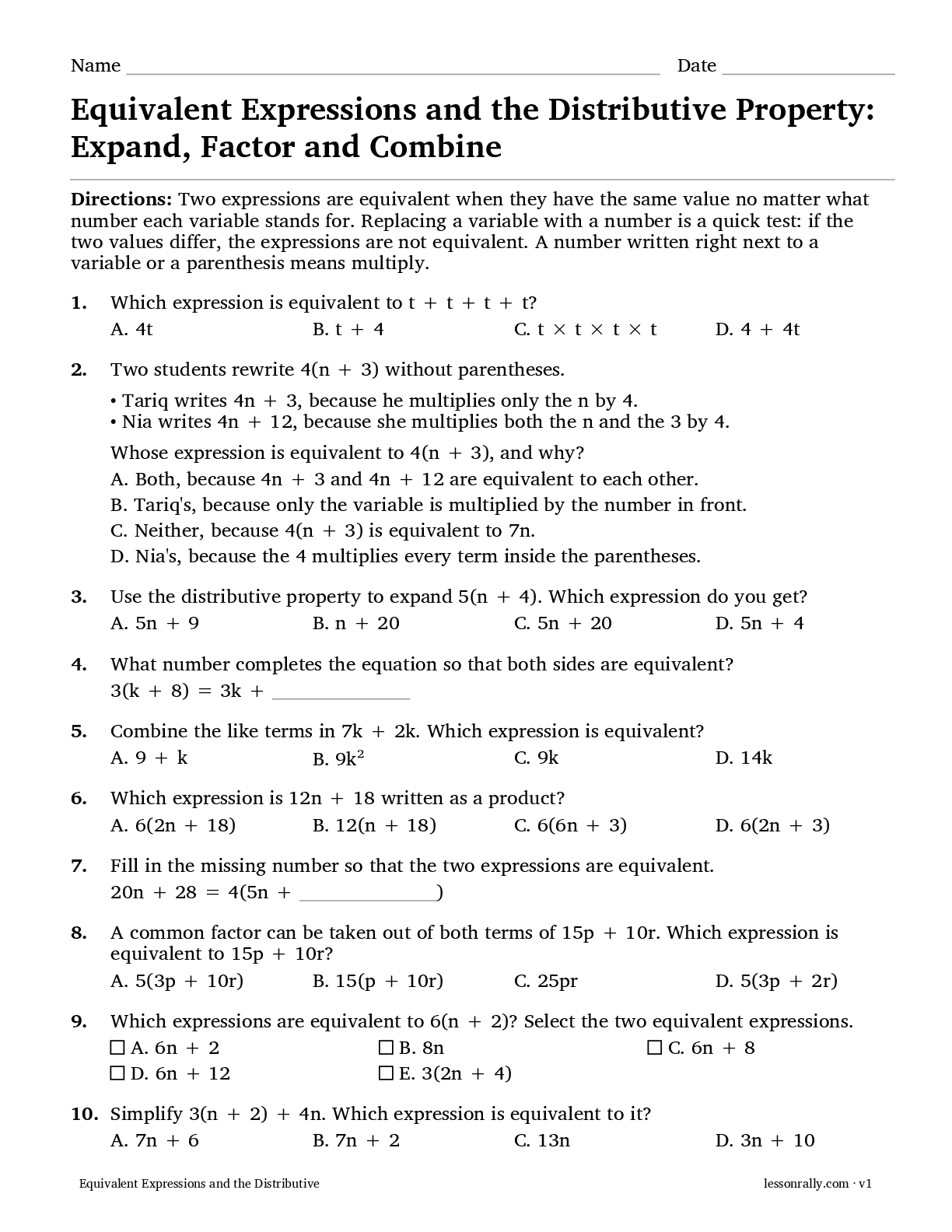
Two expressions are equivalent when they have the same value no matter what number each variable stands for. Replacing a variable with a number is a quick test: if the two values differ, the expressions are not equivalent. A number written right next to a variable or a parenthesis means multiply.
Which expression is equivalent to t + t + t + t?
Choose one answer.
Two students rewrite 4(n + 3) without parentheses.
Whose expression is equivalent to 4(n + 3), and why?
Choose one answer.
Use the distributive property to expand 5(n + 4). Which expression do you get?
Choose one answer.
What number completes the equation so that both sides are equivalent?
Fill in each blank.
3(k + 8) = 3k + blank 1
Combine the like terms in 7k + 2k. Which expression is equivalent?
Choose one answer.
Which expression is 12n + 18 written as a product?
Choose one answer.
Fill in the missing number so that the two expressions are equivalent.
Fill in each blank.
20n + 28 = 4(5n + blank 1)
A common factor can be taken out of both terms of 15p + 10r. Which expression is equivalent to 15p + 10r?
Choose one answer.
Which expressions are equivalent to 6(n + 2)? Select the two equivalent expressions.
Choose 2 answers.
Simplify 3(n + 2) + 4n. Which expression is equivalent to it?
Choose one answer.
No reviews yet.
Reviews come from teachers who assigned this activity to a class.
Have a topic of your own? Make a printable worksheet and online quiz, free.
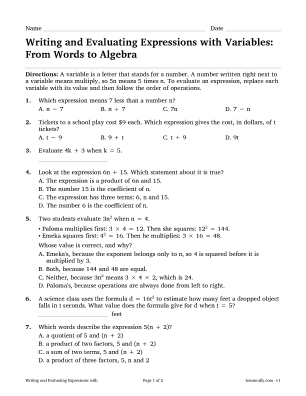
Create an activityCommon Core 6.EE.A.2c
Made by Hannah Yoon · LessonRally (AI-assisted)
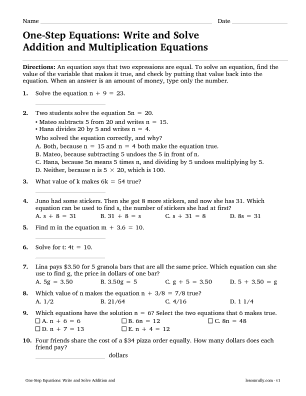
Common Core 6.EE.B.7
Made by Hannah Yoon · LessonRally (AI-assisted)
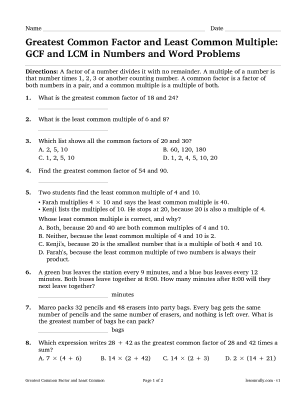
Common Core 6.NS.B.4
Made by Hannah Yoon · LessonRally (AI-assisted)
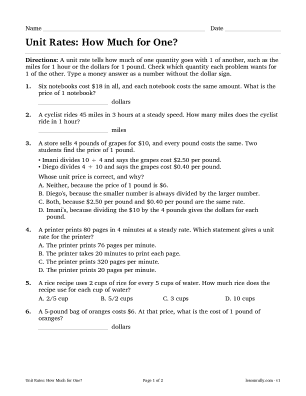
Made by Hannah Yoon · LessonRally (AI-assisted)