

Sentence Structure
Sentence structure is how clauses combine into sentences. Students tell simple, compound and complex sentences apart, join ideas with conjunctions such as but and because, and fix fragments and run-ons.
Topics are chosen by LessonRally.
Filter by grade
- English Language ArtsFeatured
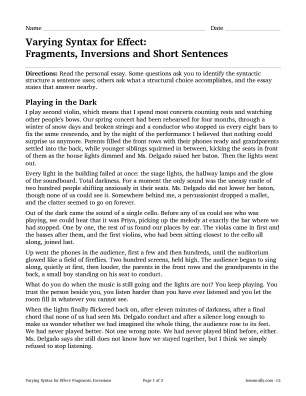
Varying Syntax for Effect: Fragments, Inversions and Short Sentences (opens in a new tab)
- Grades 11–12
- 10 questions
- Estimated reading level 9.1
Common Core L.11-12.3a
Made by Julian Corvell · LessonRally (AI-assisted)
- English Language ArtsFeatured
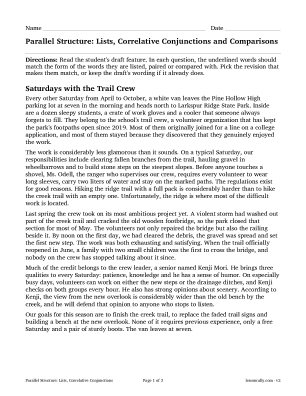
Parallel Structure: Lists, Correlative Conjunctions and Comparisons (opens in a new tab)
- Grades 11–12
- 10 questions
- Estimated reading level 9.8
Common Core L.11-12.1
Made by Julian Corvell · LessonRally (AI-assisted)
- English Language Arts
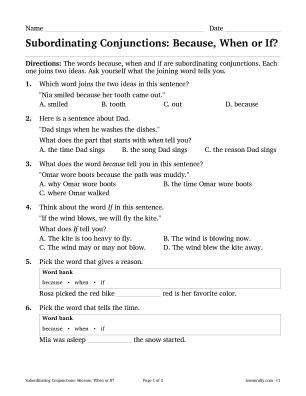
Subordinating Conjunctions: Because, When or If? (opens in a new tab)
- Grade 3
- 10 questions
- Estimated reading level 2.7
Common Core L.3.1i
Made by Sophia Howard · LessonRally (AI-assisted)
- English Language Arts
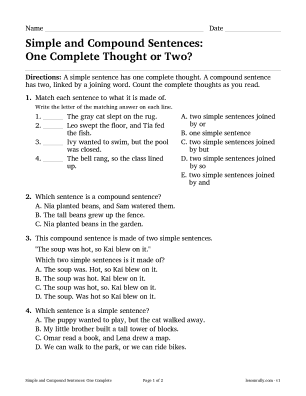
Simple and Compound Sentences: One Complete Thought or Two? (opens in a new tab)
- Grade 3
- 8 questions
- Estimated reading level 2.8
Common Core L.3.1i
Made by Sophia Howard · LessonRally (AI-assisted)
- English Language Arts
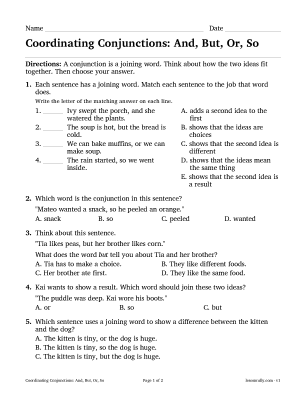
Coordinating Conjunctions: And, But, Or, So (opens in a new tab)
- Grade 3
- 8 questions
- Estimated reading level 2.8
Common Core L.3.1h
Made by Sophia Howard · LessonRally (AI-assisted)
About teaching Sentence Structure
- What students practice
- Finding the subject and verb in each clause, joining two sentences with a comma and a word such as so, as in “It rained, so we stayed in,” and putting a comma after an opening dependent clause, as in “When the bell rang, we left.”
- Common mistakes
- Students often write fragments like “Because it rained”; have them add a main clause: “Because it rained, we stayed in.” Many join two sentences with only a comma; have them add and, but or so, or use a period. Others call “Sam and Ana ran” compound, but it is one clause with a compound subject.
- Ways to use these activities
- Use one of these activities before a sentence-combining warm-up in which students join two short sentences three different ways. In pairs, one student writes a simple sentence and the other turns it into a compound sentence and then a complex one.