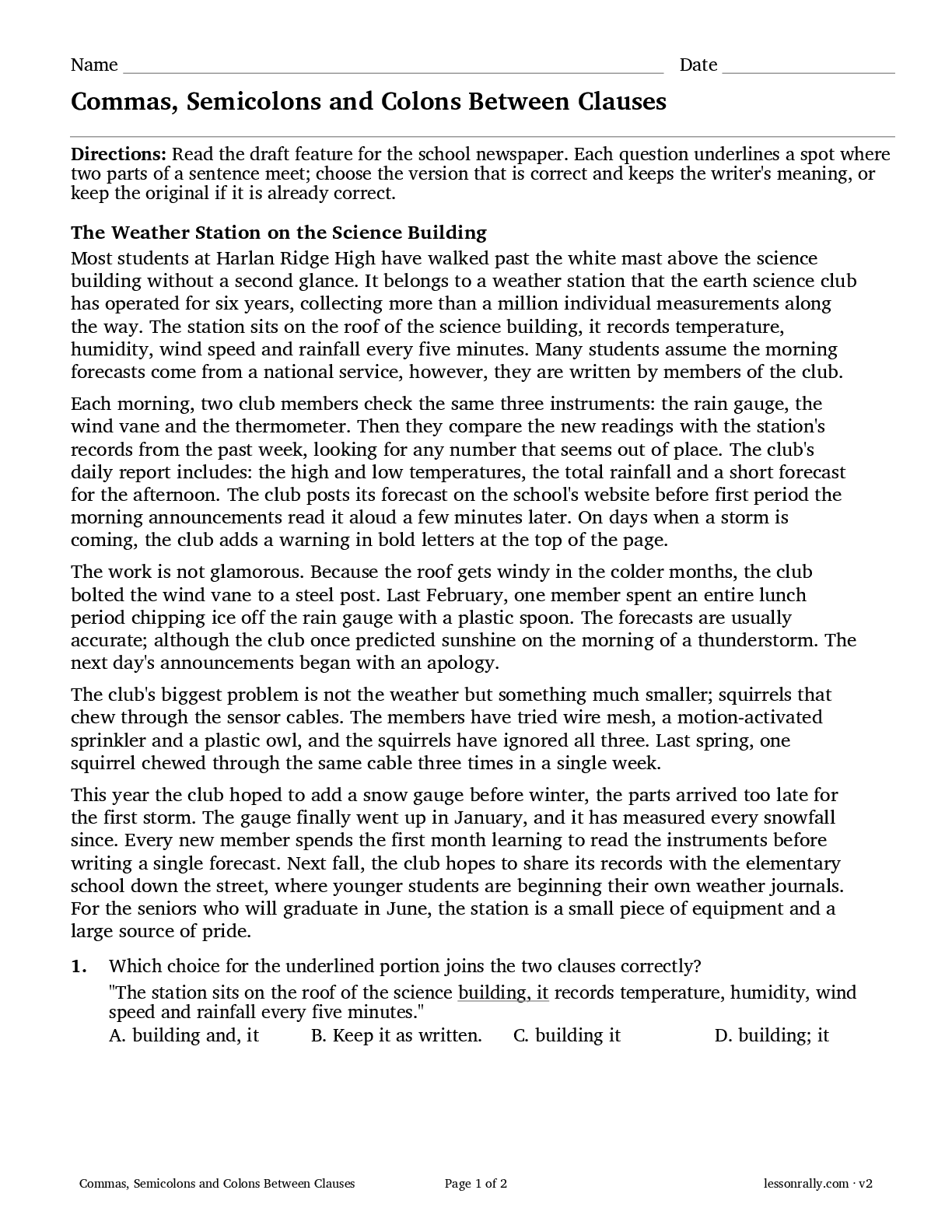
Most students at Harlan Ridge High have walked past the white mast above the science building without a second glance. It belongs to a weather station that the earth science club has operated for six years, collecting more than a million individual measurements along the way. The station sits on the roof of the science building, it records temperature, humidity, wind speed and rainfall every five minutes. Many students assume the morning forecasts come from a national service, however, they are written by members of the club.
Each morning, two club members check the same three instruments: the rain gauge, the wind vane and the thermometer. Then they compare the new readings with the station's records from the past week, looking for any number that seems out of place. The club's daily report includes: the high and low temperatures, the total rainfall and a short forecast for the afternoon. The club posts its forecast on the school's website before first period the morning announcements read it aloud a few minutes later. On days when a storm is coming, the club adds a warning in bold letters at the top of the page.
The work is not glamorous. Because the roof gets windy in the colder months, the club bolted the wind vane to a steel post. Last February, one member spent an entire lunch period chipping ice off the rain gauge with a plastic spoon. The forecasts are usually accurate; although the club once predicted sunshine on the morning of a thunderstorm. The next day's announcements began with an apology.
The club's biggest problem is not the weather but something much smaller; squirrels that chew through the sensor cables. The members have tried wire mesh, a motion-activated sprinkler and a plastic owl, and the squirrels have ignored all three. Last spring, one squirrel chewed through the same cable three times in a single week.
This year the club hoped to add a snow gauge before winter, the parts arrived too late for the first storm. The gauge finally went up in January, and it has measured every snowfall since. Every new member spends the first month learning to read the instruments before writing a single forecast. Next fall, the club hopes to share its records with the elementary school down the street, where younger students are beginning their own weather journals. For the seniors who will graduate in June, the station is a small piece of equipment and a large source of pride.